

Atlas Assurance Sells Flexibility in Uneasy Cruise Market
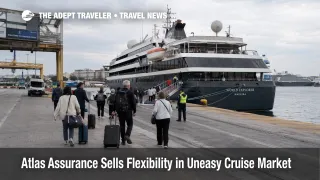
Atlas Ocean Voyages is not launching Atlas Assurance into a calm market. The new program lets travelers cancel for any reason up to 15 days before departure and keep the full cruise fare as a future cruise credit, which sounds generous on the surface but also reveals what cruise lines are having to solve in 2026. Demand is still strong across the industry, yet confidence is more fragile. Travelers still want premium cruises, but fuel volatility, Middle East spillover, airfare risk, and the cost of complex pre and post cruise travel are making people hesitate before committing early.
Atlas Assurance Cruise Flexibility: What Changed
What changed is not just that Atlas added a new sales offer. It added a reassurance tool at a moment when flexibility is helping close bookings. The official terms say Atlas Assurance applies to select 2026 Arctic, Mediterranean, and Northern Europe voyages booked between April 20 and May 15, 2026, with cancellation allowed up to 15 days before departure in exchange for a future cruise credit equal to 100% of cruise fare. That future cruise credit must be applied to a new booking within 12 months, with travel completed by departing by December 31, 2026.
The structure matters. Atlas is not promising a cash refund, and it is not erasing the rest of the trip risk. Taxes, airfare, insurance, and some third party services remain outside the core protection. For travelers, that means the cruise portion becomes more flexible than the surrounding itinerary. For Atlas, it means the line can reduce booking hesitation without letting revenue leave the system entirely.
This also lands in a market where cruise demand has not collapsed. Cruise Lines International Association said global cruise passenger volume reached 37.2 million in 2025, a record high, with nearly 90% of cruisers saying they intend to sail again. The signal here is not weak demand. It is strong demand meeting a more nervous planning environment.
Who Benefits Most From The New Offer
The travelers most likely to benefit are the ones booking expensive, long lead, destination driven itineraries where the cruise is only one piece of the spend. That includes Arctic voyages, Northern Europe sailings, and Mediterranean departures that usually require international airfare, hotel nights, transfers, and more advance coordination than a simpler close to home cruise.
That is especially true in expedition and upscale cruise, where ships are smaller, sailings are less frequent, and same season substitutes are limited. In an earlier Adept Traveler article, Atlas Ocean Voyages January 2026 Bookings Hit Record, the pressure point was inventory tightening. Atlas had already been signaling that interest in its 2026 product was strong. Atlas Assurance now adds another layer, a way to keep hesitant travelers in market even if they are not ready to make a hard commitment.
Travel advisors also benefit. In an uncertain environment, advisors are not only selling itinerary quality. They are selling recoverability. A future cruise credit is not the same as full downside protection, but it gives advisors a cleaner answer when clients ask what happens if the mood, the fuel picture, or the wider travel system changes before departure.
What Travelers Should Do Before Booking
Travelers should read Atlas Assurance as a partial flexibility tool, not a full risk transfer product. The immediate question is whether the most expensive and least flexible parts of the trip sit inside or outside the protected zone. If your airfare, hotel nights, and transfers are nonrefundable, the cruise policy alone does not make the whole trip flexible.
Book now if cabin choice, voyage date, or a specific region matters more than keeping every option open. That is the strongest case for using this kind of offer. Wait longer only if your trip is highly price sensitive, you have not sorted out the air side yet, or you would struggle to reuse a future cruise credit within Atlas's deadline.
The next decision point is whether the broader travel system gets calmer or more expensive. Watch fuel, airfare behavior, and any sign that cruise lines or tour operators are leaning harder on credit based offers instead of cleaner refunds. In an earlier Adept Traveler article, Strait of Hormuz Reopening Leaves Fuel Risk in Place, the main conclusion was that reopening a shipping corridor did not immediately restore normal fuel economics. That still matters here, because cruise pricing confidence depends partly on whether the transport system around the ship becomes more predictable.
Why Cruise Lines Are Leaning Harder On Flexibility
The wider industry backdrop is a mix of strength and strain. Bookings are still coming in, but operators are dealing with a market that feels more conditional. Reuters reported in March that Carnival cut its annual profit forecast as fuel costs surged, even while bookings for 2026 remained up double digits. That is the core contradiction in 2026 travel, people still want the trip, but suppliers have less visibility on what it will cost to deliver and travelers have less confidence that today's plan will feel safe tomorrow.
That is why Atlas Assurance looks less like a one off promotion and more like a broader industry tell. The cruise industry is trying to preserve demand without forcing travelers into an all or nothing commitment. Atlas chose a future cruise credit because it softens the purchase while still protecting the line's cash flow. That approach fits a year in which uncertainty has not destroyed demand, but it has changed how suppliers have to win it.
There is also a practical cruise specific layer to this. Cruise disruption behaves differently than airline disruption because travelers often buy a cruise first and build the rest of the trip around it. When the system feels unstable, people start paying more attention to cancellation terms, deposit exposure, insurance fine print, and whether they can recover the trip if one part breaks. In an earlier Adept Traveler article, Gulf Cruise Disruptions Leave Passengers Onboard, the problem was operational disruption after booking. Atlas Assurance addresses the anxiety earlier in the funnel, before booking becomes fully locked. The offer is useful, but it is also a sign of the market. Cruise lines still have demand. What they need now is a better answer to uncertainty.
Sources
- Introducing Atlas Assurance, Atlas Ocean Voyages
- State of the Cruise Industry Report 2026, Cruise Lines International Association
- Cruise operator Carnival cuts annual profit forecast as fuel costs surge, Reuters, March 27, 2026
- US cruises sail into higher costs as oil prices rally; Carnival could be hardest hit, Reuters, March 16, 2026