

Gulf Cruise Disruptions Leave Passengers Onboard
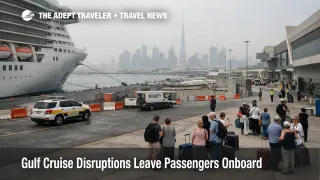
Cruise passengers sailing in the Arabian Gulf are now dealing with more than rerouted flights. As of March 2, 2026, multiple operators have suspended sailings, held ships in port, and issued "stay onboard" style guidance tied to evolving security conditions, which can erase port days and destabilize embarkation and disembarkation timing even when the ship itself is safe. The practical risk is not only a missed excursion, it is getting stuck on the wrong side of a flight, a hotel booking, or a separately ticketed connection because the ship's timing no longer matches the plan. Reporting and operator updates indicate canceled departures and extended port stays affecting Gulf itineraries, including ships positioned in Dubai, United Arab Emirates, and Doha, Qatar.
One reason this matters now is that "cruise disruption" behaves differently than "flight disruption." When a carrier cancels, you can sometimes reroute the same day. When a ship is instructed to hold, you may have no independent way to reach a port you were counting on, and you may not be allowed to disembark even if you can see the city from the balcony. That is why travelers should treat this as a rights, documentation, and cash flow problem as much as an itinerary problem, especially if they booked flights, hotels, and tours separately from the cruise fare.
Gulf Cruise Disruption: What Changed For Passengers
The current pattern is a mix of canceled departures, ships remaining docked for longer than planned, and itinerary reshuffles meant to reduce exposure to uncertain operating conditions. Reuters reported that German tour operators and cruise brands suspended Middle East trips and canceled cruises in the February 28 to March 5 window, while also noting MSC Euribia remained docked in Dubai under U.S. military guidance. Trade reporting also described cruise lines monitoring conditions with safety and repatriation as the priority, and regional coverage reported specific itinerary adjustments affecting Celestyal and others, including a ship remaining in Doha until at least March 7, subject to operating conditions.
For travelers, the immediate consequences concentrate in three places. First, port calls can be skipped or replaced at short notice, which wipes out prepaid shore excursions and timed tickets. Second, "stay onboard" constraints can remove your ability to self manage plans in port, including meeting a private driver, switching hotels mid trip, or repositioning to protect an onward flight. Third, uncertainty around arrival timing can turn a normal same day flight home into a forced overnight, or a missed long haul connection, particularly when regional air capacity is already constrained. The aviation side of this same security situation has already been disrupting Gulf hubs, which compounds the cruise problem when passengers try to fly in or out around altered ship timing. See Middle East Airspace Closures Extend Into March 1 and Worldwide Security Alert Flags Airspace, Hotel Risk for the flight and hotel volatility layer that can collide with cruise port holds.
Which Cruise Travelers Are Most Exposed
The highest risk group is anyone who stitched together separate components around a Gulf cruise, especially flights and hotels that were not booked through the cruise line or a package organizer. If embarkation shifts, a separate ticket airline can treat a missed flight as a no show, and a nonrefundable hotel can become a sunk cost. The second highest risk group is passengers whose cruise ends with a same day flight, because even a modest delay in clearance, docking, or disembarkation sequencing can destroy the buffer you thought you had.
There is also a quiet exposure split between "package" buyers and "cruise only" buyers. In the U.S., there is no single federal agency that regulates cruise customer service issues like itinerary changes, and remedies often default to the ticket contract. By contrast, travelers who bought the cruise as part of a package (for example, cruise plus flights sold together by an organizer) can have stronger cancellation and refund rights when there is a significant change, depending on jurisdiction and the exact contract structure. This is why the first decision is not "am I entitled to compensation," it is "what did I buy," cruise only, package, or cruise via a tour operator, because the remedies can differ materially.
Finally, travelers relying on travel insurance should assume friction until proven otherwise. Many policies do not pay simply because a cruise swaps ports or modifies the itinerary, and many also exclude war or military action related disruptions as covered reasons for trip cancellation or interruption unless you purchased optional upgrades like Cancel For Any Reason (CFAR), and even that is usually partial reimbursement.
What Passengers Should Do Now
If you have not departed yet, make the go, no go decision based on two gates, whether your cruise line has confirmed the sailing is operating as marketed, and whether your entry and exit transport still works with realistic buffers. In this environment, "scheduled" is not the same as "operating," and a port day printed on an itinerary is not a promise. Cruise line contracts and FAQs commonly reserve broad discretion to change ports and timing, sometimes with explicit language that the line is not liable for losses arising from deviations. That does not mean you have no options, it means you need to use the options that actually exist, refunds, rebooking, or package law remedies, rather than assuming a missed port automatically triggers compensation.
If you are already onboard, start building a documentation file now, before the trip ends and details get fuzzy. Save every written update from the line (app notifications, emails, printed notices), and take screenshots that show date, time, and the stated reason for changes or restrictions. Keep receipts for any out of pocket costs that were caused by schedule changes (hotels, meals, ground transport, rebooking fees). If the line later offers onboard credit, partial refunds, or free rebooking, you will be able to compare the offer against your actual costs, and you will have what you need if you escalate through your travel advisor, card benefits, insurer, or the organizer who sold the trip.
For flights and hotels tied to the original disembarkation plan, act earlier than you normally would. Rebook now if your flight is same day, if you are on separate tickets, or if your airline is already offering change flexibility for the region. Wait only if you have genuine date flexibility and you can absorb an unplanned night without breaking the purpose of your trip. If you must keep the trip, favor routings that avoid tight connections through the region while airspace and airport operating status remains volatile, and put at least one hotel night buffer on either side of embarkation or disembarkation if you are flying long haul.
On insurance, read the "covered reasons" and "exclusions" sections, not the marketing summary. If the trigger is war, military action, or a government closure, many standard policies will not treat that as a covered cancellation reason, although you may still have limited benefits for delays, missed connections, or trip interruption depending on wording. If you have CFAR, check the purchase window, the reimbursement percentage, and whether you must cancel a minimum number of hours before departure to qualify. If you booked with a premium credit card, review trip delay and trip interruption benefits, because those sometimes apply differently than a standalone travel policy.
Why Cruise Disruption Spreads Into A Rights And Cash Problem
Cruise lines can change itineraries quickly because the ship is both the transport and the hotel. When the operating environment shifts, a line can hold the vessel, skip a port, or reorder calls without needing an airport slot, a rail path, or a hotel room for every passenger that night. That operational flexibility is exactly what creates passenger friction, because your independent components, flights, hotels, tours, and transfers, do not automatically re synchronize.
The second mechanism is authority layering. A "stay onboard" instruction is not only a customer service choice, it can reflect port authority controls, security guidance, or a risk management posture that treats movement ashore as the variable to eliminate. In practice, that can strand third party vendors (private guides, drivers, tour operators) while leaving passengers with few self help options beyond what the cruise line offers onboard.
The third mechanism is that cruise disruption collides with constrained regional transport. When aviation and security conditions are already degrading hub reliability in the Gulf, the normal escape valves are weaker. Even if you decide to bail out of a cruise early or reposition to protect a flight, there may be fewer seats, higher walk up fares, and less predictable airport operations. That is why the right planning posture is to assume that the cruise line will protect the onboard experience first, while you protect the edges, documentation, buffers, and the ability to absorb an overnight without cascading losses.
Sources
- Dertour, TUI Cruises cancel Middle East trips amid travel disruptions, stranded (Reuters, March 2, 2026)
- Cruise lines monitor Gulf conflict, priority is safety and repatriation (Seatrade Cruise, March 1, 2026)
- Celestyal, MSC Cruises and TUI adjust Arabian Gulf sailings (Connecting Travel, March 2, 2026)
- MSC Cancels Departures in the Middle East (Cruise Industry News, March 2, 2026)
- Cruise Itinerary Changes, Why They Happen (Cruise Critic, November 10, 2025)
- Royal Caribbean itinerary change updates (Royal Caribbean)
- Cruise Service Issues, Cruise Passenger Assistance (Federal Maritime Commission)
- Travel Insurance Coverage for Military Action in 2026 (Squaremouth, January 9, 2026)
- Does Travel Insurance Cover Travel Advisories (InsureMyTrip, December 3, 2025)
- Cancelling a package holiday, significant change rights (Citizens Advice)