

Teotihuacán Shooting Pushes Mexico Security Upgrade
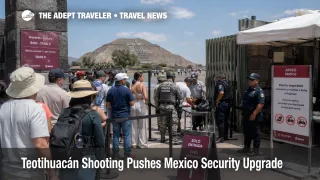
Mexico tourist security has moved from broad World Cup reassurance to visible on the ground hardening after the shooting at Teotihuacán. Two days after a Canadian tourist was killed and 13 others were injured at the Pyramid of the Moon, Mexico reopened the site with National Guard patrols, bag checks at five entrances, and a promise of metal detectors. That is a real operational shift for travelers, not just political messaging, and it raises a bigger question Mexico now has to answer before June 11, 2026, when the World Cup opens in Mexico City.
Mexico Tourist Security: What Changed
What changed is not simply that officials condemned the attack. Mexico is now adding visible screening and armed presence at major visitor sites after a kind of attack that President Claudia Sheinbaum described as something the country had not seen before. Reuters reported that authorities say the gunman acted alone, fired 14 times, and carried material referencing the Columbine massacre, while Omar García Harfuch said security would be tightened at archaeological and other top tourist sites.
The early proof point is Teotihuacán itself. When the site reopened on April 22, 2026, Reuters reported that 40 National Guard members were deployed, basic bag inspections were added at all five access points, and access slowed enough that some visitors waited more than three and a half hours. The climb up the Pyramid of the Moon remained suspended. That means the first order effect is already clear, entry to marquee sites can become slower, more controlled, and less predictable even when they are technically open.
This is also an update to Adept's own coverage. In an earlier Adept Traveler article, Teotihuacán Shooting Tests Mexico Site Security, the main traveler question was whether the incident would stay local to one archaeological zone. It still may, but the operational answer is now broader, Mexico is visibly hardening tourist access points as World Cup travel gets close.
Which Travelers Should Treat This As A Real Planning Issue
The most exposed travelers are not every Mexico visitor equally. They are travelers building itineraries around high profile sites, fixed time slots, same day airport transfers, or World Cup linked city breaks that leave little slack for security friction. A day trip that once looked simple can now include screening delays, partial access restrictions, and more police control at the entrance.
That matters most around Mexico City, where the World Cup opener is scheduled for June 11, 2026, and where any added security posture can ripple into the wider travel system. Mexico will host 13 matches across Mexico City, Guadalajara, and Monterrey, and Reuters has separately reported that authorities have announced around 100,000 security personnel for the tournament. The travel risk is not that every visitor site becomes unsafe. The nearer term risk is that security gets tighter faster than operators, transport plans, and tourists adjust.
Travelers should also view this alongside other Mexico City warning lights. In an earlier Adept Traveler article, Mexico City Anti Tourism Protests Warn World Cup Fans, the issue was social and street level pressure around the event. This story is different, but the consequence overlaps, a World Cup trip to Mexico is becoming less of a simple event ticket and hotel purchase, and more of a security, transfer, and timing problem that needs extra margin.
What Travelers Should Do Now
Travelers with Teotihuacán on the itinerary should stop assuming that open means normal. Confirm site status with the operator, transport provider, or official source before departure, and assume entry can take materially longer than it did a week ago. Do not pair the pyramids with a tight same day airport run, a narrow tour connection, or an evening booking that depends on precise timing.
For Mexico City and World Cup planning more broadly, buy flexibility while it is still relatively cheap. Favor changeable lodging, avoid stacking too many timed attractions into one day, and give more transfer buffer between hotels, stadium areas, airports, and side trips. Screening changes at visitor sites do not shut down a trip by themselves, but they reduce schedule slack, and that is exactly how missed tours, late arrivals, and broken same day plans start.
The next decision threshold is spread. If extra checks remain concentrated at Teotihuacán and a few marquee sites, this stays manageable with better timing and more patience. If similar controls start appearing across major attractions, stadium perimeters, museums, or city access corridors, then travelers should start simplifying itineraries and avoiding back to back commitments in the capital during match weeks.
Why Mexico Is Hardening Security, And What Happens Next
The mechanism is straightforward. Mexico is trying to reassure both tourists and FIFA that a rare public attack at a flagship site does not signal wider loss of control. That means more visible force, more screening, and more public emphasis on preparedness. Sheinbaum has already insisted there is no risk to World Cup fans after earlier violence in Jalisco, but this latest incident forces that reassurance into a more practical phase, where travelers will judge the system by wait times, site access, and how smoothly security measures actually work.
There is also a tradeoff here. More guards and checkpoints may reassure many travelers, but they can also create friction, long lines, and concerns that security forces are being stretched across tourist sites, host cities, and the broader tournament footprint. Reuters noted Amnesty's warning that the large World Cup deployment could bring its own risks if heavy militarization starts colliding with protests or daily city movement. For trip planning, that means Mexico tourist security is no longer just a background policy issue. It is becoming an operational variable that travelers should watch closely through June.
Sources
- Gunman shoots Canadian woman dead at Mexico's Teotihuacan pyramids, 13 injured | Reuters
- Mexico pledges World Cup safety after shooting at ancient pyramids | Reuters
- Mexico reopens famed pyramids under heavy police presence after deadly shooting | Reuters
- Versión estenográfica. Conferencia de prensa de la presidenta Claudia Sheinbaum Pardo del 21 de abril de 2026
- Teotihuacan reanudó actividades con operación coordinada y medidas reforzadas | INAH
- Amnesty warns of 'huge' human rights risks at 2026 World Cup | Reuters
- Mexico president says 'no risk' for 2026 World Cup fans | Reuters