

Mexico City Anti Tourism Protests Warn World Cup Fans
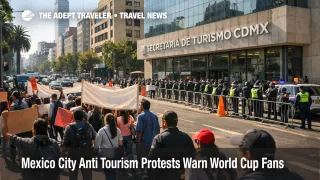
Mexico City tourism protests have become an early warning signal for World Cup travelers, even though they have not yet turned into a broad operational disruption. On February 27, 2026, activists marched to the Mexico City Tourism Secretariat to protest gentrification and overtourism tied to the upcoming 2026 FIFA World Cup, citing rising rents in central and southern neighborhoods and higher water costs. For now, the practical move is not to cancel a trip, it is to treat this as a sentiment and planning signal in a host city that will stage the tournament opener on June 11, 2026.
The reason this matters now is that World Cup travel stress usually shows up before the first match. Once host city tensions harden, the first effects are often marches, police perimeters, road slowdowns, and new pressure on short term rentals or event rules, not an immediate tourism shutdown. Mexico City already has a recent pattern of demonstrations creating localized transfer problems near major corridors, which is why travelers, advisors, and event planners should watch this issue before June rather than after it starts affecting match day transport.
Mexico City Tourism Protests: What Changed
What changed is that anti tourism pressure is no longer only a broader global mood story, it is now visible in one of the World Cup's most important host cities. The February 27 march specifically targeted the Tourism Secretariat, and Reuters' event caption tied the protest directly to concerns that overtourism linked to the 2026 FIFA World Cup is worsening housing and cost pressures in parts of the city. That makes this more relevant than a generic anti gentrification rally, because the grievance is now attached to a defined mega event with a fixed timeline.
Mexico City also sits at the center of Mexico's World Cup plan. FIFA has confirmed that Mexico City Stadium will host the opening match on Thursday, June 11, 2026, and official tournament scheduling makes the capital one of the highest visibility travel nodes in the competition. That means any hardening of local opposition to tourism, even if still limited, matters more here than it would in a lower profile destination.
This is also a change from prior coverage because the issue has moved from a general overtourism debate toward a host city warning. Mexico City has already seen earlier protests tied to gentrification and visitor pressure, including destructive scenes in 2025, but this latest action was more targeted and institution facing, which is often how a mood story starts becoming a policy or operations story. For broader context on how this pressure has built, see Overtourism protests spread, from Barcelona to Mexico City.
Which Travelers Should Pay Attention First
The most exposed travelers are not necessarily ordinary spring visitors. They are World Cup planners, fans booking short stays in central districts, operators relying on road transfers, and anyone expecting Mexico City to function like a friction free event hub during match windows. Protesters cited pressures in central and southern parts of the city, so neighborhoods popular for tourism, dining, and short term stays deserve closer attention if sentiment keeps building.
Hotel operators, tour companies, and short term rental users should pay especially close attention because these are the parts of the travel system that usually absorb local backlash first. If city authorities respond to resident pressure with tighter enforcement, the result may not be a formal tourist ban. It may look more like licensing crackdowns, stricter controls around event zones, altered traffic management, or tighter access rules near official venues and tourist corridors. Mexico's own travel picture also already points to strong 2026 demand, which raises the odds that capacity pressure and local frustration can reinforce each other as match dates get closer. For the demand side of that story, see Mexico 2025 Tourism Record Hits 98.2M Visitors.
Travelers with fixed schedules should also remember that Mexico City protests do not need to be huge to become disruptive. As earlier local coverage on Adept Traveler noted in January, even geographically limited demonstrations can snarl cross city movements, especially when police cordons and reroutes push traffic into already stressed corridors. That matters for airport transfers, stadium access, timed tours, and same day arrivals built around little buffer. Related street movement risk is already familiar in the city, as shown in Protests Near Mexico City U.S. Embassy, Polanco Delays.
What Travelers Should Do Before Booking And Before Match Week
Right now, the smart move is to plan for optionality, not panic. If you are booking Mexico City for World Cup dates, favor refundable or changeable lodging, use professionally managed accommodations over marginal rentals, and avoid same day chains that depend on perfect road timing. The story is not yet that the city is operationally hostile to visitors. The story is that the warning lights are visible early enough for travelers to buy flexibility while it is still cheap.
The next decision threshold is whether this remains symbolic or starts affecting movement. If protests begin recurring near government buildings, tourism offices, stadium approaches, or major tourist districts, then the risk changes from sentiment to operations. At that point, fans should add larger transfer buffers, avoid overly tight stadium day itineraries, and think harder about where they stay relative to the venue and airport, rather than choosing only on nightly rate. Travelers moving across multiple host cities should also review World Cup 2026 Host City Flights December 2025 Boost, because air capacity can help with city to city movement, but it does not solve last mile friction inside Mexico City.
Over the next 24 to 72 hours, and then again as June approaches, the signals to monitor are simple. Watch for repeat marches, any city or federal statements on tourism management, stricter talk around rentals or event security perimeters, and whether demonstrations start clustering around tourist or venue districts instead of staying mostly symbolic. The closer those signals move toward access control and traffic management, the more this becomes a real travel story rather than a political mood indicator.
Why This Matters For World Cup Planning
The mechanism here is straightforward. A protest about overtourism does not need to target fans directly to affect travel. The first order effect is reputational and procedural, because it forces officials, police, tourism bodies, and operators to treat visitor flows as a governance issue rather than only a demand opportunity. The second order effects are where travelers feel it, in stricter crowd management, more visible security, changes to street access, and a rougher operating environment for properties and tours that depend on dense visitor zones.
Mexico's broader World Cup posture shows why this should be watched seriously, but not exaggerated. After recent violence in Jalisco raised doubts about tournament readiness, Mexican officials described a World Cup security plan involving more than 20 federal agencies, with deployments around stadiums, airports, roadways, and lodging centers, and joint task forces in Mexico City, Guadalajara, and Monterrey. That response is mainly about security, not overtourism, but it shows the same basic point, the tournament is already pushing host cities toward tighter operational management months before kickoff.
That is why this is a warning, not yet a disruption. The February 27 protest does not prove Mexico City will face anti visitor unrest during the World Cup. It does show that tourism growth, housing pressure, and public services are being argued over in a host city on a fixed event clock. For travelers, the practical conclusion is clear, Mexico City remains bookable, but the margin for careless planning is getting thinner.
Sources
- March Against Over-Tourism In Mexico City, Reuters Connect
- Mexico City Stadium Hosts Opening Match, FIFA
- Updated FIFA World Cup 2026 Match Schedule Reveals Venues and Kick-Off Times for All 104 Matches, FIFA
- Mexican President Visits Jalisco to Ease Concerns Over Violence Ahead of FIFA World Cup, AP News