

United Sees 20% Airfare Jump as Fuel Costs Surge
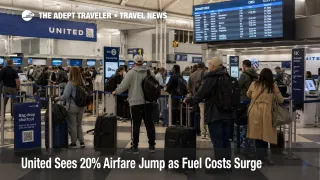
United is putting a sharper number on airfare pain than travelers have heard from most U.S. airlines so far. On April 22, 2026, CEO Scott Kirby said fares may need to rise by 15% to 20% to offset higher jet fuel costs, while the carrier also said it has already pushed through five fare increases late in the first quarter and raised checked bag fees. That matters because this is no longer just a warning that fuel is expensive. It is a major network airline openly signaling a near full cost pass through, with summer bookings, family trips, and managed travel budgets now facing a more aggressive repricing window.
United Airfare Increase: What Changed
What changed is the precision. Airlines have spent weeks warning that fuel costs were rising, but United attached a specific yield target to the problem. Kirby said fares may need to rise by about 15% to 20%, and the airline is assuming roughly $4.30 per gallon fuel in the current quarter. United also said it wants to recover the full increase in fuel costs as quickly as possible, which turns this from a margin story into a direct traveler pricing story.
The other important shift is that the repricing has already started. United said it implemented five fare increases late in the first quarter, and its checked bag fees rose for tickets purchased on or after April 3, 2026. For many travelers on most affected routes, the first checked bag now costs $50.00 (USD), or $45.00 (USD) if prepaid, and the second bag costs $60.00 (USD), or $55.00 (USD) if prepaid. That means the cost pressure is not hypothetical, and it is not limited to the base fare.
This also looks different from a one day fare spike. Reuters reported United is aiming toward a 100% pass through over time, even though it currently expects to recover only 40% to 50% of the fuel spike in the second quarter. In plain language, the airline is signaling that more of the catch up may still be ahead if fuel stays elevated.
Which Travelers Face the Most United Fare Pressure
The most exposed travelers are the ones who cannot easily trade down, shift dates, or avoid ancillary fees. That starts with families checking bags, because a round trip for two travelers checking one bag each can add $180.00 (USD) in bag fees at the new prepaid rate, and $200.00 (USD) without prepaying. A family of four checking four first bags round trip would face $360.00 (USD) prepaid, or $400.00 (USD) if they pay the standard airport rate. Those numbers are illustrative, but the point is real, baggage now meaningfully changes the total trip price.
Basic Economy travelers also sit near the pressure point. United says Basic Economy tickets include only one personal item on most trips, not a standard carry on, so travelers trying to avoid higher fares may still get hit later through baggage or seat selection costs. That makes the cheapest displayed fare less protective than it looks, especially for weekend leisure trips or short family breaks where travelers might otherwise assume a low advertised price is the real price.
Corporate travelers and premium leaning leisure travelers are exposed in a different way. United's first quarter results showed premium revenue up 14%, business revenue up 14%, and loyalty revenue up 13% year over year, which tells you the airline still sees strength in customers who are less price sensitive. That gives United more room to keep pressing fares upward on strong routes before demand breaks. In practice, that means travelers on hub to hub, business heavy, and schedule critical itineraries may see less discounting and fewer reasons to wait.
What Travelers Should Do Before Prices Move Higher
For summer and early fall trips that are likely to happen anyway, the safer bet is usually to price and book now rather than assume a later dip will bail you out. United has already moved fares several times, and its own message is that the carrier still has more room it wants to recapture. Waiting may still work on weak leisure dates, but it is a riskier strategy on business markets, major holiday windows, and nonstop dominated routes where schedule convenience matters more than absolute price.
Travelers should also stop comparing fares on base price alone. On United, bag fees, Basic Economy restrictions, and seat costs can erase what first looks like a cheaper option. In an earlier Adept Traveler article, Low Cost Airlines Seek Tax Relief as Fuel Shock Bites, the wider market signal was already clear, low fare carriers were warning that fuel stress could break the economics of cheaper tickets. This United update strengthens that case at the large network carrier end of the market.
The next decision point is not just whether to book. It is whether to change the shape of the trip. Travelers who can use alternate airports, pack lighter, or accept a connection instead of a nonstop may still find savings. Travelers who need fixed dates, checked bags, and specific flight times should assume the United airfare increase story is more likely to worsen than reverse quickly over the next several weeks.
Why United Is Pushing Fares Higher, and What Happens Next
The mechanism is straightforward. Fuel rose fast enough that packed airplanes alone are not protecting margins. Reuters reported United's first quarter fuel expense was up by about $340 million from a year earlier, while the airline's current quarter planning assumes much higher fuel costs than it expected earlier in the year. When that happens, carriers usually respond in layers, first fare increases, then fee increases, then capacity discipline, and finally schedule cuts if pricing still cannot keep up.
United is already moving beyond pricing into network planning. The airline said it is adjusting its schedule for the rest of 2026 and now expects an approximately 5 point capacity reduction versus its original plan, with third and fourth quarter capacity flat to up about 2% year over year. First order, that helps the airline protect yields. Second order, it can leave travelers with fewer backup flights, less same day rebooking flexibility, and stronger pricing on the flights that remain.
That is the bigger traveler takeaway. The United airfare increase is not just about paying more for the same seat. It can also mean thinner schedule depth and fewer cheap workarounds if fuel stays high. In an earlier Adept Traveler article, Europe Jet Fuel Risk Moves Into Emergency Planning, the pressure was already spreading through airline planning, not just pump prices. United's new 15% to 20% target shows the same logic now landing directly in U.S. airfare decisions.
Sources
- United Airlines says fares may need to rise up to 20% to offset fuel surge
- Record demand can't save US airlines from Iran war fuel shock
- United Airlines echoes industry caution as Iran war fuel surge squeezes margins
- United's Long-Term Strategy Remains Focused on Growth and Margin Expansion
- Checked bags, United Airlines
- Basic Economy, United Airlines
- Carry-on Bags, United Airlines