

Mexico Border Blockades Ease, Cross Border Risk Remains
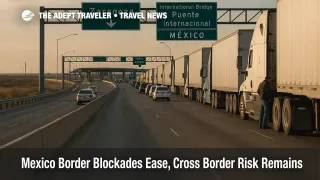
Mexico border blockades at land crossings between Ciudad Juarez, Nogales, Mexicali, and the United States have formally lifted after late November 2025 protests, but the recovery phase is proving slow and uneven for trucks, buses, and private cars. Farmers and truckers have agreed to suspend mega blockades in return for talks on highway security, water law changes, and overdue subsidies, yet exporters, maquiladora plants, and road trippers still face long queues and fragile schedules. Travelers and shippers now need to treat December crossings as high risk, buffer heavy trips with extra time, and keep backup routes ready.
The end of nationwide Mexico border blockades shifts travelers and cross border freight teams from live closures to a messy clearance period, with export backlogs at corridors such as Ciudad Juarez, El Paso expected to take around 10 days to unwind and the risk of new protests returning if promised reforms stall.
Which Crossings Have Reopened
The most acute disruption hit in the four day megablockade that began on November 24 2025, when farm and transport groups blocked highways in at least 17 states and squeezed access to ports of entry feeding Texas, Arizona, and California. That wave of action saw truck lanes and approach roads toward Ciudad Juarez, Nogales, and Mexicali either fully closed or opened only in short convoys, dramatically cutting northbound capacity for both freight and long distance buses.
By November 28 2025, Mexico's Interior Ministry had negotiated a framework deal in Mexico City and most highway blockades were lifted, including key approaches into Ciudad Juarez and Sonora. The agreement created three negotiating tables, one for highway security and crime, one for agricultural pricing and subsidies, and one for controversial changes to the national water law that protesters say will devalue irrigated farmland and concentrate control in federal hands.
For border travelers, the immediate effect is that primary cargo approaches to the Zaragoza Ysleta complex, the Bridge of the Americas, Nogales commercial facilities, and the Mexicali Calexico freight lanes are no longer physically blocked by parked tractors and trucks. Lanes are open, customs is processing traffic, and both Mexican and U.S. authorities have extended some commercial hours to help move the backlog. That is a step change from late November, when some corridors saw multi day closures.
How Deep The Backlogs Are
Even with blockades lifted, the system is far from normal. Logistics briefings and trade press describe tens of thousands of truckloads stranded during the peak of the protests, with one widely cited estimate placing roughly 38,000 loads in limbo on the Ciudad Juarez, El Paso corridor alone. Freight analysts say export backlogs at that gateway are likely to take around 10 days to clear under typical operating conditions, so long as no new blockades emerge to choke the flow again.
Local television coverage from El Paso shows long lines of semi trucks stretching along approaches to the Bridge of the Americas and Ysleta Zaragoza, even after Mexican protest leaders told supporters to stand down, with trucking executives talking about a backlog in the tens of thousands of vehicles. Maquiladora plants on the Mexican side have already reported technical stoppages and idled workers because key components could not cross, and shippers warn that the ripple effects will show up in delayed deliveries, temporary factory slowdowns, and short term inventory gaps on the U.S. side of the border.
For road trippers, RV caravans, and long distance bus passengers, those numbers translate into practical friction. Many land crossings share approach roads and bridge decks between cargo and passenger traffic, so even modest increases in freight queues can turn a normally one hour crossing into a three or four hour wait, especially on peak days around December holidays.
Why The Risk Is Not Over
The political drivers behind the protests have not been resolved, they have only been parked. The proposed national water law championed by President Claudia Sheinbaum continues to move through Congress, with rural groups arguing that tighter federal control and bans on private transfers of water concessions will erode the value of their land and leave them more vulnerable to large corporate buyers. Those same organizations, together with transport associations, have publicly threatened to revive blockades of highways, customs posts, and border crossings if they believe the government is backtracking on promised changes or delaying security improvements on violent corridors.
Recent coverage of farmer actions in Mexico City, including tractor blockades around Congress, underlines that the movement has shifted its focus rather than disappearing. In practice, that means border routes could again become bargaining chips in a wider national standoff over rural policy, even if there is no formal call for another nationwide megablockade.
For Adept Traveler readers, this is the key difference from our earlier phase coverage in pieces such as Mexico Farmer Blockades Snarl U.S. Border Crossings and Mexico Highway Megablockades End, Border Routes Ease. The story has shifted from watching for new closures every morning to managing a longer window of elevated risk in which blockades may flare again with limited warning.
Planning Around Freight Heavy Crossings
Anyone whose itinerary shares roads with commercial traffic now needs to plan as if December crossings will be slower than the historical norm, even on days with no active protests. Drivers using Ciudad Juarez bridges to connect with flights at El Paso International Airport (ELP) or Ciudad Juarez International Airport (CJS), officially Abraham Gonzalez International Airport, should avoid same day land crossing and departure combinations wherever possible, and instead treat the border as its own travel day.
For time sensitive trips, an overnight stay near the departure airport gives more buffer than trying to go from interior Mexico to a U.S. gate in one push. Bus passengers should check whether their operator is adjusting timetables or adding recovery time to scheduled border crossings, and favor well established lines with better information channels over informal vans that may not have the same negotiating power when convoys are organized.
On the planning side, travelers should use the same tools that freight teams rely on. U.S. Customs and Border Protection's Border Wait Times site, Mexican federal traffic advisories, and local live camera feeds for El Paso, Nogales, and Calexico all help show whether approaches are flowing or backing up. Checking these resources 12 to 24 hours before a planned crossing, then again on departure morning, gives a more realistic picture than simply relying on static timetable estimates.
Routing And Safety Considerations
Routing decisions now matter more than usual. Where geography and personal safety considerations allow, it can be smarter to pick an alternate crossing that is less exposed to protest leverage, for instance shifting from the most heavily used Ciudad Juarez bridge to a secondary port or, in some cases, using a more distant crossing that shares less highway mileage with recent blockade points. Detours add distance, but they may lower the odds of being trapped in a long, static queue.
Security should sit alongside delay risk in traveler planning. Protest organizers themselves have highlighted cartel violence, cargo theft, and roadside extortion as reasons for demanding better federal highway policing. That is one reason to stay on main toll roads rather than cutting through minor routes to dodge queues, to keep fuel levels high near the border, and to avoid confrontations with protesters or other drivers. Adept Traveler's broader Mexico safety coverage, including destination pages for states such as Chihuahua, Mexico, can help set expectations around general crime and advisory trends on top of this specific protest risk.
How Long To Plan For Elevated Risk
There is no fixed end date for this phase. With the water law still under debate, new implementing rules yet to be written, and three negotiation tables only just established, farmer and trucker groups are openly talking about a months long campaign rather than a one week event. For travelers looking at December 2025 trips and early 2026 itineraries, the safest working assumption is that northern Mexico's highway and border ecosystem will remain fragile, with periods of relative calm punctuated by localized or corridor specific flare ups.
That does not mean every crossing will be a nightmare. Many trips will continue to run smoothly, especially for travelers who choose less congested days, add generous time buffers, and stay flexible on route choice. The risk is in planning as if the protests are over and the system has fully reset. In reality, Mexico border blockades have shifted from being a breaking news event to a structural factor that travelers and shippers will need to manage for some time.
Sources
- Mexico Border Blockades, What Cross Border Shippers Need To Know, TradLinx
- Blockades Choke Mexico's Border Trade As Farmers, Truckers Escalate Unrest, FreightWaves
- El Paso Border Crossings Face Long Delays As Mexican Protests Cause Truck Backlog, KFOX14
- Protesters, Mexican Government Come To An Agreement To End Road Blockades, KJZZ Fronteras Desk
- La Ley De Aguas De Sheinbaum Avanza En El Congreso Con La Amenaza De Los Campesinos De Revivir Los Bloqueos En El Pais, El Pais
- Farmers Win Deal As Mexico Highway Blockades Are Lifted, Vallarta Daily