

Costa Maya Protest Hits Port Access, Royal Caribbean Acts
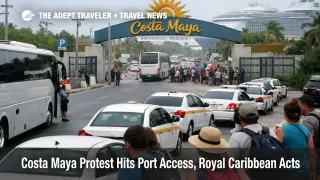
Costa Maya, Mexico cruisers should plan for tighter port day margins after a protest in Mahahual disrupted access around the Costa Maya cruise pier, a reminder that local community actions can create real excursion and transport friction even when ships still call. The immediate change for passengers is not a canceled itinerary, it is higher odds of stop and go access for taxis, tour buses, and excursion staging near the port entrance on affected days. Royal Caribbean moved quickly afterward to publicly reaffirm commitments to the local community, including an announced investment tied to road infrastructure in Nuevo Mahahual.
The traveler takeaway is simple, Costa Maya remains a working cruise call, but the failure mode shifts from "the ship skipped the port" to "your tour timing got squeezed." That is when missed meeting points, delayed departures from the pier area, and late returns become the real risk, especially for independent excursions that run long distances inland.
Costa Maya Cruise Port Protest: What Changed for Travelers
Reporting from local and cruise industry outlets describes a protest that blocked, or constrained, access near the Costa Maya pier while multiple ships were in port, with residents seeking attention to basic public services and infrastructure in nearby communities, including Nuevo Mahahual. In practical terms, that kind of access action hits the exact choke point cruise passengers rely on, the road and pedestrian flow between the pier complex, the taxi and tour staging area, and the first outbound routes toward beaches, ruins, and inland attractions.
Royal Caribbean's response, as published in its press center, was to announce a "significant investment" to rehabilitate key roads in Nuevo Mahahual, framing it as part of a longer term partnership with the local community. For travelers, the key signal is not the politics, it is that the cruise line itself treated the protest as an operational and reputational risk worth addressing publicly, which usually means the company wants to reduce repeat disruption at the access points passengers actually use.
Which Costa Maya Itineraries Are Most Exposed
The highest exposure group is anyone planning a long, rigid day away from the port footprint, especially independent tours to inland sites where return timing already has less slack. A protest that slows bus dispatch, reroutes taxis, or changes where vehicles can stage can eat your buffer before you ever leave Mahahual, Mexico, and that lost time often does not come back.
Families and groups on separate bookings carry extra risk because they are more likely to split across different tours, return times, and transport modes. The operational consequence is that a "normal" all aboard cushion can quietly shrink, which raises the odds of someone sprinting a pier at the end of the day, or abandoning a planned stop to make the ship.
Travelers who want the lowest stress option should treat this like any port access volatility story, ship sponsored excursions tend to have more built in coordination when access points get messy, even if they are not immune to delay. If you want a comparable example of how a single access constraint can ripple into passenger timing and decision stress, see Puerto Vallarta Airport Roadblocks Disrupt Hotel Transfers and Cape Liberty Blizzard Delays Royal Caribbean Sailingv for the same pattern in different systems, the constraint is outside your control, so buffers and safer routing win.
What Passengers Should Do to Reduce Missed Excursion Risk
Start with a tighter timing posture than you would use on a routine Costa Maya day. Plan to be back in the port area earlier than your usual comfort level, and avoid stacking too many fixed time commitments into one day, especially if your tour depends on a single bus departure window from the pier. If your ship offers official shuttles or clearly defined meeting points, use them, because ad hoc pickup plans are the first thing to break when access is constrained.
Use a simple decision threshold for independent excursions. If your plan takes you far inland, involves multiple stops, or relies on a single operator with no redundancy, rebook to a shorter radius option unless you can tolerate cutting the day short without financial pain. The tradeoff is paying more for a ship tour, or a nearer activity, versus protecting your all aboard margin when dispatch timing and routing are less predictable.
Over the next 24 to 72 hours before your call, monitor for three signals. First, ship and port advisories about where vehicles will stage, because small changes in pickup geometry can add big delays. Second, whether cruise line updates reference "operational impacts" or "delayed tours," because that is the clearest passenger facing indicator that access friction is back. Third, if you see on the ground access constraints developing, treat that as a cue to stay closer to the pier area and prioritize an early return rather than trying to squeeze in one more stop.
Why This Protest Can Translate Into Port Day Friction
Costa Maya's passenger experience depends on a narrow set of access corridors and staging zones. When a protest targets the port entrance, or adjacent approaches, it does not need to stop ships from docking to change outcomes for travelers. The first order effect is slower dispatch and unpredictable routing for taxis and excursion buses, plus confusion about where to meet and how long it will take to clear the immediate pier area.
The second order ripple is timing stress that shows up later, delayed outbound departures compress the day, then the return wave becomes more concentrated, and concentrated returns raise the odds of long lines at security checkpoints, late pier arrivals, and missed last tender windows if the ship is not alongside. Even when everything "works," it often works with less slack, which is why travelers feel the disruption most at the end of the day.
Royal Caribbean's road investment announcement matters because it indicates the company is trying to reduce the underlying friction points that can fuel repeat conflict, especially around basic infrastructure in nearby communities. Whether that resolves local concerns is not a traveler decision, but it is a practical indicator that the port access problem is being treated as something that can be managed through visible commitments, not ignored.
Sources
- ROYAL CARIBBEAN ANNOUNCES SIGNIFICANT INVESTMENT TO IMPROVE ROAD INFRASTRUCTURE IN NUEVO MAHAHUAL
- Two dozen settlers block Mahahual cruise ship pier in protest
- Royal Caribbean's Perfect Day Mexico Project Faces Protest and Court Ordered Halt
- Royal Caribbean takes action after protest at Costa Maya cruise port