

Heathrow SAS Strike Hits Flights December 26, 2025
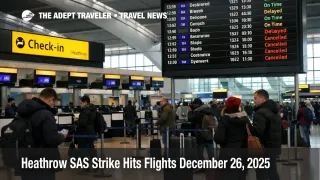
Strike pressure involving Scandinavian Airlines Services cabin crew is still centered on London Heathrow Airport (LHR) on December 26, 2025, keeping cancellation and delay risk elevated for SAS passengers. Travelers connecting through Heathrow, or trying to protect same day onward plans, are the most exposed because a single cancellation can force a full itinerary rebuild when holiday seats are tight. The practical next step is to decide early whether you will wait for your booked flight, rebook to a different carrier or routing, or switch to a different London airport while there is still inventory.
The key London change today is at London Luton Airport (LTN). Planned strikes by check in and baggage handling staff that had been expected to run from December 26 through December 29 have been called off after an improved pay offer, which reduces the odds that Luton fails purely on ground handling during that period. That de escalation reshapes reroute logic because Luton becomes a more realistic plan B for travelers who can actually secure an alternate flight and manage the transfer, even while Heathrow remains the higher risk node for SAS operations.
Who Is Affected
The most directly affected travelers are those booked on SAS services in and out of Heathrow, especially flights tied to Scandinavian gateways that feed onward connections. When cabin crew availability drops, the disruption often shows up as short notice cancellations or consolidations, and the recovery problem becomes seat inventory, not just delay minutes.
A second group at risk is anyone using Heathrow as a self made connection point, particularly on separate tickets, or anyone planning a same day airport switch across London. Even if your own flight is not SAS, displaced passengers can push up rebooking competition, service desk queues, and last minute hotel demand in the Heathrow corridor when travelers get rolled to December 27.
Luton travelers get a relative improvement, not a guarantee. Calling off the baggage and check in strikes lowers the chance of systemic bag drop and turnaround failures at Luton across December 26 to 29, but it does not automatically create seats, nor does it eliminate weather, ATC delays, or the normal holiday surge that can still stretch curbside, security, and road access.
What Travelers Should Do
Start with an immediate status check and a hard cutoff. If you are flying SAS from Heathrow today, verify operating status in your airline app, and do not treat earlier day performance as predictive, because late breaking cancellations are common in labor disruption. If you have a protected connection, ask what the airline can confirm now, not what might be possible later, and screenshot any rebooking options you are offered so you can act fast if inventory starts to disappear.
Use a decision threshold for switching airports rather than defaulting to London wide improvisation. Switching from Heathrow to another airport only helps if you can secure a confirmed seat on an alternate routing and still arrive before your trip becomes pointless. If your trip breaks with an arrival more than about 2 to 4 hours late, or if you have a time locked anchor like a cruise embarkation, a tour departure, or a paid event check in, you should treat any cancellation notice or major schedule change as a trigger to move immediately, even if the new routing is longer.
Over the next 24 to 72 hours, monitor the signals that tell you whether the system is stabilizing or degrading. Watch for repeated cancellations on the same city pairs, expanding rebooking windows, and shrinking same day seat availability, because those are the indicators that a December 26 problem becomes a December 27 lodging and ground transport problem. If you pivot to Luton because the baggage strike was called off, monitor your carrier's check in guidance and baggage cutoffs anyway, because a last minute reroute often increases bag misrouting risk, and carry on only travel is still the simplest way to reduce failure modes.
How It Works
A cabin crew walkout affects flight operations because each departure must meet minimum staffing requirements, and substitutes are difficult to position on short notice when aircraft and crews are already scheduled tightly for peak periods. At a capacity constrained hub like Heathrow, one canceled rotation is not just one flight, it is an aircraft and crew plan that has to be rebuilt while the airport continues operating near its limits, which is why the disruption often presents as uneven cancellations and compressed rebooking waves instead of a smooth, predictable delay pattern.
The Luton change matters because it removes one major friction point from the London system. When baggage and check in staffing is under strike pressure, even flights that operate can fail operationally through missed bag cutoffs, slow turns, and passenger processing queues that trigger missed departures, so calling the action off lowers the odds of those specific failure modes for carriers depending on that outsourced ground handling. That does not fix Heathrow's SAS crew constraint, but it does improve the reliability of a subset of alternate routings that travelers might use to exit London on short notice.
Second order ripple is where travelers feel the cost. As SAS passengers compete for replacement seats, pressure can spread into other carriers' loads, into hotel inventory near Heathrow when people get rolled to the next day, and into surface transport as travelers attempt cross London airport switches at the same time. For Scandinavia bound itineraries, disruptions at Heathrow can also cascade into missed connections at the Nordic hubs, because the first missed sector can break the rest of the day's protected routing options during holiday peaks.
For broader context and prior guidance on this specific labor action, see Heathrow SAS Cabin Crew Strike Dec 24 and 26.