

Flight Delays and Airport Impacts: January 13, 2026
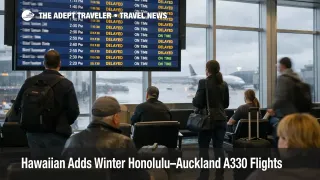
The FAA is flagging localized weather as the main driver of delay risk across several high volume hubs on January 13, 2026, led by low clouds in the Pacific Northwest and gusty winds in the Northeast corridor. Travelers moving through Seattle-Tacoma International Airport (SEA), General Edward Lawrence Logan International Airport (BOS), the New York City area airports, Philadelphia International Airport (PHL), and the Washington, DC area airports are the most exposed to knock on delays that can spread well beyond the original weather footprint. The smart play is to protect connections, watch for airline waivers, and make earlier switches while seats still exist if your itinerary depends on a tight hub transfer.
The change for travelers is straightforward, U.S. flight delays January 13, 2026 risk rises because low ceilings and winds can force arrival rate cuts at hubs that anchor national connection banks. The FAA Daily Air Traffic Report highlights low clouds in Seattle during the morning, and gusty winds later in the day for Boston, the New York area, Philadelphia, and Washington area hubs. FAA Command Center planning also lists terminal constraints for BOS, New York TRACON, and Philadelphia on wind, plus SEA on low ceilings, while noting possible arrival delays in Miami and Fort Lauderdale later in the planning window.
Several of the affected airports may look normal early, which is typical before demand peaks. As banks build in the afternoon and evening, wind driven runway configuration changes and spacing requirements can reduce acceptance rates, and the FAA can respond with metering that holds flights at their origin gates, stretches connection times, and compresses arrival waves. Even when cancellations are limited, that kind of metering can still break same day plans, especially when the only remaining options are later departures that depend on the same constrained hubs.
For context on why these hub slowdowns can ripple nationwide even when the weather looks regional, see U.S. Air Traffic Control Privatization: Reality Check.
Who Is Affected
Travelers departing from, arriving into, or connecting through Seattle-Tacoma International Airport (SEA) face the highest morning sensitivity, because low ceilings tend to reduce arrival and departure throughput quickly once the airport needs more conservative spacing. That matters most for itineraries that connect onward to long haul flights, cruise embarkations, or time bound events, because even a modest airborne or gate delay can wipe out connection buffers.
In the Northeast and Mid Atlantic, travelers transiting General Edward Lawrence Logan International Airport (BOS), Newark Liberty International Airport (EWR), John F. Kennedy International Airport (JFK), LaGuardia Airport (LGA), Philadelphia International Airport (PHL), Baltimore/Washington International Thurgood Marshall Airport (BWI), Ronald Reagan Washington National Airport (DCA), and Washington Dulles International Airport (IAD) carry elevated afternoon and evening risk when gusty winds constrain the busiest arrival and departure banks. The practical exposure is not just at the airport with the wind, it is also at your departure point, because the FAA can delay flights before pushback to prevent airborne holding and to keep arrival flows manageable.
Even if your itinerary avoids those hubs directly, you can still get pulled in via network effects. When Boston, New York area, Philadelphia, and Washington area flows slow, airlines often protect the system by swapping aircraft routings, stretching turn times, and repositioning crews, which can push delays into later flights in unrelated regions. That secondary effect is why last flights of the day, separate ticket self transfers, and tight airport to hotel timing are consistently the most fragile patterns on wind days.
What Travelers Should Do
If you are flying today through Seattle, Boston, New York, Philadelphia, or the Washington area, start by checking your airline app for waiver language before you leave for the airport, then look at your inbound aircraft and crew continuity. If you see your aircraft arriving late into your origin, treat that as an early warning that the rest of your day may slide, and shift to an earlier departure or a more conservative connection while inventory is still available.
Use a clear decision threshold for rebooking versus waiting. If your planned connection is under 90 minutes in the New York or Washington area banks, or under 75 minutes in Boston or Philadelphia, assume it is breakable once flow restrictions start, and move proactively if an alternative exists that arrives earlier. If you are already inside the airport and your first leg is delayed, prioritize options that avoid the most wind exposed hubs, even if that means a longer overall travel time, because the goal is to escape the constrained arrival stream, not to chase a theoretically shorter itinerary that depends on the same bottleneck.
Over the next 24 to 72 hours, monitor whether the FAA shifts from general caution to active traffic management initiatives, and whether airlines publish broader waivers for the Northeast corridor. Also keep an eye on runway and ramp constraints that can slow recovery even when weather improves, which is why the ongoing runway and airfield constraint landscape covered in FAA Runway Closures at US Airports Raise Delay Risk still matters on otherwise routine days. If you have a must arrive commitment, add a buffer night, or pick an itinerary that lands earlier in the day, because late day recovery is where wind driven compression most often turns into overnight disruption.
How It Works
Low clouds and gusty winds do not need to shut an airport to create meaningful disruption. The first order effect is capacity, when ceilings drop or winds force a less efficient runway configuration, the airport must increase spacing and reduce acceptance rates to maintain safety and stability. That can quickly trigger flow management responses, including holding aircraft at their departure gates, metering arrival streams, and spacing departures to match the reduced arrival capacity at the destination.
The second order effect is propagation through the network. Once a hub arrival bank is compressed, the aircraft that were supposed to turn and depart on schedule leave late, and crews that were built around tight duty windows lose their margin. That ripple shows up as later flight delays, missed connections, and rebookings that concentrate demand onto fewer remaining flights, which in turn raises the probability of overnight stays in gateway cities and missed downstream plans such as cruise embarkations, meetings, and prepaid tours.
The third order effect is on the ground layer that travelers often underestimate. When arrivals bunch into fewer time windows, baggage delivery, curbside pickup, rideshare availability, and hotel shuttle timing all become less predictable. That is why a day that starts with "on time" boards can still end with missed dinner reservations, late check ins, and broken same day ground transfer plans, especially in the Northeast corridor where many itineraries depend on tightly timed connections and onward ground transport.
Sources
- FAA Daily Air Traffic Report
- Current Operations Plan Advisory, ATCSCC
- Seattle-Tacoma International Airport (SEA) Real-time Status
- General Edward Lawrence Logan International Airport (BOS) Real-time Status
- Newark Liberty International Airport (EWR) Real-time Status
- John F. Kennedy International Airport (JFK) Real-time Status
- LaGuardia Airport (LGA) Real-time Status
- Philadelphia International Airport (PHL) Real-time Status
- Ronald Reagan Washington National Airport (DCA) Real-time Status
- Washington Dulles International Airport (IAD) Real-time Status
- Baltimore/Washington International Thurgood Marshall Airport (BWI) Status
- Miami International Airport (MIA) Status
- Fort Lauderdale/Hollywood International Airport (FLL) Real-time Status