

Storm Fern Brooklyn Cruise Embarkation Delays
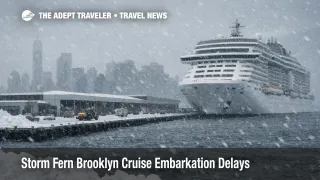
Storm conditions tied to Winter Storm Fern are pushing cruise embarkation risk beyond flights and into same day access to the Brooklyn Cruise Terminal in Red Hook. The immediate problem is not only snowfall, it is the cascade of road reliability, transit slowdowns, and compressed arrival windows that can put travelers on the wrong side of a strict final check in time. For sailings scheduled out of Brooklyn on January 25, 2026, including MSC Meraviglia, travelers should plan for slower trips to the terminal, longer queues once onsite, and a higher chance that embarkation processes bottleneck in the afternoon.
The operational risk is highest when your plan depends on tight timing, especially a morning flight into the New York region, a long car transfer from New Jersey, Long Island, or upstate corridors, or a train to subway handoff that assumes normal headways. Even if the ship ultimately sails close to schedule, the traveler failure mode is arriving late to the terminal, not the ship departing early.
Who Is Affected
Embarking passengers departing from the Brooklyn Cruise Terminal on January 25, 2026, face the most direct risk, because the terminal's cutoff policies can be unforgiving when security screening and check in close. MSC Meraviglia is listed on the Brooklyn Cruise Terminal schedule for that date, which makes Red Hook access and terminal throughput the core planning constraint, not the itinerary itself.
Travelers coming in by air the same day are exposed twice, first by cancellations and rolling delays across major hubs, then by the ground transfer segment that becomes slower and less predictable as snow accumulates. If a flight is canceled, the rebooked option often lands later, and that later arrival pushes more people into the same narrow check in window, which increases terminal congestion for everyone.
Local and regional ground travelers are also exposed. New York City issued a hazardous travel advisory covering January 25 and January 26, and the MTA published storm service changes for the same period, which is the kind of combination that tends to produce uneven service, longer waits, and slower door to door travel times, especially for the last mile into Red Hook.
Finally, the ship's approach and docking window can be affected by marine conditions. The National Weather Service marine forecast for New York Harbor included hazardous wind conditions, which can slow pilotage, docking, and turnaround timing, and that can compress boarding and baggage handling if the ship arrives later than planned.
What Travelers Should Do
Act as if you need to be at the terminal earlier than your original plan, and build buffers into every segment. If you are flying, do not rely on same day connections when earlier routings exist, and treat a hotel night near the port as risk control, not a luxury. If you are driving or taking rail into the city, assume slower surface streets into Red Hook, and keep a backup route and a backup arrival mode ready in case bridges, tunnels, or local streets become unreliable.
Set a clear decision threshold for rebooking versus waiting. If your latest realistic arrival time at the terminal puts you inside the cruise line's final check in window with little margin, you should pivot early, either by moving to an earlier flight, arriving the prior night, or switching to ground transport that avoids tight transfers. Waiting for one more update is usually the wrong move once you are within a few hours of the cutoff, because the last mile failures, traffic, transit gaps, and queue time at the terminal are the parts you cannot "make up" at the end.
Over the next 24 to 72 hours, monitor three things with discipline. First, watch official city and transit updates that affect road and subway reliability. Second, watch your airline's rolling cancellations and rebooking options if you are still trying to get into the region. Third, watch your cruise line's guest advisory messages for any change to arrival guidance, boarding windows, or documentation requirements, and keep screenshots of every change, every delay, and every expense you incur so travel insurance and claims have clean evidence.
Background
Winter storms break cruise embarkation days through a predictable chain. The first order disruption is weather itself, snow, ice, and reduced visibility, which degrades road friction and lowers safe driving speeds. That immediately impacts airport access, rideshare availability, and the reliability of transfers across bridges, tunnels, and local surface streets into Red Hook.
The second order ripple is schedule compression. When flights cancel and trains run on modified service, travelers shift into later arrival windows, and those arrivals stack at the terminal. Bag drop, security screening, and check in counters then become bottlenecks, and a terminal that can feel smooth on a normal day becomes a queueing system with steep penalties for late arrivals.
A third ripple hits the ship turnaround itself. Even when a cruise is not canceled, marine conditions such as gale force winds in New York Harbor can slow docking, delay disembarkation, and tighten the turnaround clock. That tends to increase stress on staffing, baggage flows, and boarding sequence, which is why travelers should plan as if both access and processing will be slower than usual.
If you also need flight focused tactics, see Winter Storm Fern US Flights, Waivers Expand Jan 23.
Sources
- NYC Emergency Management Issues a Hazardous Travel Advisory for Sunday, January 25 Until Monday, January 26
- MTA, Winter Storm Service Changes: January 25 to 26, 2026
- National Weather Service Marine Forecast, New York Harbor
- National Weather Service Marine Weather Message, Gale Watch Summary
- Brooklyn Cruise Terminal Schedule
- MSC Warns of Potential Delays in New York City
- More than 10,000 Flights Canceled as Massive Winter Storm Sweeps Across US
- Winter Storm Fern US Flights, Waivers Expand Jan 23