

Winter Storm Fern US Travel Disruptions Jan 25 to 26
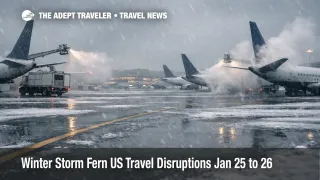
Winter Storm Fern is driving widespread U.S. travel disruption as snow, sleet, and especially freezing rain push airlines into heavy cancellations and irregular operations across multiple hub regions. Travelers are most exposed on January 25, 2026, and January 26, 2026, because the storm is not just reducing flight capacity, it is also slowing recovery through ice in the South and extreme cold behind the system. The practical move is to treat this as a proactive rebooking window, use published waivers early, and add buffers to both connections and ground transfers before conditions refreeze.
The Winter Storm Fern US travel shift is that cancellation volume is now large enough to break normal hub connectivity, meaning travelers can be delayed even when their home airport looks fine on radar. Aviation impacts are stacking because the FAA's national operations planning for January 25, 2026, anticipates significant impacts along the East Coast, the Midwest, and Texas, with multiple major hubs listed for possible ground stop and delay program activity as conditions evolve.
Who Is Affected
Travelers connecting through the biggest hubs are affected first, especially those moving through Dallas Fort Worth International Airport (DFW), Charlotte Douglas International Airport (CLT), Hartsfield Jackson Atlanta International Airport (ATL), Philadelphia International Airport (PHL), and the New York City area airports because cancellations at these nodes cascade into missed onward segments nationwide. Even if a traveler's origin and destination are outside the heaviest precipitation, their aircraft and crew rotations often still pass through constrained hubs, and that is how disruption spreads to the wider network.
Road and rail travelers are also in the blast radius, particularly where freezing rain produces glazing on bridges and secondary roads and then temperatures plunge, locking hazards in place. The National Weather Service briefing for north and central Georgia, for example, warned of major to extreme impacts from significant ice accumulation, gusty winds, and extreme cold behind the system, including dangerous travel and widespread power outage risk. That combination matters for air travelers because it can prevent staff from reaching airports, slow baggage and fueling operations, and disrupt the drive to and from terminals even when flights are still operating.
Travelers with hard arrival deadlines, cruise embarkations, prepaid tours, medical appointments, and same day business meetings are the group most likely to incur unrecoverable losses. When airlines pre cancel to protect tomorrow's operation, the remaining flights fill quickly, and rebooking competition rises sharply, especially for passengers on separate tickets or those relying on the last flight of the day.
What Travelers Should Do
If your trip touches the storm corridor, move now, not later. Confirm whether your itinerary is covered by a carrier waiver, then rebook before the best alternates disappear, and build slack into ground transfers by assuming road icing and refreezing will make airport access slower than normal. If you must travel, pack for an extended airport stay, keep essential medications in your personal item, and plan for checked baggage delays if ramp work pauses for safety.
Use a clear threshold for rebooking versus waiting. If your first flight is already delayed and your connection drops under 60 to 75 minutes at a hub, or if your hub is listed in the FAA operations plan window for possible ground stops or delay programs, rebooking is usually safer than hoping the system recovers in time. If you are on separate tickets, or you have a must arrive deadline, treat any meaningful freezing rain forecast at your origin, your hub, or your airport access corridor as a strong signal to shift travel to after the main event rather than trying to thread the needle.
Over the next 24 to 72 hours, monitor three layers that change fast during winter operations: local National Weather Service warnings for your counties, airline travel alerts for updated waiver dates and airport lists, and FAA system planning that signals when traffic management initiatives are likely to tighten. Also watch for power outage updates in your departure and arrival metros because outages can disrupt rideshare availability, hotel operations, and even airport staffing. If your flight is canceled and you decide not to travel, prioritize the refund option that fits your plan, then rebook when the network stabilizes instead of locking in a tight same day reroute.
How It Works
Winter storms disrupt travel through a mix of surface capacity loss and network fragility after the first cancellations. At the source, snow and ice reduce the number of arrivals an airport can safely accept per hour because runway braking action, visibility, and approach spacing become more conservative. On departures, deicing adds minutes per aircraft, and those minutes compound into gate congestion when multiple banks are trying to push at once.
Freezing rain is the operational wild card, particularly in the South and parts of the Mid Atlantic, because a thin glaze can shut down ramp activity for safety even when runways remain technically usable. The NWS Atlanta briefing highlights why this matters: significant ice plus gusty winds raises the probability of power outages and long duration hazardous conditions, and extreme cold behind the system prevents quick thawing, which slows the restart of normal ground operations.
Second order ripples are what most travelers experience. When a hub cancels a bank, aircraft are left out of position for later segments, crews run into duty limits, and the next day starts short on both planes and staff. The FAA then plans and, when needed, implements traffic management initiatives to meter flow into constrained regions, which can create departure delays from airports that look clear locally. That is why a traveler can see "on time" indicators early in the day while the system is already fragile, and why disruptions can persist after precipitation ends.
For continuity and local pattern matching, travelers can compare earlier Adept coverage in Winter Storm Fern US Flights, Waivers Expand Jan 23 and the hub delay posture baseline in Flight Delays and Airport Impacts: January 23, 2026.
Sources
- More than 10,000 flights canceled as massive winter storm sweeps across US
- Massive winter storm across the US brings frigid temperatures and widespread power outages
- Delta Air Lines urges travelers to rebook as winter storm threatens weekend flights
- ATCSCC ADVZY 006 DCC 01/25/2026 OPERATIONS PLAN
- January 24-25 2026 Winter Storm Special "Ice Storm" Weather Briefing
- ATL Airport Status
- BOS Airport Status
- National Airspace System Status Map
- Travel Alerts
- Closures, Cancellations As Epic Winter Storm Spreads East