

Milan Airport Ground Handling Walkout March 18, 2026
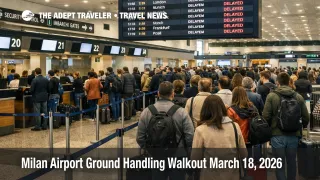
Milan airport ground handling walkout risk is back on the calendar for Wednesday, March 18, 2026, and it is the kind of disruption that breaks trips even when airplanes are ready to fly. Italy's transport strike listing shows 24 hour actions tied to Airport Handling and ALHA operations at Milan Malpensa Airport (MXP) and Milan Linate Airport (LIN), a setup that can slow check in support, ramp handling, and baggage flows across the day. Italy's aviation strike rules also create protected flight windows, but "operating" does not always mean "smooth," because ground handling constraints can still produce baggage backlogs and rolling delays.
The practical takeaway is simple. March 18 is a higher misconnect day through Milan, and it is a higher baggage risk day for anyone checking luggage, even if their flight number is not canceled.
Milan Airport Ground Handling Walkout: What Changed
The change is the date specific risk: a 24 hour ground handling walkout on March 18, 2026, aimed at staff tied to Airport Handling and ALHA at Milan's two main airports, with the official strike listing showing full day timing from 1200 a.m. to 1159 p.m. Ground handling is the set of jobs that turns an aircraft and its passengers around, baggage sorting and loading, ramp services, and the on the ground choreography that keeps departure banks from slipping. When that layer is constrained, the first visible symptom is often slower baggage delivery and longer departure delays that stack across the day.
This risk is distinct from air traffic control issues. Even if airspace is flowing normally, a ground handling pinch can still delay departures because aircraft sit longer at gates, bags move later, and crews and planes drift off schedule.
Which Milan Itineraries Are Most At Risk
The most exposed travelers are those connecting the same day through Malpensa or Linate, especially when the connection is short, or when the trip uses separate tickets that will not automatically protect onward travel. Business critical morning departures are also vulnerable because a small early slowdown can erase the buffer that makes the rest of the day workable.
Trips that depend on checked baggage are higher risk than carry on only travel because baggage systems are the easiest place for backlogs to compound. Travelers arriving in Milan for onward rail moves, meetings, or tours should treat baggage delivery time as variable on March 18, not a clockwork step.
There is also a layering effect on March 18. The same official listing includes a 4 hour work action from 100 p.m. to 500 p.m. for easyJet and ITA Airways personnel, which can add another disruption band even if you are not directly tied to the ground handling companies.
What Travelers Should Do Now
Start by choosing what you are protecting: arrival time or cost. If you must arrive in Milan, Italy, or depart it on March 18 with a hard deadline, the safer posture is to shift travel to Tuesday, March 17, or Thursday, March 19, because that removes you from the all day handling constraint that can create rolling delays. If moving days is not possible, favor carry on only packing, and build more connection slack than you normally would for Milan.
Use a blunt decision threshold for rerouting. If your itinerary includes a same day connection in Milan under 2 hours, or it is on separate tickets, treat March 18 as a reroute candidate now rather than a "wait and see" situation. The tradeoff is that early changes can cost more, but late changes tend to collide with limited seat inventory and hotel scarcity when many travelers are solving the same problem at once.
Monitor two official signals as the date approaches. First, watch your airline for schedule trims, rebooking options, and any waiver language. Second, use Italy's strike guidance to understand the protected flight windows, because flights scheduled inside those windows are more likely to operate, even if airport conditions remain slower than normal. If you are building a wider Italy positioning plan in March, this earlier rail disruption coverage shows how quickly misconnect risk can shift when transport labor actions change start times and service patterns: Italy Rail Strike 9:00 p.m. Start Raises Misconnect Risk.
Why Ground Handling Walkouts Create Baggage and Turnaround Delays
Ground handling is a throughput system. When staffing falls, the immediate bottleneck is bags and ramp tasks, and that bottleneck turns into longer gate occupancy and later departures. First order effects show up as delayed baggage delivery, slower baggage drop processing, and aircraft that are ready late because loading and dispatch steps take longer. Second order effects spread into the airline network when those late aircraft are supposed to fly multiple legs the same day, which can shift delays into later airports that have nothing to do with Milan.
Protected flight windows help keep some flights operating during Italian aviation strikes, but they do not eliminate the handling math. A flight can depart in a protected window and still arrive late if the aircraft left its prior station behind schedule, or if baggage and ground services created a departure queue earlier in the day.