

Italy March 18 Flight Strikes Hit Malpensa, easyJet
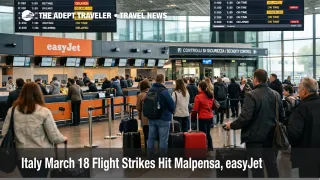
Italy's March 18 aviation disruption picture is now specific enough for travelers to act on. Italy's transport ministry strike database lists a 24 hour walkout by ALHA staff at Milan Malpensa Airport (MXP), a four hour national strike by easyJet flight crew from 100 p.m. to 500 p.m. local time, and two 24 hour local actions at Brescia Montichiari Airport (VBS) covering GDA Handling and MH24 staff. For most travelers, the practical move is to stop treating Wednesday, March 18, 2026 as a normal connection day if the itinerary depends on Malpensa, easyJet, or same day onward ground transfers in northern Italy.
The traveler advantage is that this is no longer a vague strike watch. Italy's civil aviation rules still protect departures in the 700 a.m. to 1000 a.m. and 600 p.m. to 900 p.m. local windows, but protected does not mean friction free when handling or crew availability is under pressure. Travelers with flexible tickets should be looking now at earlier departures, later same day departures, or overnighting in Milan rather than gambling on a tight midday plan.
Italy March 18 Flight Strikes: What Changed
What changed since the broader Europe disruption wave earlier this week is that Italy now has a named, dated, officially listed aviation lineup for March 18. The government database shows ALHA staff at Malpensa on a full day action, easyJet flying crew on a national four hour action from 100 p.m. to 500 p.m., and separate full day handling related actions at Brescia Montichiari. That matters because this is a mixed disruption pattern, not a single airport closure or a single airline issue.
Malpensa is the biggest traveler decision point in this package because a full day ground services action can slow check in, baggage, and aircraft turnarounds even when a flight is technically scheduled to operate. The easyJet action adds a second layer, because it is national in scope and sits directly across a common midday and afternoon short haul departure bank. Brescia Montichiari is a smaller airport in traveler terms, but the local actions still matter for cargo linked operations, repositioning, and niche itineraries tied to the airport's handling ecosystem.
Which Travelers Face the Most Disruption
The highest risk group is travelers booked on easyJet flights touching Italy on the afternoon of March 18, especially anyone connecting onward the same day by rail, road, or long haul departure from Milan. A four hour crew strike does not automatically wipe out the whole day, but it can break aircraft rotations, which means a late inbound flight can still damage an evening itinerary even after the official strike window ends.
Travelers using Milan Malpensa for long haul departures should also treat the day carefully, even if the long haul leg is outside the core easyJet window. Ground handling pressure can delay check in, bag acceptance, gate processing, and aircraft turnaround, and those frictions are exactly how a labor action spreads from one airport function into missed long haul connections, hotel changes, and overnight reaccommodation. This is the same reason Milan Airport Ground Handling Walkout March 18, 2026 mattered before the easyJet element sharpened the wider picture.
The lower risk group is travelers on departures fully inside Italy's protected windows, especially nonstop trips with no checked bags and no same day onward commitments. Even there, lower risk is not the same as no risk. Protected windows keep scheduled flights operating, but they do not guarantee normal queue times or normal baggage recovery speed.
What Travelers Should Do Now
The cleanest move is proactive simplification. If your trip touches Malpensa on March 18, avoid tight self transfers, avoid separate ticket connections, and build more ground time between flight arrival and rail or car pickup. If you are on easyJet in the 100 p.m. to 500 p.m. period, or on a rotation likely to be touched by that period, check now for free change options or same day alternatives that depart in the protected morning band.
Rebooking makes the most sense when the trip has a hard deadline, such as a cruise embarkation, a long haul departure on a separate ticket, a wedding, or a same day business meeting. Waiting makes more sense when the ticket is protected on one booking, the arrival time is not mission critical, and the airline still shows solid alternatives later that evening or the next morning. Travelers who went through similar Italy disruption earlier this year will recognize the pattern from Italy Airport Strike Disrupts Flights January 9, 2026, where the central problem was not only cancellations, but the way handling delays poisoned normal airport flow.
Over the next 48 to 72 hours, watch for airline schedule trims, waiver policies, and any publication of guaranteed or canceled flight lists. ENAC says detailed operating information should be requested from the carrier, which in practice means travelers should rely on the airline app, email, and manage booking tools rather than assuming airport websites will tell the full story first.
Why the Disruption Spreads Beyond One Airport
The mechanism here is straightforward. Ground staff actions hit the airport processes that let an aircraft depart on time, bag drop, ramp work, baggage loading, boarding support, and turnaround coordination. Flight crew actions hit the airline schedule directly. When both are present in the same market on the same day, the result is not just isolated cancellations, but a wider reliability problem across the operating bank.
Italy's minimum service framework softens that risk, but it does not erase it. ENAC says departures in the 700 a.m. to 1000 a.m. and 600 p.m. to 900 p.m. local windows must be operated, and sector rules also require a reduced level of service outside those bands. That helps preserve some movement, but it also concentrates demand into the flights that still run, which can leave rebooking inventories thin and airport lines longer than travelers expect.
That is why this matters beyond Malpensa itself. First order, check in, baggage, crew coverage, and turnarounds come under pressure. Second order, same day city breaks get shorter, long haul repositioning gets riskier, and hotel demand around Milan can rise as travelers decide it is cheaper to sleep near the airport than to lose the whole itinerary. For March 18, that is the real traveler decision, not whether every flight will be canceled, but whether the remaining itinerary still has enough slack to survive the day.