

Washington ATC Outage Delays DCA, IAD, BWI, RIC
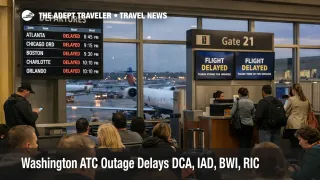
Washington ATC outage delays became a real traveler problem on Friday, March 13, 2026, when an overheated circuit board and strong chemical smell at the Potomac Consolidated Terminal RADAR Approach Control facility, Potomac TRACON, triggered a ground stop affecting Ronald Reagan Washington National Airport (DCA), Washington Dulles International Airport (IAD), Baltimore/Washington International Thurgood Marshall Airport (BWI), and Richmond International Airport (RIC). The stop was later lifted, but the damage to the evening operation was already done, with Reuters reporting more than 800 disrupted flights and delays of up to three hours or more at the Washington area airports. For travelers, the main point is simple, Friday's event was not just a DCA story, and some Saturday morning trips can still inherit late aircraft, late crews, and thinner recovery options.
The change from Adept Traveler's earlier shutdown and spring break strain coverage is that this disruption came from a live air traffic control equipment failure inside a facility that manages a wide regional slice of airspace, not just from staffing pressure or checkpoint slowdowns. That distinction matters because U.S. Shutdown Hits TSA Lines at Spring Break Airports is mainly about getting passengers to the gate, while this event hit the flight operation itself after passengers were already ticketed and aircraft were already in motion.
Washington ATC Outage Delays: What Changed
The FAA disruption centered on Potomac TRACON in Warrenton, Virginia, a regional approach control facility that handles the Baltimore Washington and Richmond Charlottesville areas. The FAA says that facility controls the airspace over BWI, Reagan, Dulles, Richmond, and many other airports, which is why one building problem quickly became a multi airport problem. Transportation Secretary Sean Duffy said firefighters found no danger to personnel, the source was traced to an overheated circuit board, and the board was replaced.
By the time flights started moving again, the evening banks were already out of sequence. Reuters reported that Reagan saw 34 percent of flights delayed, BWI about 30 percent, and Dulles more than 260 disrupted flights. Local reporting also indicated that even after the ground stop was lifted, delay programs stretched late into the night, which is exactly the kind of pattern that can spill into first wave departures the next morning.
Which Travelers Face the Most Disruption
DCA passengers likely took the hardest immediate hit because Reagan runs a dense, high frequency schedule with less slack than Dulles. When a core approach facility breaks during an evening bank, short haul business and leisure itineraries can unravel quickly because there are fewer later departures left to absorb missed slots. BWI and Dulles had larger absolute disruption counts in some measures, but Reagan's percentage delay figure suggests its operation was hit especially hard.
The most exposed travelers now are same day connectors, passengers booked on the first departures Saturday, and anyone using Washington area airports as repositioning points for spring break trips. A delayed late inbound on Friday can become a late aircraft assignment on Saturday morning. A crew that times out or mispositions can strip resilience from the first bank. That is why a technical stop that lasts only a few hours can still produce next day misses, especially during a heavy demand period already flagged in Flight Delays and Airport Impacts: March 13 and the wider spring break surge discussed in United Spring Break Forecast Raises Airport Stress.
Richmond matters here even though it is smaller. Potomac TRACON officially covers the Richmond side of the corridor too, so travelers who assume the issue was only a Washington problem may underread their exposure. That is especially relevant for passengers connecting from Richmond into larger hubs later in the day.
What Travelers Should Do Now
For Saturday travelers, the smart move is to check the inbound aircraft and the operating status of your specific flight before leaving for the airport, not just the departure board. If your plane ended Friday night badly delayed into DCA, IAD, BWI, or RIC, your morning departure can slip even if the airport itself looks calmer by sunrise.
Rebook early if you are protecting something expensive or hard to replace, such as an international long haul connection, a cruise embarkation, a wedding, or a spring break rental with fixed arrival timing. Wait and monitor if you are on a simple domestic nonstop with multiple same day alternatives. The tradeoff is straightforward, waiting may preserve flexibility or avoid unnecessary change fees, but early action can save the itinerary when Saturday's first bank starts inheriting Friday night's disorder.
At the airport, travelers should budget for both airside and landside friction. Friday's ATC problem was separate from the broader TSA and shutdown strain, which means even a recovering flight schedule does not guarantee a smooth curb to gate experience. Anyone flying out of the Washington region during the spring break push should still leave more buffer than usual.
How the Disruption Spreads Through Travel
A TRACON is the layer between local airport towers and the wider en route system. In plain language, it sequences arrivals and departures through busy terminal airspace. When Potomac TRACON is impaired, the problem does not stay inside one terminal or one airline. It spreads across multiple airports because those fields share the same approach control backbone. That is the key mechanism travelers need to understand.
The first order effect is obvious, aircraft cannot depart or arrive normally, so flights are held, diverted, or slowed. The second order effect is where the traveler pain grows, aircraft and crews end up in the wrong places, later banks lose timing integrity, and same day reaccommodation gets tighter because multiple airports are competing for the same recovery resources at once. That systems pressure is also why broader structural debates, including staffing and modernization covered in U.S. Air Traffic Control Privatization: Reality Check, matter to travelers even when the immediate trigger is one failed component.
What is still not fully clear is whether any Saturday morning airports will publish stronger traveler guidance tied specifically to this outage. What is confirmed is narrower but still useful, the faulty circuit board was replaced, controllers were cleared to return, and operations resumed late Friday. What travelers should monitor now is whether airlines start the day with delayed first departures, aircraft swaps, or thinning same day connection options in the Washington corridor.
Sources
- US FAA lifts ground stop at the three Washington-area airports
- A strong chemical smell forces a 1-hour flight halt at 4 major DC-area airports
- Potomac Consolidated TRACON (PCT)
- Ground stop at 3 DC-area airports lifted after halting due to strong chemical smell
- Flight Delays and Airport Impacts: March 13
- U.S. Shutdown Hits TSA Lines at Spring Break Airports
- United Spring Break Forecast Raises Airport Stress
- U.S. Air Traffic Control Privatization: Reality Check