

U.S. Shutdown Airport Risk Grows This Weekend
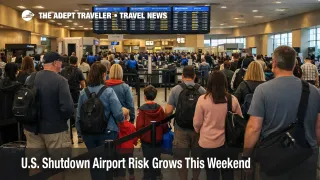
Spring break travelers in the United States are heading into a more fragile airport weekend, not a routine busy one. The U.S. shutdown airport risk has shifted from long but manageable security lines to a broader warning that delays at major hubs may worsen and some smaller airports could face checkpoint shutdowns if staffing slips further. Transportation Secretary Sean Duffy said this week that conditions could deteriorate as TSA officers approach another missed paycheck on March 27, 2026, while Reuters reported national absences still near 10 percent on March 20, far above normal. Travelers with Sunday departures, tight domestic connections, cruise embarkations, or international onward flights should add more airport buffer now.
U.S. Shutdown Airport Risk: What Changed
What changed is the warning threshold. Earlier shutdown coverage focused on rising absenteeism and longer security lines. The current shift is that federal officials are now publicly saying the problem can move beyond checkpoint delay into outright service loss at some small airports, while Duffy is warning that what travelers have seen so far may look mild compared with what could follow another missed paycheck next week. Reuters reported that TSA absences were 9.8 percent nationally on Thursday, March 20, after hitting 10.2 percent on Wednesday, and that about 366 officers had already quit during the shutdown.
The biggest staffing gaps are not spread evenly. Reuters has reported especially high absence levels at major hubs including Hartsfield Jackson Atlanta International Airport (ATL), John F. Kennedy International Airport (JFK), and George Bush Intercontinental Airport (IAH), while earlier reporting also pointed to severe strain in New Orleans and Houston as long lines built. That matters because large hubs can sometimes consolidate checkpoints and keep moving, even if badly, while smaller airports with only one screening point have less room to absorb callouts. In an earlier Adept Traveler article, TSA Shutdown Delays Deepen at U.S. Airports tracked the line risk as March 27 approached. In another, U.S. Shutdown Threatens Smaller Airport Closures documented how the warning widened from delay to possible airport access loss.
Which Travelers Face The Most Weekend Exposure
The most exposed travelers are not just those at the worst airports. Families checking bags, passengers without TSA PreCheck, travelers departing on the first bank of morning flights, and anyone relying on a short same day connection face the highest practical risk. AP reported that wait times have become highly unpredictable during the shutdown, and airlines are generally not required to protect a passenger who misses a flight because the security line itself was too long.
Sunday is the sharper decision point for leisure travelers returning from spring break, because a high volume day collides with weaker staffing resilience. The first order effect is straightforward, longer security waits, checkpoint consolidation, and slower recovery when one screening lane falls behind. The second order effect is where itineraries break. A missed domestic departure can turn into a lost cruise embarkation, a blown long haul connection, a car rental extension, or an extra hotel night in an expensive market where rebooking space is already tight. Reuters also reported that 171 million airline passengers are expected during this spring travel period, up 4 percent from last year, which leaves less slack in the system when staffing falters.
Smaller airports deserve more attention than they usually get in weekend planning. Large airports can sometimes reduce operations by closing some checkpoints and rerouting passengers. Smaller commercial airports often do not have that redundancy. Reuters reported that federal officials warned some of those airports may have to shut if callout rates keep rising, which turns a line problem into a departure access problem. For travelers originating at a regional airport, that is the threshold to watch most closely.
What Travelers Should Do Before Sunday And March 27
Travelers flying this weekend should act as if normal airport timing no longer applies. Arrive materially earlier than you would for the same route in a normal spring break period, especially if you are checking bags, traveling with children, or starting at a large hub with known staffing strain. If your trip includes an international onward flight, a cruise sailing, or a paid tour that cannot absorb a late arrival, the safer move is to protect the itinerary now rather than assume the line will clear.
The next decision threshold is whether your booking can survive a missed first flight. If the answer is no, rebooking to an earlier departure, shifting to a larger airport with more frequency, or moving the trip to the night before can make more sense than gambling on a same day save. Travelers starting from smaller airports should watch for signs of checkpoint strain, reduced screening hours, or abrupt staffing notices, because those are the signals that the problem is moving from delay to possible temporary closure. Airport Delays is the most relevant internal topic page to monitor alongside airline alerts.
March 27, 2026 is the other hard date in this story. Duffy said conditions are likely to worsen as TSA officers approach another missed paycheck, and multiple reports now tie absenteeism and resignations directly to the pay lapse. Travelers flying from March 27 into the following weekend should treat that window as potentially worse than the current one, even if some airports look manageable on Saturday.
Why The Risk Can Worsen Quickly Next Week
The mechanism is simple, but the consequences spread fast. TSA officers are legally required to work, but they are not immune to financial pressure. Reuters and AP both report that officers have been working without pay during the shutdown, hundreds have already quit, and airports have started offering food support, vouchers, and other assistance because the strain is no longer theoretical. When enough officers call out at one hub, lines lengthen. When that repeats across several hubs on a heavy travel day, aircraft depart without some booked passengers, reaccommodation pools shrink, and later flights lose the flexibility that normally helps the system recover.
What happens next depends less on rhetoric than on staffing and whether Congress breaks the Department of Homeland Security funding impasse. AP reported another failed Senate effort on March 21, with lawmakers still divided over whether to fund TSA separately or resolve the broader Homeland Security fight. Until that changes, the main signal for travelers is not a political headline on its own. It is whether absence rates stay near 10 percent nationally, whether the worst hit airports keep running far above that, and whether regional airports begin trimming or suspending screening operations. That is why the U.S. shutdown airport risk remains a live planning problem through this weekend and into the March 27 pay deadline.
Sources
- US says airport delays will worsen as shutdown continues
- Some small US airports may have to shut due to TSA absences, official says
- US official warns small airports could soon shut over TSA absences
- US says 10% of airport security officers did not work Sunday amid shutdown
- Airports rush to feed unpaid TSA workers as belts tighten
- TSA officers are quitting as a funding standoff forces them to staff airports without pay
- Bill to fund Homeland Security fails again as concern grows about airport lines