

U.S. Gulf Travel Advisories Tighten as Risks Spread
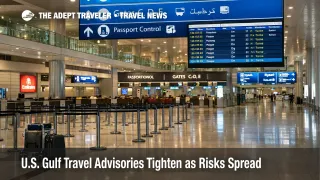
Gulf travel advisories for Bahrain, Kuwait, Oman, Qatar, Saudi Arabia, and the United Arab Emirates were refreshed or reaffirmed through March 2026 as the U.S. Department of State warned Americans worldwide, especially in the Middle East, to exercise increased caution. For travelers, the practical change is not just the color on the map. It is that several Gulf destinations now carry active armed conflict language, some posts have reduced embassy operations, and official guidance is telling Americans to watch for periodic airspace disruption before they travel.
Gulf Travel Advisories: What Changed
The broad story is more complicated than a simple mass upgrade. Saudi Arabia, Oman, Kuwait, Bahrain, Qatar, and the United Arab Emirates are all currently at Level 3, Reconsider Travel, but some of those March updates were summary refreshes rather than brand new level jumps. Saudi Arabia's advisory was updated on March 13, 2026, Oman's on March 13, Kuwait's on March 9, Bahrain's on March 2, Qatar's on March 2, and the UAE's on March 3. Iran remains at Level 4, Do Not Travel, with the State Department warning of terrorism, civil unrest, kidnapping, arbitrary detention, torture, and wrongful detention.
What makes this more serious than a routine advisory refresh is the language now attached to several destinations. Bahrain's advisory says the March 2, 2026 ordered departure of non emergency U.S. government employees followed safety risks tied to armed conflict and flight disruption. Qatar and the UAE advisories also reference the March 2 departures of non emergency U.S. personnel and the threat of armed conflict, while Kuwait's advisory notes that the U.S. Embassy in Kuwait suspended operations, including routine consular services, on March 5, 2026.
Which Travelers Face the Highest Exposure
The most exposed travelers are Americans booking discretionary trips into the Gulf, business travelers assuming a quick in and out visit will stay routine, and long haul passengers using Gulf hubs as connection points rather than final destinations. A Level 3 advisory does not automatically mean flights stop or hotels close. It does mean the U.S. government sees serious enough risk that travelers should reconsider going, especially when a trip depends on stable airspace, normal consular support, and easy onward rebooking.
The main operational risk is that security problems do not stay confined to one city. First order effects include embassy staffing changes, airspace interruptions, and direct security threats. Second order effects hit travelers through delayed or canceled connections, reduced same day rebooking options, hotel changes near major hubs, and more expensive replacement tickets when capacity tightens across the region. The State Department's March 22, 2026 Worldwide Caution explicitly warns that periodic airspace closures may cause travel disruptions and says U.S. diplomatic facilities, including outside the Middle East, have been targeted.
The risk picture also remains uneven outside the Gulf. Iran is still Level 4. Iraq, Afghanistan, Haiti, Libya, Russia, Somalia, Sudan, Ukraine, and Yemen also remain at Level 4 on the State Department travel advisory list. Mexico stays at Level 2 overall, but the U.S. applies stricter state level restrictions in parts of the country, including strong limits in Sinaloa and route specific restrictions in parts of Jalisco, while Baja California is not broadly under a Level 3 or Level 4 statewide designation.
What Travelers Should Do Before Departure
Travelers with non essential Gulf trips should read the destination specific advisory, not just the global map, before making the final go or no go decision. The key threshold is whether your trip depends on a fragile connection, embassy support, or fast commercial recovery if flights slip. If the answer is yes, waiting can protect the itinerary better than forcing the trip through a volatile operating window. In an earlier Adept Traveler article, State Department Worldwide Alert Raises Travel Caution already showed how a global warning can turn into a same day planning problem once local embassy notices and airspace changes start stacking.
Anyone who still needs to travel should enroll in the Smart Traveler Enrollment Program before departure and monitor the nearest U.S. embassy or consulate. STEP is free and sends destination specific alerts and updates from U.S. embassies and consulates abroad. That matters more when advisory text references reduced embassy staffing, suspended routine services, or a changing security environment.
Travelers already in the region should avoid treating Level 3 as background noise. Keep routing flexible, avoid tight onward connections, confirm hotel and airport transfer plans the day before movement, and build extra buffer for any trip that crosses a Gulf hub. In an earlier Adept Traveler article, Qatar Depart Now Advisory Keeps Exit Pressure High the practical warning was that limited consular support and constrained commercial options can become an exit problem faster than many travelers expect.
Why the Warnings Broadened, and What Happens Next
The mechanism is straightforward. The State Department is no longer warning only about country specific background risks such as terrorism or crime. It is tying several Gulf advisories directly to armed conflict, Iranian drone and missile threats, and disruption to commercial aviation. Saudi Arabia's advisory specifically warns of Iranian drone and missile targeting of American interests, while Qatar and the UAE advisories note armed conflict related risk and aviation safety concerns tied to regional tensions.
What happens next depends less on whether another map color changes and more on whether embassies restore normal operations, airspace stays stable, and airlines keep enough frequency in the market to absorb disruptions. Until that improves, Gulf travel advisories should be read as live operating conditions, not a checkbox before booking. Travelers should expect more advisory text refreshes, local security alerts, and route specific flight friction before they should expect a clear return to routine regional travel planning. In an earlier Adept Traveler article, Middle East Evacuations: Global Rescue Scales Up the pressure point had already shifted from simple caution to active contingency planning.
Sources
- Worldwide Caution, March 22, 2026, Travel.State.Gov
- Travel Advisories Overview, Travel.State.Gov
- Saudi Arabia Travel Advisory, March 13, 2026
- Oman Travel Advisory, March 13, 2026
- Kuwait Travel Advisory, March 9, 2026
- Bahrain Travel Advisory, March 2, 2026
- Qatar Travel Advisory, March 2, 2026
- United Arab Emirates Travel Advisory, March 3, 2026
- Iran Travel Advisory
- Mexico Travel Advisory
- STEP, Smart Traveler Enrollment Program