

Iran Port Blockade Raises Gulf Travel Risk
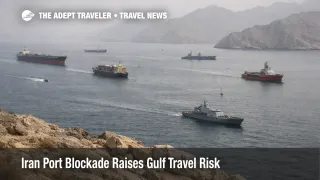
Iran port blockade risk widened on April 13, 2026, when U.S. Central Command said it would begin enforcing a blockade at 2:00 p.m. GMT against vessels entering or leaving Iranian ports and coastal areas. For travelers, the immediate issue is not a blanket shutdown of all Gulf shipping, because neutral transit through the Strait of Hormuz to non Iranian destinations remains allowed. The bigger change is that a maritime war risk has moved from fuel warning and air route tension into an active enforcement phase, which can push up operating costs, weaken confidence in Gulf cruise and ferry planning, and make contingency nights around major hub cities more valuable.
Iran Port Blockade: What Changed
What changed is the enforcement line. CENTCOM said on April 12 that it would blockade all maritime traffic entering and exiting Iranian ports starting April 13 at 10:00 a.m. ET, and Reuters later reported that the note to seafarers covered the Gulf of Oman and Arabian Sea east of the Strait of Hormuz, applying to vessels of any flag. The same notice said unauthorized entry or departure could lead to interception, diversion, or capture, while humanitarian cargo could still move subject to inspection. That makes this an operational escalation, not just another diplomatic threat.
The practical distinction matters. Ships transiting the Strait of Hormuz to or from non Iranian ports are not supposed to be impeded under the U.S. announcement, so Dubai, Abu Dhabi, Doha, Manama, Muscat, and Kuwaiti port access are not automatically closed by this step alone. But Reuters also reported that tanker traffic was already sparse, that oil traders expected tighter supply, and that Iran had threatened retaliation against Gulf neighbor ports if its own ports were threatened. That means a traveler does not need a closed airport or closed cruise terminal to feel the effect. A rise in security risk, insurance cost, fuel cost, or carrier caution can degrade the system before a visible closure appears.
Which Gulf Travelers Are Most Exposed
The most exposed travelers are those whose plans depend on maritime or Gulf gateway resilience rather than only on one flight segment. That includes cruise passengers embarking from Gulf ports, ferry users, offshore workers and contractors moving through regional ports, travelers building self rescue plans around mixed air and sea options, and passengers connecting through Gulf hubs whose itineraries already have little slack. If retaliation risk broadens, hotel demand near hub airports can tighten first as airlines, crews, and stranded travelers protect onward options with overnight stays.
A second exposed group is summer long haul travelers who are not going anywhere near Iran. In an earlier Adept Traveler article, Europe Jet Fuel Shortage Threatens Summer Flights, the site noted airport warnings that Europe could face a systemic jet fuel crunch within weeks if Hormuz flows did not recover. In another, Travel Bankruptcy Risk Rises if Fuel Stress Lasts Into Summer, the site outlined how sustained fuel pressure can shift from fare pain into weaker schedule resilience. This blockade does not prove that wider airline disruption is inevitable, but it does harden the fuel and cost pathway that can eventually cut frequencies, raise surcharges, and thin out backup capacity.
What Travelers Should Do Now
Travelers with Gulf departures, cruise embarkations, ferry segments, or complex hub connections in the next 72 hours should add buffer time and stop assuming a same day recovery will be easy. The right immediate move is not panic rebooking, because non Iranian transit is still formally allowed, but plans that depend on perfect timing now deserve extra slack. An added overnight near the departure hub is worth more than usual when maritime tension can spill into ground transport, crew positioning, or irregular operations with little warning.
The main decision threshold is whether your itinerary relies on one fragile recovery path. Rebook sooner rather than later if you are tied to a single cruise embarkation window, a once daily long haul connection, an onward border move, or a separate ticket that would collapse if one leg slips. Waiting is more defensible on dense trunk routes through major hubs where airlines still have multiple same day or next day options. Travelers should also watch for three signals before departure, carrier notices that cite security or operational review, widening fuel surcharge or fare moves, and official warnings about Gulf port or airport security rather than only Iranian waters.
How the Risk Could Spread Next
What happens next depends less on the legal wording of the blockade than on whether the conflict spreads operationally. Reuters reported that Britain refused to support the blockade and said its effort remained focused on reopening the strait, while China urged restraint and warned that disruption in this corridor cuts against broader international interests. That matters because the next phase may not be a single dramatic closure. It may be a slower pressure chain, higher insurance and fuel costs, more cautious vessel routing, weaker carrier confidence, and sharper stress on flights and cruises that already sit close to the margin.
For travelers, the warning signs are specific. A deterioration from this point would look like retaliation threats turning into action against Gulf neighbor ports, more ships refusing the corridor, fresh carrier suspensions, or airport and cruise guidance shifting from monitoring language to operational restrictions. If those signals do not broaden, Iran port blockade risk may remain concentrated around Iranian maritime access and fuel pricing. If they do broaden, Gulf travel risk will move from a specialist shipping story into a wider booking and disruption story across flights, cruises, ferries, and hotel contingency planning. That is the threshold to monitor now.
Sources
- U.S. to Blockade Ships Entering or Exiting Iranian Ports
- US military to enforce blockade in Gulf of Oman, Arabian Sea, note to seafarers
- What does a US naval blockade of Iran mean for oil flows?
- Iran threatens to retaliate against Gulf ports for US blockade
- UK will not back blockade of Strait of Hormuz, PM Starmer says
- China says Strait of Hormuz blockade against global interests, urges restraint