

Europe EES Border Delays Push Airlines To Seek Pause
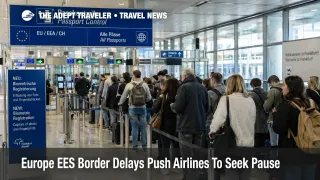
Europe EES border delays have moved from a planning warning to a live airport timing problem, and the pressure is now strong enough that airline and airport groups are openly asking Brussels for wider suspension powers. The Entry Exit System became fully operational across Schengen on April 10, 2026, ending manual passport stamping for eligible non EU short stay travelers and requiring biometric processing at the external border. Since then, airport and airline groups have reported delays, missed flights, and long queues, while the European Commission has continued to frame the system as a major border security milestone. For travelers, the practical takeaway is simple, first Schengen entry points now need more time, more buffer, and less reliance on tight same day onward plans.
Europe EES Border Delays: What Changed
What changed on April 10 was not the legal concept of EES, but the end of the six month progressive rollout. The European Commission says the system is now fully operational across all Schengen countries, records entries and exits digitally, collects facial images and fingerprints for eligible non EU short stay travelers, and has replaced passport stamping at external border crossing points. The official goal is tighter overstay tracking, better fraud detection, and eventually more efficient border processing.
The problem is that live airport operations are not matching the smoother throughput the system was meant to support. On April 10, ACI EUROPE and Airlines for Europe said the first day of full operations was marked by passenger disruption, delays, and missed flights, and they called for immediate additional flexibility from the European Commission and member states. Industry concern did not start last weekend. In February, ACI EUROPE, A4E, and IATA had already warned that delays of up to two hours were being seen during the rollout phase, and that summer waits could reach four hours or more without corrective action on staffing, technology, and border automation.
That makes the current dispute bigger than a bad launch weekend. It is becoming a throughput argument between Brussels, which is defending a security system now fully in place, and airport and airline operators, which say the current border process can break flight operations when traffic banks hit at the wrong time. Euronews and TravelPulse both reported that A4E escalated its language on April 14, calling three hour border queues a systemic failure and urging Brussels to allow full or partial suspension through the end of summer where needed.
Which Travelers Face the Most Exposure
The highest exposure still sits with non EU short stay travelers making their first Schengen entry under full EES conditions. That is where the biometric enrollment step is most likely to add time, and where a border queue can damage the rest of the itinerary. Repeat travelers may still face delays, but the first entry point remains the main failure point because it is where full registration usually happens.
Air travelers are most exposed when the first Schengen airport is followed by a short onward connection, a separate ticket, a same day rail leg, a cruise embarkation, or a timed hotel or tour plan. A border line that adds 45 to 90 minutes does not just create inconvenience, it can erase the margin for bag recheck, terminal transfers, airport rail departures, and local ground transport. In Milan, one example cited in recent coverage involved passengers missing an EasyJet flight after long border queues, which shows how fast a border process problem can turn into a full itinerary rebuild.
The broader catch is that this is not only an airport arrivals issue. In an earlier Adept Traveler article, Europe EES Border Queue Risk Hardens Before April 10, the warning was that different transport modes feel EES at different points in the trip. Airport passengers often feel it on arrival, while some UK based Channel crossings feel it before departure. In an earlier Adept Traveler article, Europe EES Boarding Checks Tighten on April 10, the added risk was carrier side document checks for some passengers before boarding. The result is a wider zone of failure than a normal passport queue.
What Travelers Should Do Now
Travelers should treat the first Schengen entry point as a protected segment, not a routine formality. That means arriving earlier for departures that involve pre departure border controls, avoiding short separate ticket connections after arrival into Schengen, and reconsidering same day onward moves that leave no slack. If the trip depends on a fixed onward segment, an overnight at the gateway is now safer than assuming the border line will behave normally.
The decision threshold is blunt. Keep the current itinerary if the onward segment is protected, the first Schengen crossing is the only timed step that day, or a late arrival will not break the trip. Rework it if the plan stacks a first entry queue onto a separate ticket flight, Eurostar departure, ferry cutoff, cruise boarding window, or a nonrefundable timed booking. Europe EES border delays are most damaging when one slow checkpoint cascades into multiple missed services and extra hotel costs.
Travelers should also watch operator specific guidance, not only broad EU messaging. Airports, airlines, rail operators, and Channel operators know where the bottleneck sits in their own process flow, while official EU statements remain focused on system goals and overall deployment status. The most useful signals over the next several weeks will be airport queue reports, carrier advisories, and any formal clarification from Brussels on when partial or full suspension can still be used at overloaded crossings.
Why the Rollout Is Struggling, and What Happens Next
The mechanism behind the disruption is not mysterious. EES adds biometric capture and verification to a border process that already becomes fragile when arrivals bunch, staffing is thin, or kiosks and border automation do not work cleanly. ACI EUROPE, A4E, and IATA said in February that three issues were compounding delays, chronic understaffing at border control, unresolved technology issues, and limited uptake of the Frontex pre registration app by Schengen states. Those are structural operational problems, not just passenger unfamiliarity.
The next policy fight is over flexibility. Member states do have suspension tools in exceptional circumstances, and the Council has said that after the progressive start ends, a border crossing point may still suspend EES for six hours in exceptional cases. What remains contested is how usable that flexibility really is during repeated summer peaks, and whether the Commission will endorse a broader operational reading of those powers. That is why the current airline demand is not simply for patience, it is for clearer permission to pause the system when queues become excessive.
For now, there is no sign that Brussels is about to roll the system back. The Commission's April 10 messaging emphasized that EES is fully operational, has already logged more than 52 million entries and exits, and remains central to its border security strategy. So the likely near term path is not cancellation, but a messy stretch of local fixes, partial relief measures, and continued pressure from airports and airlines before the peak summer season. In an earlier Adept Traveler article, Schengen EES Goes Fully Live on April 10, the main warning was that April 10 would harden a queue risk. What changed this week is that the queue risk has become an airline operations and missed flight story.
Sources
- Entry/Exit System (EES) Is Fully Operational, European Commission
- Entry/Exit System (EES), European Commission
- How the Entry/Exit System Works, Council of the European Union
- Entry Exit System Disruptions on First Day of Full Operations Affirm Yet Again the Immediate Need for Flexibility, ACI EUROPE
- Airports and Airlines Call for Immediate Schengen Entry/Exit System Review Ahead of Peak Summer Months Traffic, ACI EUROPE
- 'A Systemic Failure': How the New Entry/Exit System Brought Chaos to EU Border Control, Euronews
- European Airline Groups Seek EES Suspension Amid "Systemic Failure", TravelPulse