

Spain Tower Strike Hits Canary And Regional Flights
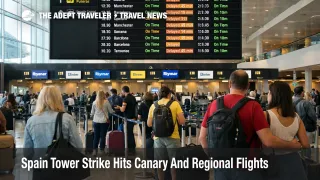
Spain tower strike flights moved from warning to active disruption on April 17, 2026, when USCA and CCOO began an indefinite walkout at SAERCO managed towers and Spain's Transport Ministry imposed minimum service rules for the affected public transport flights. For travelers, this is not a full shutdown story. It is a capacity and reliability story at smaller but strategically important airports where every airline depends on tower throughput. The practical consequence is more delays, some cancellations, and thinner recovery options when one late flight breaks the rest of the day.
Spain Tower Strike Flights: What Changed
What changed is activation. In an earlier Adept Traveler article, Spain Air Traffic Control Labor Rift Raises New Strike Threat, the dispute was still a strike threat. Now the action is live, and the Transport Ministry's current minimum service order confirms protected public transport flight percentages through May 31, 2026, for Lanzarote Airport (ACE), Fuerteventura Airport (FUE), La Palma Airport (SPC), El Hierro Airport (VDE), Seville Airport (SVQ), Jerez Airport (XRY), Vigo Airport (VGO), A Coruña Airport (LCG), and Madrid Cuatro Vientos Airport.
Those minimum services reduce the odds of a total collapse, but they do not mean normal operations. The ministry order protects 66 percent to 83 percent of domestic public service and non peninsular routes at the named airports in April and May, about 51 percent to 59 percent of international routes and longer mainland routes, and only about 34 percent to 36 percent of shorter mainland routes under five hours where ground transport is a realistic substitute. That leaves clear room for schedule thinning, delay accumulation, and fewer backup options when flights fall out of position.
Which Airports And Itineraries Are Most Exposed
The biggest traveler exposure sits in the Canary Islands and at smaller mainland gateways where air service is harder to replace cleanly. Lanzarote, Fuerteventura, La Palma, and El Hierro matter because island flights are not just leisure traffic, they are the transport backbone for onward domestic and international itineraries. Seville and Jerez matter because they feed Andalusia city breaks, cruise joins, and surface transfers. Vigo and A Coruña matter even more over the next few weeks because the ministry says Santiago de Compostela Airport will close from April 23 to May 27, 2026, which is expected to push extra traffic into those two Galician alternatives.
The ministry's traveler facing commercial airport list does not currently include La Gomera, even though broader reporting around SAERCO's tower network has referenced additional non commercial or less relevant towers in the wider dispute. For this article, the operative airport set is the one in the ministry's minimum service resolution, because that is the clearest public document for flights travelers are actually booking and flying.
The most fragile patterns next are island hops, same day onward connections, and trips that depend on one narrow departure bank. First order, tower action can slow departures and arrivals for every carrier using the airport. Second order, that pushes missed inter island links, late car hire pickups, hotel no show risk, and missed cruise or tour joins, especially where there are only one or two usable later flights.
What Travelers Should Do Now
Travelers with flights touching these airports in the next several days should start by protecting the brittle parts of the trip. If a delay would break a cruise embarkation, event arrival, protected tour, or the last practical flight of the day, rebooking to an earlier departure or building an overnight buffer is the safer move than waiting for the airport day to unravel. If the trip is nonstop, flexible, and served several times daily, waiting can still make sense.
For Canary itineraries, the cleanest risk reduction is to avoid tight same day connections and avoid treating the last flight as good enough. For Seville, Jerez, Vigo, and A Coruña, the right buffer is not only airport time, but surface time after arrival, because a late flight can still break rail, cruise, driver, and hotel timing even when the flight eventually operates. Travelers should also watch airline alerts and airport notices directly, because a minimum service order protects part of the schedule, not their specific booking.
Passenger rights still matter if a flight is canceled. Airlines should offer rerouting or a refund, plus duty of care where required, even though air traffic control strikes are often treated as extraordinary circumstances for compensation purposes. That makes record keeping more important, not less. Save the cancellation notice, boarding documents, and receipts if the disruption forces meals, transport, or an overnight stay.
Why Capacity Risk Can Spread Beyond The Tower
The mechanism is simple. Tower control is the gatekeeper for local departures and arrivals, so even partial staffing pressure can cap how many aircraft move in and out each hour. Spain's ministry also notes that SAERCO must feed service restrictions and capacity limits to the network manager, ENAIRE, and publish NOTAMs when needed. That means the disruption can spread beyond the tower itself into slot timing, aircraft rotations, and the next leg an incoming plane was supposed to fly.
The unions say the strike stems from structural staffing cuts, fatigue, canceled leave, short notice roster changes, and unresolved negotiations, not a one off scheduling clash. Whether or not the parties settle quickly, the current ministry order runs through May 31, 2026, and would need renewal if the strike continues past that date. For travelers, the next decision point is not whether all flights stop. It is whether Spain tower strike flights keep eroding schedule resilience at airports that already have limited slack.
Sources
- Resoluciones de servicios mínimos
- Resolución por la que se determinan los servicios mínimos de los servicios públicos esenciales para la comunidad a mantener en SAERCO
- USCA y CCOO convocan huelga indefinida en SAERCO por recortes de plantilla y riesgos para la seguridad operacional
- Spain Air Traffic Control Labor Rift Raises New Strike Threat