

Greece Taxi Strike And Roadblocks Disrupt Airport Access
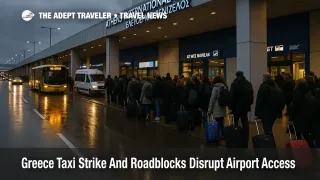
Travelers moving through Greece taxi strike airport access corridors on December 2 and 3, 2025 now face a two day gap in cab service, because the Panhellenic Federation of Taxi Owners has called a 48 hour nationwide warning strike that has pulled most taxis off the streets in cities from Athens, Greece to Thessaloniki, Greece. The stoppage coincides with expanding farmer tractor blockades that are closing sections of the Athens Thessaloniki National Road and other highways, especially around Larissa and the Malgara tolls. Travelers flying into major airports, boarding ferries, or driving long distances through central and northern Greece this week need backup transfer plans, longer buffers, and flexible routing.
The Greece taxi strike airport access problem means that normal taxi ranks at Athens International Airport (ATH), Thessaloniki Airport (SKG), and key ports will not be reliable through the end of December 3, and that farmer blockades are likely to keep disrupting major highway and border routes on many days through the rest of the month.
How The Taxi Strike Is Affecting Airports And Ports
Greek taxi unions are staging the 48 hour strike to protest new tax rules, mandatory transition to electric taxis in Athens and Thessaloniki from January 1, 2026, and what they describe as unfair competition from ride hailing style tourist vehicles. Union statements frame the stoppage as a warning action, but they also warn that more frequent or longer strikes could follow if the government does not adjust the regulations.
As of December 3, taxis remain off the road for most ordinary trips, with limited exemptions for emergencies, and Greek media emphasize that all other public transport is running normally. That keeps airports and ports technically accessible, but shifts heavy demand onto metro lines, suburban rail, airport buses, hotel shuttles, and prebooked private transfers.
At Athens International Airport, travelers can still reach the city center and Piraeus by metro, suburban rail, and express buses such as routes X95 to Syntagma and X96 to the coastal corridor. Authorities have reinforced some airport services for the strike, but morning and late afternoon waves are seeing long queues for tickets and boarding. Late night and very early morning arrivals face the tightest margins, because frequencies are lower and some lines do not run around the clock.
In Thessaloniki, city buses remain the primary backup when taxis are unavailable, linking the airport to the new railway station and intercity coach terminal. On islands and smaller ports, travelers may find that local buses and hotel or cruise line shuttles are the only realistic same day options, so it is crucial to confirm operating hours with accommodation or tour providers before arrival.
Farmer Blockades And Highway Disruptions
Farmer protests are a separate but overlapping risk. Angered by delayed European Union subsidies, alleged fraud in the payment system, and rising costs, farmers and livestock breeders have parked about 5,000 tractors on key roads in central and northern Greece, blocking or throttling traffic on important stretches of highway.
The highest impact point so far is the Athens Thessaloniki National Road near Larissa, where blockades at Nikaia and the nearby Malgara tolls have repeatedly shut at least one direction of the route and forced police to divert vehicles to secondary roads. Border traffic is also affected, with evictions and closures at crossings such as Evzoni reported in recent days.
Farmer leaders quoted by several outlets say they plan to maintain roadblocks through the Christmas period if necessary, and are coordinating new actions that include closing ports and airports in Crete from December 8. That could temporarily disrupt flights and ferries around Chania and Heraklion, adding an extra complication for island itineraries that already depend on fairly tight flight and ship connections.
For travelers, this means that even once taxis return to work after December 3, road conditions on major corridors may stay unpredictable, with rolling closures and slow moving convoys turning what would normally be a four hour drive into an all day journey.
Practical Alternatives For Airport And Port Transfers
During the taxi shutdown, public transport and prebooked transfers are the main tools for getting between airports, ports, and hotels. Travelers flying into Athens should treat the airport metro and suburban rail lines as the default, buying tickets at machines or staffed counters in the arrivals hall, then allowing extra time to navigate any queues on platforms and at exits. When luggage is heavy or mobility is limited, express buses that stop closer to curbside can be easier than wrestling suitcases through metro interchanges.
Hotel, cruise, and tour operator shuttles are particularly valuable in this window. Where a property offers a scheduled or on demand airport or port shuttle, travelers should secure seats as early as possible, and confirm pickup points and timing in writing. Licensed private transfer companies that operate outside the taxi framework can still run, but demand is high, so some will be fully booked for peak hours.
At Thessaloniki Airport, the city bus link to the center and intercity terminals may be crowded but remains the core option. Travelers heading onward toward Halkidiki, Mount Olympus, or northern borders should try to build at least a two to three hour buffer between flight arrival and any coach departure, then monitor operator announcements for delays triggered by blockades on approaches to the city.
On islands and in smaller regional cities, airport and port ground transport is often thin even in normal times. Visitors should assume that any remaining taxis will be reserved for medical and emergency uses during the strike, and should instead ask hotels to arrange shared shuttles, verify local bus timetables, or consider short walks where distances and safety allow.
Planning Road Trips And Connections Through December
The combined effect of taxi strikes and farmer blockades is most severe for travelers who rely on same day chains of transport, for example a morning flight into Athens followed by a same day rental car drive to northern Greece, or a long distance bus ride feeding into an evening ferry. Every extra link in a chain is another exposure to congestion, missed departures, or last minute rerouting.
Anyone planning long drives on the Athens Thessaloniki axis or across central Greece for the rest of December should check Greek language and English language news sites for updated lists of blockades, paying particular attention to Larissa, Malgara, Karditsa, and other protest hubs. Rental car users should favor itineraries that allow for flexibility, such as spending a night in Larissa or Thessaloniki instead of trying to go directly from Athens to a remote village in one day.
For cross border trips, the risk is that a seemingly short hop across a frontier becomes impossible when tractors close a checkpoint. Travelers heading toward North Macedonia via Evzoni, or toward Bulgaria and Turkey via other northern crossings, should have fallback routes via alternative border posts or consider rail and coach options where available.
Air and sea connections are also clustering around a wider European strike calendar. France experienced its own national strike on December 2, with transport disruptions centered on rail and public services, and Portugal is preparing for a December 11 general strike that is expected to ground most flights at major airports. Travelers building multi country itineraries should avoid stacking those high risk days with Greek protest peaks, and should consider moving critical flights, cruises, or rail journeys to less exposed dates where possible.
Background: Why These Disputes Matter For Travelers
Taxi drivers argue that the shift to mandatory electric vehicles in Athens and Thessaloniki, combined with tighter tax enforcement and the expansion of tourist vehicle licenses, will make their businesses unviable and push passengers toward a small number of large platforms. They see the December 2 to 3 strike as a way to show how dependent airport and port access remains on traditional cabs, especially for late night and early morning movements.
Farmers, for their part, are reacting to what they describe as years of delay and mismanagement in EU subsidy payments, capped by a fraud investigation that revealed millions of euros in illegal payments and renewed scrutiny of the agencies that distribute funds. Tractor blockades and symbolic closures of ports and airports are intended to keep pressure on the government ahead of the holiday season, when both domestic and international travel flows are strongest.
For travelers, the immediate takeaway is simple. Taxis will be scarce to nonexistent through December 3, and road blockades in central and northern Greece are likely to persist, with additional targeted actions in Crete from December 8 onward. Anyone flying, cruising, or driving through the country in the next few weeks should rely on confirmed public transport and shuttles, add generous time buffers, and keep itineraries flexible enough to absorb a missed connection or overnight stop without derailing the entire trip.
Sources
- Taxis in Greece on 48h nationwide strike, Dec 2 3
- Taxi strike today, December 2, drivers across Greece pull the handbrake
- Greek Taxi Drivers Announce 48 Hour Strike for December 2 3
- Farmers, breeders continue blockades with 5,000 tractors on Greece's roads and highways
- Farmers remain at the roadblocks today, they will also shut down ports
- Farmers remain at the roadblocks today, they will also shut down ports, there will be consequences, responds Chrysochoidis
- Farmers' blockades disrupt key roads across Greece
- Greek farmers clash with police amid protests over delayed EU subsidies
- Greek farmers block Athens motorway as fallout from illegal subsidies fraud continues
- Portugal expected to see flight cancellations on December 11