

Azul Handling Strike Spain Airports Through Dec 31
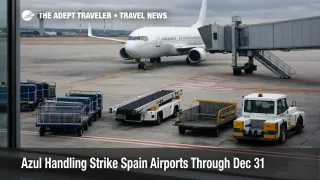
Azul Handling labor action is raising the risk of airport service disruption across Spain, with check in, baggage, and aircraft turnaround functions most exposed through 12/31/2025. Travelers flying Ryanair and other carriers that use Azul for ground services can see longer queues, late bags, and departure delays, especially when staffing falls during the most operationally sensitive parts of the day. The practical next step is to treat your departure as a "services may be constrained" day, adjust baggage strategy, and give your itinerary more time and more fallback options before you head to the airport.
The change that matters for trip planning is that the strike cadence is published, and Spain's minimum services framework is also published. UGT's notice set three daily disruption windows, 500 a.m. to 900 a.m., 1200 p.m. to 300 p.m., and 900 p.m. to 1159 p.m., and said that after the first August dates, actions continue on Wednesdays, Fridays, Saturdays, and Sundays through 12/31/2025. Spain's Transport Ministry, in a 11/27/2025 resolution, set minimum services percentages by route type and airport, noted that the percentages apply to each strike time band, and said the resolution stays in force through 01/31/2026.
<div class="notice related"><h4>Related</h4>
Spain Immigration Strike Threat Hits Appointments
Spain Tower Strike Hits Canary And Regional Flights
Spain Immigration Appointments Face April 21 Strike
Spain Airport Ground Strike Hits Easter Flights
Spain Airport Strike Risk Narrows, Easter Stays Exposed
That combination changes traveler decision making because it lets you aim for flights outside the most stressed windows, and it clarifies which kinds of routes are more likely to be prioritized for basic handling support. It also explains why disruption is rarely "just a check in problem," because late turns at the gate can snowball into aircraft and crew being out of position for later banks.
For related context and earlier traveler guidance on the rolling schedule, see Spain Airport Handling Strike Days Through December 31 and Ryanair handling strike in Spain is now daily, indefinite.
Who Is Affected
Passengers departing from, arriving to, or connecting through airports where Azul Handling provides passenger and ramp services are the most exposed. The Transport Ministry's minimum services resolution lists affected airports including Adolfo Suárez Madrid Barajas Airport (MAD), Josep Tarradellas Barcelona El Prat Airport (BCN), Málaga Costa del Sol Airport (AGP), Palma de Mallorca Airport (PMI), Alicante Elche Miguel Hernández Airport (ALC), Santiago Rosalía de Castro Airport (SCQ), Sevilla Airport (SVQ), Tenerife Sur Airport (TFS), Valencia Airport (VLC), Ibiza Airport (IBZ), Gran Canaria Airport (LPA), César Manrique Lanzarote Airport (ACE), Fuerteventura Airport (FUE), Asturias Airport (OVD), Seve Ballesteros Santander Airport (SDR), Girona Costa Brava Airport (GRO), Vigo Airport (VGO), Vitoria Airport (VIT), Zaragoza Airport (ZAZ), and Internacional Región de Murcia Airport (RMU).
Ryanair passengers are an obvious group to watch because the union notice frames the dispute around Ryanair's handling operation, but disruption can spill to any carrier sharing counters, gates, belt loaders, and ramp space when staffing is uneven. Travelers with checked bags, families who need counter help, passengers requiring special assistance, and anyone on a tight same day connection have less margin for error if bag drop slows or a departure pushes back.
Route type also changes the risk profile. The Transport Ministry's minimum services percentages are higher for domestic routes to or from non peninsular territories and certain public service obligation routes than for short peninsular routes where public ground transport is considered a reasonable alternative. That does not guarantee your specific flight runs smoothly, but it can influence how airlines sequence cancellations, consolidate flights, and prioritize limited handling capacity during recovery.
What Travelers Should Do
If you are flying during the remaining strike period, prioritize carry on only, and complete as much as possible in advance, including online check in, boarding passes, and seat selection where needed. Arrive earlier than you normally would, because strike driven slowdowns often show up first as queue growth, then as knock on delays at the gate, and then as late baggage on arrival. If you must check a bag, build buffer into onward trains, ferries, and hotel check ins, because a "flight on time" can still end with a long wait at baggage claim when handling is constrained.
Use decision thresholds that reflect your downside risk. If your itinerary includes a self transfer, a last flight of the day, or a same night cruise, tour, or event you cannot miss, it is usually rational to rebook to an earlier departure, move travel by one day, or route through an alternate hub before inventory tightens, even if it costs more. If you have a protected connection on one ticket and you can tolerate arriving later, it can be reasonable to wait for airline reaccommodation, but only if the alternative options remain available and you can handle a potential overnight.
Over the next 24 to 72 hours, monitor three things: your airline's day of operations messages, airport advisories, and any updated minimum services or strike notices that change the windows or coverage. If your flight is canceled or heavily delayed, you should still expect care and rerouting or refund options under EU style passenger rules, even when the disruption is labor related, and you should keep receipts for meals and lodging if the carrier instructs you to self arrange. Compensation eligibility can depend on the cause classification and the specifics of the disruption, so document what happened, and request written confirmation when possible.
Background
Ground handling is a hidden dependency that touches almost every step between "I have a ticket" and "the aircraft pushes back." When staffing drops, the first order effects typically show up at check in and bag drop, at gate processes like boarding, and on the ramp where baggage loading, equipment positioning, and turnaround sequencing happen. Even small delays at this layer can break the cadence that airlines rely on to keep aircraft rotating, because a late departure can miss its slot, land into a different gate, or arrive too late for the next crew or the next departure bank.
Those first order delays then propagate through at least two other layers of the travel system. In the air network, pushed departures can trigger missed onward connections, and can force airlines to protect crews from exceeding duty limits, which turns "delay" into "cancellation" later in the day, particularly during holiday peaks when schedules are tight and spare aircraft are limited. On the ground, disruption hits hotels, tours, and surface transfers because travelers arrive later than planned, and because reaccommodation can shift arrivals from daytime to late night, increasing missed check in windows, prepaid tickets, and ground transport costs.
Spain's minimum services approach is designed to reduce the worst system wide spillovers by requiring Azul Handling to support a defined share of protected air services by route type, airport, and time band. The Transport Ministry resolution also models a separate holiday period between 12/19 and 01/07, reflecting heavier loads, and notes that the resolution remains valid through 01/31/2026 unless the strike is called off earlier. In practice, that framework helps explain why some flights will still operate, why queues can still spike, and why recovery can take multiple rotations after a single disrupted departure bank.
Sources
- Resolución servicios mínimos huelga Azul Handling (27/11/2025) (PDF)
- UGT convoca huelga en el handling de Ryanair a partir del 15 de agosto
- UGT convoca huelga en el handling de Ryanair a partir del 15 de agosto (RTVE)
- Know your rights if you are affected by airline strikes (AESA)
- Air passenger rights (Your Europe)
- Home page | Adolfo Suárez Madrid Barajas Airport (Aena airport list and IATA codes)