

Portugal Ground Handling Strike Risks New Year Flights
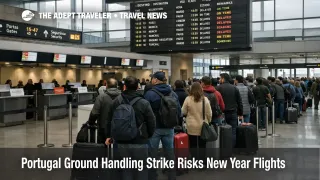
A strike notice covering airport ground handling in Portugal is set to span the New Year travel peak, raising the odds of long lines, delayed bags, and last minute schedule changes at the country's main gateways. Travelers flying via Humberto Delgado Airport (LIS), Francisco Sá Carneiro Airport (OPO), Faro Airport (FAO), Madeira Airport (FNC), or Porto Santo Airport (PXO) during the holiday window are the most exposed, especially on itineraries with tight connections or checked baggage. The practical move now is to reduce airport processing dependencies by traveling with carry on only where possible, arriving earlier than usual, and avoiding brittle same day connections.
The Portugal ground handling strike matters because it can slow the basic steps that keep flights turning, check in, baggage load, pushback support, and turnaround timing, even when the aircraft and crew are ready.
Ground handling sits underneath almost every visible part of the airport experience. When staffing or throughput drops, the first order effects show up as long check in queues, slow bag drops, and crowded gate areas as departures slip. The second order effects are where itineraries break, because late turns disrupt aircraft rotation plans, create crew duty time issues, and push delays into later banks that were supposed to be on time. Around New Year, that cascade is harder to absorb because flights are fuller, rebooking seats are scarcer, and hotels can sell out quickly in the cities travelers get stranded in.
Who Is Affected
Travelers departing from, arriving into, or connecting through Lisbon and Porto are likely to feel the broadest impact because both airports run dense banks of flights that depend on rapid baggage and ramp throughput. Leisure travelers with checked bags, business travelers trying to preserve same day meetings, and families traveling on the heaviest holiday departure days tend to face the longest processing pinch points when staffing is constrained. Travelers on separate tickets are especially exposed, because a missed first leg can leave the onward segment unprotected, even if the disruption cause is outside the airline's direct control.
Island travelers should treat the window as higher risk even when flights operate. Madeira and Porto Santo have fewer same day alternatives than mainland routes, so a delay that becomes a cancellation can quickly turn into an overnight hotel problem, plus a rebook the next day scramble. Even when minimum service rules keep core flights moving, baggage timing is often the weak link, and delayed bag delivery can disrupt onward plans, including cruises, tours, and prebooked transfers.
Airlines that depend heavily on the affected handler for check in and ramp services are more exposed to queue and turnaround problems than carriers with more diversified handling arrangements. The traveler takeaway is that the airport can remain open and flights can still depart, but the experience can degrade sharply, and airlines may prioritize certain departures, leaving other frequencies more likely to be consolidated, retimed, or canceled.
For a broader playbook on rerouting logic and traveler rights during European strike disruption, see Europe Airport Strikes: Compensation and Re-Routing Guide. For additional Portugal context from earlier in the strike cycle, see Portugal Ground Handling Strikes, Intermittent Delays and Portugal Airport Strikes To Disrupt Flights December 5 To 8.
What Travelers Should Do
Treat this disruption as an airport processing problem first, and a flight operations problem second. Build time into the front end of the journey, because the most common failure mode is spending longer than expected at check in and bag drop, then arriving at the gate already behind schedule. If you can travel with carry on only, that is the cleanest risk reducer, because it removes the baggage handoff steps that are most likely to bottleneck.
Use decision thresholds that match how brittle your itinerary is. If you have a connection under two hours through Lisbon or Porto, or you are self transferring on separate tickets, rebooking to a longer connection or a different day is usually the rational move, because a single queue can break the chain. If you have three hours or more, and your airline offers same day reaccommodation tools, it can be reasonable to hold, but only if you are not relying on the last flight of the day, and only if you have a realistic backup plan for lodging and ground transport.
Over the next 24 to 72 hours before departure, monitor airline app notifications for waivers and automatic rebooking, airport operator alerts for counter and terminal changes, and real time performance of your inbound aircraft rotation. A pattern of late arrivals on the inbound leg is an early warning that the outbound is at risk, even before a formal delay posts. If meaningful delays begin stacking on the morning of travel, act early rather than waiting for the airport to become saturated, because same day alternatives can disappear quickly around New Year.
Background
Ground handling includes the on the ground services that make a flight possible, passenger check in support, baggage and cargo processing, ramp services on the apron, and coordination that allows an aircraft to depart on time. When those functions are constrained, airports can look operational while the schedule quietly degrades, producing long lines, late baggage delivery, and knock on delays that spread to other cities as aircraft and crews miss their planned positions. Those ripples often reach beyond aviation into missed rail connections, lost timed entry tours, and unexpected hotel nights in Lisbon, Porto, and other hubs where reroutes strand passengers.
Minimum service decisions can shape what actually happens during a strike. An arbitration decision published by Portugal's Conselho Económico e Social sets out minimum service requirements for a broader strike period running into early January 2026, including full handling requirements for specific critical flights and service level rules that can keep some routes operating even as overall capacity and processing speed fall. For travelers, the key point is that "not a full shutdown" does not equal "normal operations," especially when holiday demand compresses recovery options.