

Jalisco, Puerto Vallarta Violence Travel Insurance Options
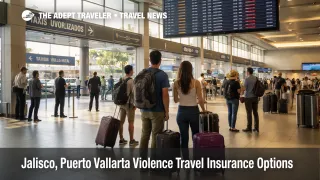
Violence and roadblocks across Jalisco, Mexico disrupted travel flows into and out of Puerto Vallarta, Mexico, and forced airlines to cancel or pause some operations serving the destination. Travelers are getting hit in three different time windows, people who were supposed to arrive or depart on February 22, 2026, or February 23, 2026, people with trips in the next few weeks who now do not want to go, and people already on the ground who cannot reliably reach Licenciado Gustavo Díaz Ordaz International Airport (PVR) or whose flights are canceled. The practical consequence is that "the resort is fine" and "I can move safely to the airport" can diverge fast, and travel insurance is one of the few tools that can turn that disruption into recoverable dollars instead of total loss.
The key change for planning is that Jalisco Puerto Vallarta travel insurance is not about predicting safety, it is about managing financial exposure when mobility collapses, flights cancel, and extra nights become unavoidable.
Who Is Affected
Travelers who were scheduled to travel yesterday, today, or in the immediate future are the easiest group for insurance to help, because the disruption tends to create clean triggers. Airline cancellations, missed connections, delayed departures that force an overnight, and documented inability to access the airport are the kinds of events that align with trip delay and trip interruption provisions, assuming you bought coverage before the situation was a known event under your policy. Reuters has reported airlines temporarily halting or canceling Puerto Vallarta service during the current flare up, which is exactly the kind of operational break that produces receipts and proof, the two things insurers demand.
Travelers scheduled to travel in the coming weeks but now uncomfortable sit in the gray zone, because discomfort is not the same as a covered peril. Standard trip cancellation benefits usually pay only for specific reasons listed in the contract, such as certain medical events, severe weather, or other enumerated triggers, and civil unrest language varies by plan. If you want the option to walk away because the risk feels unacceptable, Cancel For Any Reason is the product designed for that, but it is also the product with the most strings, it is typically an add on, it pays only a percentage, and it is often time sensitive, meaning you need to buy it soon after your initial trip payment.
Travelers currently in Puerto Vallarta who are unable to leave face the highest cash burn. When flights cancel and ground transport is disrupted, you are suddenly paying for extra hotel nights, meals, and rebooking, and you are doing it while the same seats you want are disappearing. This is where trip interruption and trip delay benefits can matter, but only if you treat the situation like a claim from the start, which means calling the assistance line, following their instructions, saving every receipt, and capturing proof of cancellation or delay. Government advisories have explicitly warned that the security situation can deteriorate rapidly, and they have described roadblocks and shelter in place guidance that can directly impact your ability to move.
What Travelers Should Do
If you were scheduled to travel yesterday, today, or in the next few days, stop improvising. First, confirm the airline status in writing, screenshot cancellations, delays, and any waiver notices, then call your travel insurer's assistance number before you rebook. The reason is simple, insurers reimburse what the contract allows, not what felt reasonable in the moment, and they will ask why you chose a specific reroute, hotel, or extra night.
If your trip is in the coming weeks and you are now uncomfortable, decide whether you need flexibility or certainty. If you need the freedom to cancel because you no longer want to go, read your policy for covered reasons and look specifically for a Cancel For Any Reason option, including the purchase deadline, the reimbursement percentage, and the rule that you may need to insure 100 percent of prepaid, nonrefundable trip cost. If you cannot add CFAR now, your realistic play is to push suppliers for refundable changes, shift dates, or convert to credits, because standard insurance may not treat "I do not like the risk" as a payable claim.
If you are currently there and unable to leave, treat mobility as the problem and cash preservation as the goal. Stay inside your hotel or resort footprint when official guidance says to limit movement, and coordinate airport transfers only through verified channels rather than street options, because the airport corridor is often the fragile link in these scenarios. Then build a 24 to 72 hour monitoring loop around airline operations, official advisories, and your hotel's on the ground guidance, because when service restarts it can restart unevenly, and the first flights out may be oversold. Insurance can help pay for eligible extra nights and rebooking, but it cannot fix a bad timing decision, and it cannot reimburse costs you cannot prove.
Background
Travel insurance is a contract that pays when a defined event happens, and the contract definitions matter more than the headline. Trip cancellation and trip interruption are the big levers. Cancellation is about getting some or all prepaid, nonrefundable costs back when you do not take the trip, interruption is about the cost of getting home or resuming travel after the trip has started. Trip delay is the smaller lever that often pays fixed daily amounts or capped reimbursements for meals and lodging when you are stuck, and medical coverage and assistance services are separate buckets that matter if you need treatment or coordinated care abroad.
The way the current Jalisco and Puerto Vallarta disruption propagates explains why insurance is useful. The first order effect is ground movement constraints, roadblocks, suspended taxi or rideshare service, and unpredictable access to the airport corridor, which can strand travelers even when the runway is open. The second order ripple is airline network recovery, when a carrier cancels rotations, aircraft and crews end up out of position, and the reaccommodation queue spills into later days and other routes, which raises misconnect risk and can force extra nights in hotels. The third order ripple hits hotels, tours, and transfers, because providers cannot guarantee pickups, itineraries break, and travelers stack up waiting for a safe, predictable window to move, which increases both price pressure and the probability of making a costly, rushed decision.
Cancel For Any Reason exists because standard policies are intentionally narrow. Insurers do not want to price open ended fear into every plan, so they sell flexibility separately, typically requiring early purchase, full trip cost coverage, and cancellation at least a set number of hours before departure, while reimbursing only part of the loss. If you want a single takeaway, it is this, buy flexibility before the world gets loud, because after the headlines, you are usually buying exclusions.
Sources
- Puerto Vallarta Violence Disrupts Flights Feb 22
- Puerto Vallarta Feb 22 Shelter In Place Travel Guidance
- Travel advice and advisories for Mexico
- Mexico Travel Advisory
- Air Canada, United Airlines halt flights to Mexico's Puerto Vallarta
- Cancel For Any Reason Coverage
- Cancel for Any Reason Insurance Provider