

London Heathrow: Virgin Atlantic Restarts Dubai, Riyadh
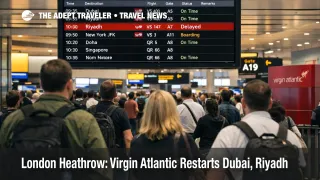
Virgin Atlantic Dubai Riyadh flights resume as of Tuesday, March 3, 2026, restoring service from London Heathrow Airport (LHR) to Dubai International Airport (DXB) and King Khalid International Airport (RUH). It is a real, traveler facing change because it creates new long haul capacity for rebooking out of London, even while parts of the region remain prone to short notice airspace and corridor constraints. The practical takeaway is that you can rebuild an itinerary through Heathrow again, but you should treat it as a limited recovery move, not a return to normal reliability.
This update matters now because travelers are making same day and next day decisions in a system where "operating as scheduled" can still mean longer routings, late arrivals, and occasional mid journey plan changes when flight paths are adjusted. The best use case is controlled rebooking onto a confirmed operating long haul, with enough buffer to tolerate a late arrival or an enforced overnight.
Virgin Atlantic Dubai Riyadh Flights Resume: What Changed
Virgin Atlantic said it has resumed London Heathrow services to Dubai and Riyadh, with flights planned to operate as scheduled from March 3, 2026. The airline framed the restart as guided by ongoing safety and security assessments, which is a signal that operations can still be revised quickly if conditions change.
For travelers, the key distinction is between a restart and a stable bank. A restarted flight gives you a seat and a way out of a stuck itinerary, but it does not guarantee that onward connections, baggage flows, or return sectors will behave normally while regional constraints remain fluid.
Who This Helps Most, and Where The Risk Still Sits
This resumption helps London based travelers who were canceled, misconnected, or stuck waiting for a workable path to Dubai or Riyadh, because it adds an operating option that can be used for rebooking and rerouting. It can also help travelers who are willing to break a journey into safer chunks, for example, flying to Dubai or Riyadh, then rebuilding onward legs separately if their original Gulf hub connection plan is still unstable.
The highest risk group is still anyone trying to thread tight connections on the far side of DXB or RUH, or anyone combining separate tickets across carriers. If your itinerary depends on a short connection window, a delay caused by a longer route, air traffic flow restrictions, or a last minute flight plan change can turn into a missed onward flight with limited same day recovery inventory. Travelers should also assume that rebooking queues and inventory pressure at Heathrow can rise quickly when multiple disrupted flows converge on the same set of operating long haul departures.
If you are rebuilding a broader Gulf region exit plan, earlier coverage on UAE Exceptional Flights Restart From Dubai and Abu Dhabi and UAE, Qatar Cover Hotels for Stranded Airspace Closures remains the right mental model, limited operations can coexist with continued volatility.
What Travelers Should Do Before Leaving For Heathrow
Treat this as a buffer first travel day. If you can, avoid itineraries that require a tight connection at Dubai or Riyadh, and prefer plans that either end in DXB or RUH, or include an overnight you can tolerate if arrival times slide.
Use a simple decision threshold. Rebook now if you have a hard start on the other end, like a cruise embarkation, a tour departure, a wedding, or a non flexible work obligation, because early seats on newly operating long haul routes can vanish fast during recovery periods. Waiting can make sense only if you are protected on a single ticket, your airline confirms your specific flight is operating, and you can absorb a 24 to 72 hour slip without breaking the purpose of the trip.
Assume diversions and turnbacks are still in the realm of possibility. If your trip cannot tolerate an unexpected landing that forces an overnight and a reissue, pack essentials in carry on, keep proof of onward accommodation, and keep your rebooking and contact channels ready before you depart for the airport.
Why A Single Carrier Restart Does Not Mean Stability
Airspace disruption in this cycle is behaving more like corridor management than like a routine weather event. When neighboring flight information regions are restricted, airlines may need to route around closed or avoided areas, and that can lengthen flight time, shift arrival banks, and cascade into crew duty limit issues. Even when airports are open, the network can remain brittle because aircraft and crews are not positioned where the published schedule assumes they will be.
That is why a "resume as scheduled" statement is useful but not sufficient for planning. The first order effect is a real increase in rebooking options from Heathrow. The second order effect is that the same constraints that caused the shutdown can still create uneven reliability, including missed connections, baggage misroutes, and forced overnights when flight plans are revised mid cycle. Travelers should keep watching airspace and operational status updates, not just departure boards, because the next decision point is whether corridors stay open long enough for airline banks to rebuild.