

Berlin Airport Recovery Adds Flights on March 19.
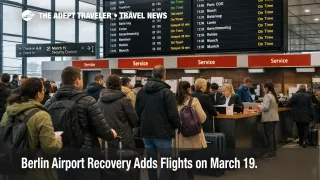
Berlin airport recovery flights are now the story, not the shutdown itself. After Wednesday's full strike closure, Berlin Brandenburg Airport (BER) said normal operations would resume on Thursday, March 19, with around 570 flights scheduled and 29 additional takeoffs and landings added to help absorb stranded demand. For travelers stuck after the March 18 stoppage, that shifts the problem from total cancellation to a more familiar recovery day, where rebooking inventory returns, but queues, standby pressure, and uneven airline recovery still matter.
What changed since Adept's March 17 and March 18 coverage is the phase of disruption. The airport is open again, and BER expects about 80,000 passengers on what it says should otherwise be a normal traffic day. That means same day movement is possible again, but not friction free, because thousands of travelers from Wednesday's canceled program are now competing for seats, service desk time, and baggage processing inside a schedule that is close to normal rather than massively expanded.
The Berlin airport recovery flights story matters because recovery days often decide whether a disruption ends with a simple late arrival or turns into a second missed connection, another hotel night, or a broken handoff to rail, cruise, or tour plans. Travelers with flexible city pairs, hand baggage only, or carriers offering automatic reaccommodation should see better odds than they did on Wednesday. Travelers with fixed onward plans and checked bags still need to treat March 19 as an irregular operations day.
Berlin Airport Recovery Flights: What Changed
BER's official position is straightforward. Regular operations resumed on Thursday, March 19, after the warning strike shut down regular passenger flying on Wednesday, March 18. The airport's own update said around 570 flights were planned for March 19, and that airlines had scheduled 29 extra takeoffs and landings to carry travelers who could not fly during the strike.
That is real recovery capacity, but it is not a blank check. Wednesday's stoppage wiped out 445 departures and arrivals and disrupted about 57,000 passengers, so 29 added movements help, but they do not erase the backlog on their own. The practical result is that Thursday should feel materially better than a shutdown day, while still producing crowded service points, uneven standby availability, and a higher chance of rolling delay on individual flights as crews, aircraft, and passengers are put back into sequence.
BER has not publicly broken out those 29 added movements by carrier. What is visible so far is that at least some stranded easyJet passengers were shifted into March 19 operations, with flight tracker pages showing Berlin departures affected by the strike retimed into Thursday under updated timings and, in some cases, new flight numbers. That suggests the extra capacity is being used in at least part for direct recovery flying, not just normal schedule restoration.
Which Travelers Gain the Most From the Recovery
The biggest winners on March 19 are passengers whose trips were interrupted only once, at Berlin. If the trip was Berlin to another short haul European point, or the inbound flight to Berlin was the last flight before an overnight stop, the restored schedule and added movements create a much better chance of moving the same day. That is especially true where airlines can swap travelers onto multiple daily frequencies or partner flights.
The higher risk group is travelers whose BER disruption is only one link in a chain. Anyone trying to reconnect to long haul service, a Deutsche Bahn segment, a ferry, a river cruise embarkation, or a prepaid timed booking still faces second order exposure even with the airport open again. Recovery days fix airport access faster than they fix full itinerary timing, because seats may return before your original downstream booking window does. That gap is where hotel nights, missed embarkations, and change fees can still pile up.
There is also a practical difference between passengers who were automatically rebooked and those who still need human help. Travelers holding confirmed replacement itineraries should mostly be dealing with airport processing and queue time. Travelers still waiting for reaccommodation remain exposed to scarce same day seats, especially on popular European business and leisure corridors where Thursday demand was already going to be healthy without a strike backlog. BER itself is advising passengers to allow sufficient time, check terminal handling details, use self check-in where available, and proceed to security promptly after check-in.
What Travelers Should Do at BER on March 19
The first move is to stop treating this like a cancellation day and start treating it like a capacity squeeze. Check the airline app before leaving for the airport, confirm whether you are on the original flight, a retimed service, or a replacement flight number, and screenshot the active booking once it appears stable. If you are still unprotected, arrive with realistic expectations about queue time and ask for the fastest workable itinerary, not only the ideal one.
The rebooking threshold is simple. Keep the March 19 itinerary if you already have a confirmed seat and the trip can absorb moderate delay. Push harder for alternatives if you are still on standby, if you must protect a long haul onward leg, or if a missed arrival triggers cruise, rail, or hotel penalties that cost more than the fare difference. On recovery days, a slightly less convenient routing can be smarter than waiting on a perfect nonstop that stays oversold.
At the airport, expect the main bottlenecks to be airline service points, baggage handling handoffs for disrupted passengers, and security timing surges when retimed flights bunch together. BER is operating again, but that does not mean every passenger process is evenly distributed. Hand baggage only travelers should move faster. Checked bag passengers, passengers needing voucher help, and anyone changing terminals or carriers should budget extra buffer. Through the rest of March 19, the thing to watch is not whether BER is open, but whether your carrier's recovery program is still adding delay minutes faster than the airport can clear them.
Why Berlin's Shutdown Turned Into a Catch Up Day
The March 18 shutdown happened because ver.di called a warning strike tied to a public sector wage dispute. Reuters reported that the union rejected the employer side's offer and called the action as pressure in the ongoing negotiations. Berlin.de said the dispute covered about 2,000 employees, including staff in the fire service, air traffic operations, and terminal management, which is why regular passenger operations could not continue even though some functions at the airport are handled by outside contractors.
That staffing profile explains why Thursday looks better, but not perfectly clean. Once the strike window ended, BER could return to normal operating status quickly because the airport infrastructure itself was not damaged and the March 19 schedule still existed. The real friction moved downstream into reaccommodation, aircraft rotation, crew timing, and baggage flows. In other words, the airport reopened faster than the network could fully reset. That is the core mechanism travelers need to understand on a recovery day.
This also matters beyond Berlin. When a one day strike wipes out a full airport program, the first order effect is obvious, canceled departures and arrivals. The second order effect is wider, because aircraft and crews that should have touched Berlin on Wednesday may start Thursday out of position, while passengers who should already be elsewhere are still competing for seats. BER's extra 29 movements reduce that pressure, and they should lower the odds of another forced overnight stay, but they do not remove the normal catch up lag that follows a full shutdown.