

U.S. TSA Shutdown Delays Ease, Risk Still Rising
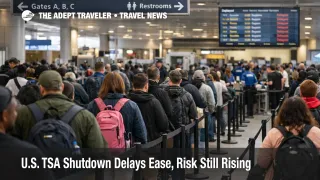
U.S. TSA shutdown delays eased slightly on March 18, 2026, but the improvement is too small to change the traveler problem. The national absence rate for Transportation Security Administration officers slipped to 9.9 percent after peaking at 10.2 percent a day earlier, yet major airports still saw severe staffing gaps, and federal officials are now warning that smaller airports could face shutdown risk if callouts climb again. For travelers, that means the immediate advice has not really changed: build more buffer, avoid tight same day connections, and treat morning departures and multi segment itineraries as the most exposed.
The practical shift since earlier coverage is not that conditions are improving, but that the disruption has moved into a more unstable phase. Reuters reports that around 50,000 TSA officers have been working without pay during the partial Department of Homeland Security shutdown, 366 officers have already left, and another missed paycheck is due on March 27. That matters because a small national improvement can hide major local failure points, especially at airports that do not have much spare staffing.
U.S. TSA Shutdown Delays: What Changed
What changed is narrow but important. The national absenteeism rate stopped rising for one day, falling from 10.2 percent on Tuesday to 9.9 percent on Wednesday. That is better than continued deterioration, but it is still about five times the normal rate, which Reuters says is usually under 2 percent. In other words, the system is still running far outside its normal staffing margin even after the one day pullback.
The airport level numbers are the real warning sign. On Tuesday, about 30 percent of TSA officers did not report at New York's John F. Kennedy International Airport (JFK), Pittsburgh International Airport (PIT), and George Bush Intercontinental Airport (IAH), while Houston Hobby Airport saw a 40 percent absence rate. Reuters also reported that earlier in the week absences topped 30 percent in New Orleans and Atlanta, with Houston exceeding 50 percent on some days, producing waits of two hours or longer.
That is why this is not yet a recovery story. The headline number improved a little, but the operational reality is still patchy, airport specific, and vulnerable to another jump in callouts as the shutdown drags on. The U.K. government has now updated its advice for the United States to warn of longer than usual queues at some U.S. airports, which is a notable shift because it frames the shutdown as a live traveler disruption issue, not just a domestic political fight.
Which Travelers Face the Most Disruption
The most exposed travelers are people flying through airports with already elevated callout rates, travelers on early morning departures, and anyone trying to make a short onward connection after landing. When TSA staffing thins out, the first order effect is longer screening lines and fewer open checkpoints. The second order effect is what hurts itineraries: missed check in cutoffs, missed domestic connections, and extra hotel or rebooking costs when a delay at the security line cascades through the rest of the day.
Spring break travelers are especially exposed because volume is already high. Reuters says airlines are expecting about 171 million passengers over the two month spring travel period, up 4 percent from last year. A strained checkpoint operation is much harder to absorb when the travel system is already near seasonal peaks, which means even a modest staffing shock can produce outsized waits at hubs with heavy leisure traffic or uneven staffing recovery.
International arrivals and departures also carry more risk than they look on paper. Even though TSA is a pre departure screening issue, the real exposure is often on the landside schedule. Travelers headed to international flights, cruises, long distance rail departures, or nonrefundable tours have less room to absorb a 60 to 120 minute checkpoint delay than someone taking a flexible midday domestic nonstop. Families, elderly travelers, and travelers moving with checked bags are also more vulnerable because they usually need more time before even reaching the checkpoint. The U.K. advisory's wording is broad, but the practical meaning is simple: foreign visitors should not assume the normal U.S. airport timing playbook holds right now.
What Travelers Should Do Now
Travelers departing in the next 24 to 72 hours should leave earlier than usual, confirm which checkpoint or terminal their airline is using, and assume local conditions matter more than the national average. A small dip in the national absence rate does not guarantee your airport is functioning normally. The airports that matter most are the ones with already elevated local callouts, closed checkpoints, or heavy spring break demand.
For domestic trips, the safest move is to add extra airport buffer and avoid arriving on your usual "just enough time" schedule. For international departures, cruise embarkations, and important same day events, the threshold is tougher: if your plan depends on a short ground transfer, a tight bag drop cutoff, or one missed flight breaking the whole trip, this is the kind of week where earlier departure or a hotel night near the airport can save the itinerary. The tradeoff is obvious, extra time costs convenience, but missed departures cost far more.
What should travelers watch next. First, whether local airports begin announcing more checkpoint consolidations or longer recommended arrival windows. Second, whether callout rates rise again ahead of the next missed paycheck on March 27. Third, whether federal warnings about smaller airport shutdowns start turning into concrete local service reductions. Until those indicators improve, travelers should treat U.S. TSA shutdown delays as an active planning risk, not a story that has already peaked.
Why the Disruption Still Matters
The mechanism is straightforward. TSA officers are considered essential, so most must keep working during a shutdown, but they are doing so without pay. That raises financial strain, increases callouts, and pushes some workers to resign. Reuters reports 366 officers have already left during the shutdown, and training replacements is not something the agency can do overnight. As a result, even a slight dip in absences does not quickly restore normal resilience.
The system then spreads the pain unevenly. Large airports can sometimes respond by closing some checkpoints and concentrating staff elsewhere, which keeps the airport open but lengthens lines. Smaller airports have less flexibility. That is why officials are now publicly raising the possibility of small airport shutdowns if staffing gets worse. The danger is not only the checkpoint itself, but the knock on effects: aircraft misconnects, extra overnight stays, missed onward transport, and pressure on already busy alternative hubs.
There is also a confidence problem now. The U.K. government's advice means the disruption has crossed from domestic operational noise into foreign traveler guidance. That does not mean U.S. air travel is broadly nonviable, but it does mean outside governments now see the queues as material enough to warn about. For travelers, that is the right way to read this story. The one day easing in absences is real, but U.S. TSA shutdown delays still pose a live spring travel risk, especially at stressed hubs and on trips where timing margins are thin.