

Taba Exit Costs Raise Israel to Egypt Cash Risk
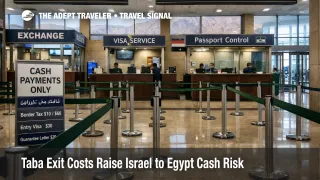
Taba exit costs are now a bigger part of Israel escape planning, not a minor border detail. Updated British government advice says travelers crossing from Israel into Egypt at Taba should carry at least $110.00 (USD) in cash per person, with extra cash for additional charges that can rise at short notice. The pressure point is no longer only getting to the border after Ben Gurion capacity cuts. It is reaching Taba with enough cash, the right documents, and a route that actually matches the entry permission you can buy there. Travelers leaving Eilat for Taba without that prep can still reach the crossing and fail the onward plan.
Taba Exit Costs: What Changed
The official fee stack is now clearer, and harsher, than many travelers will expect. GOV.UK says travelers staying only in Taba pay a $10.00 (USD) border tax for an entry permission stamp valid up to 15 days. Travelers going farther into Sinai, including Sharm el Sheikh, pay $60.00 (USD). Travelers going beyond Sinai, including those planning to fly onward from Cairo or Hurghada, pay that $60.00 (USD) border tax plus a $30.00 (USD) standard entry visa and about $20.00 (USD) for a letter of guarantee arranged by travel agents at the crossing. That is how the guidance reaches the at least $110.00 (USD) cash recommendation before any extra transport or parking costs.
This is a meaningful follow up to the broader Israel exit squeeze. In an earlier Adept Traveler article, Ben Gurion Departure Cap Pushes Border Exits explained why more travelers were being pushed toward Egypt and Jordan overland options. The new problem is that Taba is not a simple border handoff. It is a cash first transaction point with route dependent fees, and the crossing's unreliable ATMs mean travelers cannot safely assume they can fix a shortfall on arrival.
Which Travelers Face the Highest Taba Border Friction
The most exposed travelers are the ones treating Taba as a same day airport substitute. That includes passengers trying to cross from Eilat, reach Sinai or mainland Egypt, and then catch an onward flight with little slack. The risk is higher for families or groups because the cash burden scales per person, not per booking, and because one document mismatch can slow the whole party. It is also higher for anyone planning to leave Sinai and continue to Cairo, Hurghada, or elsewhere in mainland Egypt, because that is the point where the visa and letter of guarantee become part of the border process.
A shorter Sinai only plan is operationally different from a mainland Egypt exit plan. U.S. State Department guidance says U.S. citizens can enter Taba on a free 14 day visa on arrival if they remain within Sinai, but travelers who want a 30 day visa for wider Egypt travel need a support letter from a travel agency and exact U.S. dollar cash, with fees that vary. Australian government advice also says card payments are not accepted for these crossing related fees, and that ATMs at the border are not always operating. That means the route choice, Sinai only or onward Egypt, has to be decided before leaving Eilat, not improvised at the counter.
What Travelers Should Do Before Leaving Eilat
Travelers using Taba as an exit route should prepare the crossing like a document check, not like a quick land transfer. Carry more than the minimum $110.00 (USD) per person in small bills if you are doing anything beyond a basic Taba stay, and do not rely on border ATMs. If the plan is mainland Egypt, confirm before departure whether your nationality qualifies for the visa on arrival route there, whether you need the letter of guarantee, and whether an eVisa or pre arranged onward flight would reduce risk. In an earlier Adept Traveler article, Egypt Tourist Entry Requirements For 2026 explains the wider visa logic behind these choices.
The next decision point is timing. A traveler with a confirmed near term Ben Gurion seat may still be better off keeping the airport plan. A traveler without that seat, or with a fragile same day connection beyond Egypt, should compare the full Taba chain, border wait, cash burden, Sinai versus mainland permission, transfer time, and onward airport check in, against the shrinking utility of waiting for space out of Tel Aviv. If that chain depends on withdrawing cash at the border or sorting paperwork on the fly, the plan is too thin.
Why the Taba Border Has Become a Harder Exit Route
The mechanism is simple. Ben Gurion restrictions pushed more travelers toward land exits, but Taba works under a different operating logic from an airport. Airport disruption usually leaves travelers fighting for seats inside one system. Taba adds a second system, Egyptian border entry rules, cash only payments, route specific permissions, and onward transport from Sinai or mainland airports. That creates first order friction at the border itself, then second order risk for hotel nights, driver timing, airport check in windows, and missed departures from Cairo, Hurghada, or Sinai gateways.
What happens next depends on whether border charges and procedures stabilize. For now, the official guidance still warns that Taba charges have been rising at short notice since early March 2026. That means this route remains usable, but it is no longer cheap, simple, or safely cash light. Travelers should watch for new embassy or FCDO updates, confirm onward Egypt entry rules against their passport before traveling, and expect the Taba option to work best for people who reach the crossing already funded, already documented, and already committed to either Sinai only or mainland Egypt.