

Lufthansa Middle East Cuts Stay Deep Into October
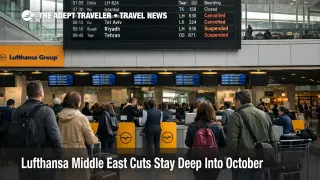
Lufthansa Middle East suspensions have become a longer planning problem than many spring and summer travelers may realize. Lufthansa's current travel notice says all Lufthansa Group airlines remain suspended to the region through April 30, 2026, but it then breaks the network into longer destination specific shutdowns, with Dubai and Tel Aviv paused through May 31, and Abu Dhabi, Amman, Beirut, Dammam, Riyadh, Erbil, Muscat, and Tehran suspended through October 24. That moves the issue beyond a near term disruption window and into summer itinerary design. Travelers booked through Lufthansa Group hubs should stop assuming a quick restart and review alternate routings, refund options, or a later travel date now. ansa Middle East Suspensions: What Changed
The practical change is clarity. Lufthansa has now published a destination by destination horizon instead of leaving travelers with only a broad regional warning. The group wide line says operations to the region are suspended through April 30, 2026, but the route detail is what changes the booking math. Lufthansa, SWISS, Austrian Airlines, Brussels Airlines, ITA Airways, Edelweiss, and Lufthansa Cargo all show Dubai through May 31 and Tel Aviv through May 31, except Lufthansa Cargo to Tel Aviv, which is listed only through April 30. Abu Dhabi, Amman, Beirut, Dammam, Riyadh, Erbil, Muscat, and Tehran are listed through October 24. Eurowings, which matters for lower fare and leisure demand, has a different pattern, with Tel Aviv, Beirut, and Erbil through April 30, and Dubai, Abu Dhabi, and Amman through October 24. Lufthansa also says affected passengers can rebook to a later date free of charge or receive a full refund. a real update, not just a restatement of the earlier caution. In an earlier Adept Traveler article, Lufthansa Middle East Cuts Spread Through October, the concern was already shifting from a rolling disruption into a seasonal planning issue. The current Lufthansa notice hardens that problem by confirming the split between late April, late May, and late October windows on one official carrier page. Travelers Now Face the Biggest Routing Problem
The most exposed travelers are passengers who built Europe to Middle East itineraries around Lufthansa Group connecting hubs and expected the onward segment to come back before summer. That includes travelers transiting Frankfurt Airport (FRA), Munich Airport (MUC), Zurich Airport (ZRH), Vienna Airport (VIE), Brussels Airport (BRU), and Rome Fiumicino Leonardo da Vinci Airport (FCO) on one ticket, as well as travelers who planned to mix Lufthansa Group long haul flights with self booked onward segments, hotels, cruises, or tours. A canceled nonstop is one problem. A broken hub strategy across several months is a larger one. d Tel Aviv passengers still face a meaningful late spring gap on the full service Lufthansa family, while travelers bound for Amman, Beirut, Riyadh, Dammam, Muscat, Erbil, Tehran, and Abu Dhabi now have to think in late season terms, not short term recovery terms. Eurowings softens that only slightly, and only on some cities, because its own network remains cut on a different timetable rather than providing a dependable backup inside the same airline group. Travelers who were waiting for a cheaper Lufthansa Group return to the market may find that the more realistic question is no longer whether to wait a week, but whether to rebuild the trip around another carrier family or another hub entirely. Travelers Should Do Now
The first step is to treat the booking as structurally disrupted if your itinerary touches one of the named cities on Lufthansa Group metal. Check the operating carrier, not just the ticketing brand, because the destination and airline combination matters. Lufthansa says passengers on affected flights may rebook to a later travel date free of charge or request a full refund, either directly or through their travel agent. That gives travelers two usable paths, save the trip by redesigning the route, or stop trying to preserve a weak itinerary and take the money back. g makes more sense when the trip is flexible on dates, airports, or airline group. Waiting makes more sense only when the trip purpose is not fixed and the booking carries clear no fee flexibility. Travelers with cruise departures, guided tours, weddings, conferences, or same day onward links should lean toward earlier action because every extra segment raises the odds that a replacement itinerary will need an extra hotel night, a longer layover, or a new visa and baggage plan. The tradeoff is straightforward, holding out for a neat restoration may preserve convenience on paper, but rebuilding early usually protects the trip itself.
Over the next 24 to 72 hours, watch for carrier specific reinstatement notices, not general regional language. The Lufthansa page itself warns that individual airline changes can still occur because the situation remains dynamic. That means passengers should monitor the exact carrier page tied to their segment, keep booking contact details current, and avoid assuming that Eurowings or another Lufthansa Group brand will mirror the mainline timetable city by city. he Cuts Matter Beyond April, and What Happens Next
These suspensions matter because they reduce route slack across a whole European airline family, not just one city pair. First order, nonstop and one stop options disappear. Second order, displaced demand shifts into other hubs, alternative airlines, extra overnight stays, and more fragile self built connections. Travelers headed from Europe into the Gulf or Levant may find workable seats through other gateways, but those routings often come with longer total journey times, tighter interline risk, or separate ticket exposure if the replacement is pieced together manually. The longer the Lufthansa Middle East suspensions remain in place, the more this becomes a summer network constraint rather than a spring disruption headline. pens next depends less on calendar optimism and more on carrier by carrier risk tolerance. Lufthansa says it is continuously monitoring the security situation and will communicate changes accordingly. That means travelers should expect rolling adjustments, not a single clean restart date across the map. For now, the safest planning assumption is that these cities stay unavailable on the published Lufthansa Group timelines unless the carrier says otherwise. In an earlier Adept Traveler article, KLM Middle East Suspensions Run Through May 17, another major European airline group showed the same broader pattern, fewer dependable hub options for Middle East trips even when some airports remain open. For summer travel, Lufthansa Middle East suspensions should now be treated as a route design problem, not a temporary inconvenience. es