

Air Transat Strike Averted For Canada Winter Flights
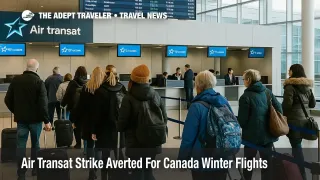
Travelers watching an Air Transat strike averted at the last minute now have a clearer runway for winter flights between Canada, Europe, and sun destinations, after the airline and the Air Line Pilots Association, ALPA, reached a tentative agreement late on December 9, 2025. The deal lifts the immediate threat of a walkout by more than 750 pilots and allows the carrier to restart operations that had been wound down at Montréal Pierre Elliott Trudeau International Airport (YUL) and Toronto Pearson International Airport (YYZ). For passengers, the focus shifts from strike day contingency plans to confirming which flights are running, which have been retimed or rerouted, and which tickets qualify for refunds or credits.
The Air Transat strike averted by this tentative deal means flights from Canada to Europe, Mexico, the Caribbean, Central and South America, and Florida should gradually return to a normal pattern, but with a higher than usual risk of late changes as aircraft and crews are repositioned. Winter leisure travelers, including package holiday passengers and those connecting to cruises or separate long haul flights, will need to treat the coming week as a recovery phase rather than an instant reset to normal operations.
Air Transat and ALPA both confirm that the agreement in principle will be submitted to pilots for a ratification vote in the coming days, after nearly a year of negotiations over a contract that had been extended several times. Union statements describe the deal as a modern contract that improves job security, compensation, and schedule flexibility, while the airline frames it as a resolution that removes the strike risk and lets customers "travel with peace of mind" as operations resume.
How We Got From Shutdown Plans To A Tentative Deal
The strike threat escalated on December 7, when ALPA issued a 72 hour notice under Canada Labour Code rules that allowed pilots to walk out as early as 3:00 a.m. ET on December 10, 2025. In response, Air Transat began a controlled shutdown of its network, suspending most flights on December 8 and 9 to avoid stranding crews and passengers overseas if the strike went ahead, and focusing on limited repatriation services.
That shutdown plan hit core transatlantic routes from Montreal and Toronto to cities in France, the United Kingdom, Spain, Portugal, and other European markets, along with peak winter sun services to Mexico, the Dominican Republic, Cuba, Jamaica, and Florida. The cancellations overlapped with broader winter weather problems at Canadian hubs, which had already pushed flight delay and cancellation counts higher than usual this week.
In earlier coverage, Adept Traveler detailed how the phased shutdown was supposed to work and what it meant for travelers in Canada Pilot Strike To Shut Air Transat Flights, as well as in Canada Flight Delays At Major Hubs As Weather, Strike Loom. This new article is an update to that coverage, focusing on how the tentative deal changes the decision set for people flying with Air Transat for the rest of the winter season.
What The Tentative Agreement Changes For Travelers
The immediate change is that Air Transat is no longer planning a full network stop, and instead is ramping its schedule back up from a reduced base. The airline's strike information page now states that the agreement "lifts the risk of a strike" and that operations are returning to normal, while emphasizing that details will go to members for ratification.
ALPA, for its part, says its pilot leaders have approved the tentative deal for a full membership vote and describes the agreement as a comprehensive overhaul of a decade old contract, with explicit references to better job security, enhanced pay, and more flexible schedules that improve work life balance. From a traveler perspective, that signals a lower risk of short notice labor action in the coming weeks while the vote proceeds, compared with the all stop scenario that had been planned for December 10.
However, the deal does not automatically restore every canceled flight. Many customers were moved to earlier dates, different routings, or later departures when the shutdown plan was announced, and those changes will not always be reversed just because a strike was avoided. The practical effect is that Air Transat's network will likely operate with some gaps and retimes through at least the middle of December, and possibly longer on thinner routes, even as the bulk of flights resume.
Which Routes And Airports See The Most Residual Impact
The heaviest residual impacts will remain on transatlantic routes and winter sun flights out of Montreal and Toronto, where Air Transat concentrates its capacity. That includes high demand city pairs such as Montreal to Paris, London, and Lisbon, Toronto to major European capitals and secondary leisure gateways, and sunshine routes to Cancun, Punta Cana, Varadero, and other Caribbean and Mexican resorts that are central to winter packages.
At Montréal Pierre Elliott Trudeau International Airport (YUL), Air Transat has been juggling aircraft between overnight European services and daytime sun flying, which makes it harder to restore every pre strike frequency at once after several days of cancellations. Toronto Pearson International Airport (YYZ) faces similar constraints, with tight turn times and high demand for both transatlantic and southern flights in the peak Christmas and New Year period.
Secondary Canadian airports that see Air Transat charter and seasonal service, including cities in Quebec and Atlantic Canada, may also see stretched schedules as the airline prioritizes restoring trunk routes first. Travelers departing from those smaller gateways should assume that marginal frequencies will return more slowly, and that alternative carriers may sell out quickly on key weekends.
How To Check And Fix Your Booking Now
If you hold an Air Transat ticket in December or early January, the first step is to confirm the current status of every segment using the airline's website or app, or your travel agent's tools. Because many changes were made preemptively, do not assume that a "no strike" headline means your original flight and time are still valid.
Next, check your email, SMS messages, and any in app notifications for schedule change notices or rebooking offers issued during the strike window. If Air Transat has already moved you to a different date or routing that no longer suits your plans, contact the airline or your travel advisor promptly to see whether alternative options exist. The sooner you act, the more likely you are to secure favorable times, especially on weekends and around Christmas week.
If your flight was canceled outright, or if you were moved significantly in time or routing, you may be entitled to a refund or credit under Air Transat's own policies, under Canada's Air Passenger Protection Regulations for flights to, from, or within Canada, and under EU261 for flights departing the European Union or operated by an EU carrier. Earlier Adept Traveler explainers on European strikes, such as Italy Air Transport Strike, guaranteed flights and EU261 rights, offer practical guidance on how to document disruptions and present claims under those rules, even though this dispute is in Canada.
Planning Connections And Backups Through December
Even with a tentative deal in place, travelers should treat Air Transat itineraries this month as somewhat less predictable than usual. If you are connecting from an Air Transat flight to a separate ticket on another airline, especially to a cruise departure or a once daily long haul service, leave a much larger ground time buffer than you usually would, or better yet, move to a single ticket on one carrier if that is available at a reasonable cost.
For connections within Europe or to onward sun destinations, assume that small timing changes on your transatlantic leg could cascade into misconnects if you have tight links to trains, ferries, or regional flights. Building in an overnight stop, or planning an extra half day in your gateway city, may be a sensible trade off against the stress and cost of a missed departure during the holiday peak.
Where alternatives exist, look at capacity on other Canadian and European carriers from your origin city, particularly if you still have flexible or fully refundable hotel and activity bookings. In previous strike and near strike situations, travelers who shifted early to competing airlines often faced fewer last minute scrambles than those who waited for every detail of the labor talks to resolve.
How Long The Elevated Risk Is Likely To Last
Most public statements from Air Transat and ALPA stress that operations are "returning to normal," and that the agreement represents a comprehensive fix to pilot frustration with an outdated contract. That language, combined with the controlled nature of the shutdown and restart, suggests that the highest disruption risk is concentrated in the days immediately around December 8 to 12, 2025, rather than over the whole winter.
However, ratification votes can take time, and in rare cases unions have rejected tentative agreements, forcing another round of bargaining. There is no specific sign that this will happen here, but it is another reason winter travelers should keep a close eye on union and airline communications over the next few weeks, especially if they are booked on high value trips between late December and early January.
For now, the practical takeaway is that an all out shutdown has been avoided, but increased schedule friction remains baked into the near term. Smart travelers will lock in workable backups, maintain generous layovers, and track their flights closely in the days leading up to departure, particularly on routes that saw multiple cancellations during the shutdown phase.
Sources
- Air Transat Pilot Leaders Approve Tentative Agreement for Pilot Ratification Vote, ALPA
- End of Strike Threat, Tentative Agreement Reached, Air Transat
- Canada Pilot Strike To Shut Air Transat Flights, Adept Traveler
- Canada Flight Delays At Major Hubs As Weather, Strike Loom, Adept Traveler
- Canada's Air Transat, Pilots Union Reach Tentative Deal To Avert Strike, Reuters
- Air Transat Pilots Poised To Strike, Issue 72 Hour Notice, ALPA
- Italy Air Transport Strike, Guaranteed Flights And EU261, Adept Traveler