

Ground Handling Walkouts Hit Spain Airports Through Dec 31
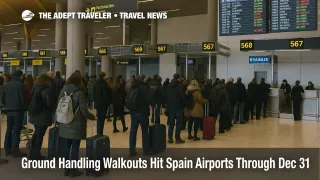
Spain airport ground handling walkouts are a year end friction story, not always a mass cancellation story, and that is exactly why holiday travelers should pay attention. Passengers flying carriers that rely on Azul Handling, especially Ryanair Group flights, can run into longer check in lines, slower baggage acceptance, and late bags at arrival even when the departure board looks mostly normal. Travelers with checked bags, tight connections, early morning departures, or late evening arrivals should add buffer time, travel carry on only where possible, and set up proactive bag tracking before leaving for the airport.
The Spain airport ground handling walkouts problem, for travelers, is that the disruption concentrates at the curb, the counter, the belt, and the turnaround. Minimum service rules can keep many flights operating, but they do not guarantee fast processing, on time boarding, or quick baggage delivery when staffing is uneven and queues build.
What Is Happening
Azul Handling provides ground services for Ryanair Group operations across Spain, and unions have been in a prolonged dispute over staffing, scheduling, and working conditions. UGT publicly laid out recurring walkout windows earlier in the dispute, and Spain's transport ministry issued minimum service resolutions to protect essential operations during the labor action.
For late 2025 planning, the key traveler detail is that the labor action later escalated. A transport ministry resolution states that the nationwide strike was shifted to a daily, 24 hour, indefinite action beginning October 1, 2025, and the ministry has continued extending minimum service coverage as the dispute remains unresolved.
Ryanair has previously claimed that early strike days had "zero impact" on its operations, framing participation as limited, and saying flights operated normally over a prior weekend. That can be simultaneously true for cancellations and still unhelpful for passengers stuck in slow moving lines or waiting on delayed bags, which is why the best framing for travelers is operational risk at processing points, not only flight status risk.
Which Airports Are Most Exposed
Azul Handling's footprint spans 24 Spanish airports in the ministry's minimum services documentation, which is why the pain can show up across mainland hubs and island leisure gateways, sometimes in the same travel day. The list includes Adolfo Suárez Madrid Barajas Airport (MAD), Josep Tarradellas Barcelona El Prat Airport (BCN), Málaga Costa del Sol Airport (AGP), Palma de Mallorca Airport (PMI), Seville Airport (SVQ), Valencia Airport (VLC), Tenerife South Airport (TFS), and several Canary Islands and Balearics airports that are heavily Ryanair weighted in peak seasons.
For year end travel, the highest volume pinch points usually align with two things, heavy passenger banks, and high checked bag volumes. That combination is common on island routes, on short haul leisure services, and on flights where travelers are carrying gifts, sports gear, or winter clothing. In practical terms, even if your flight still departs, you can lose time at bag drop, you can see gate holds because bags are still being loaded, and you can arrive on time but wait a long time at baggage claim.
How Ground Handling Walkouts Become A Passenger Problem
Background Ground handling is the layer of airport work that turns an aircraft around and processes passengers on the ground, including check in support, bag acceptance, baggage sort and load, basic gate functions, and arrival baggage delivery. When labor action reduces staffing or slows workflows, airlines can keep aircraft moving under minimum service rules, but queues and baggage timelines often degrade because the system has less slack to absorb the normal peaks.
Minimum service orders in Spain are designed to protect essential air links, public interest operations, and safety critical activities, and they can require coverage for a protected share of flights by route type and airport. For travelers, that usually means fewer outright cancellations than a full shutdown, but more "soft disruption," such as long lines, last minute gate changes, delayed boarding, and baggage arriving late.
What Travelers Should Do Now
The most effective mitigation is to remove checked baggage from the equation. If you can re pack to carry on only, you eliminate the largest failure mode in a ground handling dispute, namely bags not making it onto the aircraft, or bags arriving hours later than you do. If you must check a bag, pack essentials, medications, chargers, and one change of clothing in your cabin bag, and use a tracking tag so you can see whether the bag is moving with you.
Next, treat airport arrival time as a controllable lever. If you normally arrive two hours before a short haul flight, add margin, because the line you are betting against is the bag drop line, not the security line. If you have a connection, avoid "minimum legal" connection times, and if your itinerary is on separate tickets, consider rebooking to a single ticket or building an overnight buffer, because a baggage delay can break a self connect even if both flights technically operate.
Finally, plan for recovery while you still have options. Keep airline app notifications on, and take screenshots of any delay, gate change, or baggage status, because that documentation helps if you need to claim interim expenses for delayed baggage, or if you need to rebook while standing in a crowded terminal with weak Wi Fi.
For broader context, and for decision rules that apply across European labor disruptions, see Adept Traveler's guide to Strikes in Europe, plus the related coverage on Spain baggage handler strikes and the wider Europe December strikes roundup.
Sources
- UGT Convoca Huelga En El Handling De Ryanair A Partir Del 15 De Agosto
- MITRAMS Minimum Services Resolution, Azul Handling, Aug 2025 (PDF)
- MITRAMS Minimum Services Extension Through Jan 31, 2026 (PDF)
- Transport Ministry Page, Huelga Servicios Mínimos
- Aena X Post On Azul Handling Strike Period
- Ryanair RNS Statement: Spain Strike Has No Impact On Ryanair Ops