

Italy easyJet Strike To Disrupt Flights Jan 31 Afternoon
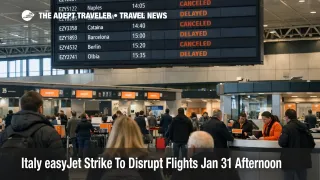
A planned four hour walkout by easyJet pilots and cabin crew in Italy is set to disrupt flights on Saturday, January 31, 2026, with the strike scheduled from 100 p.m. to 500 p.m. CET. Travelers booked on easyJet services to, from, or within Italy, especially those departing during that afternoon window, should expect a higher risk of delays and cancellations. The practical move is to check your flight status early, then be ready to shift to a morning departure, a later protected window, or an alternative carrier if your schedule cannot absorb uncertainty. Airports are already flagging potential operational impacts for passengers.
Italy easyJet strike flights matter most for travelers because Italy's air strike rules often preserve service in two daily protected bands, which can make a same day swap to earlier or later flights more realistic than trying to ride out the afternoon disruption.
Who Is Affected
The strike is listed in Italy's official transport strike calendar as a national action involving easyJet pilots and flight attendants, scheduled from 100 p.m. to 500 p.m. CET on January 31, 2026. The same calendar also shows a separate air navigation services action involving ENAV personnel at Verona Villafranca Airport (VRN) in the same time band, plus local handling actions at Brescia Airport (VBS), which can amplify delays for flights that need those services even if your specific route is not operated by easyJet.
Passengers using major easyJet airports should plan for the widest ripple, including Milan Malpensa Airport (MXP) and Naples International Airport (NAP), where the airport operator has published a passenger facing warning about possible delays and cancellations tied to the easyJet action. Travelers with afternoon departures are the most exposed, but inbound flights can also arrive late if earlier rotations break, and late afternoon cancellations can push rebooking into the evening and next morning.
If you have onward travel, the connection structure is what changes the stakes. A single reservation with a tight onward flight, a cruise embarkation, a timed rail departure, or a nonrefundable event entry is more fragile than a point to point trip with a flexible arrival time. Separately ticketed onward flights are the highest risk, because the second carrier has no obligation to protect you if you arrive late on the first ticket.
What Travelers Should Do
Check your booking, your flight status, and airport departure boards before you leave lodging, then build extra surface time for Saturday afternoon transfers to the terminal, especially if you need checked bags or special assistance. If your airline offers a free same day change, target morning departures, or the early evening protected window, and keep screenshots of any notices, cancellations, or rebooking offers for claims and travel insurance.
Rebook rather than wait if your scheduled departure is inside the 100 p.m. to 500 p.m. CET window and you cannot tolerate arriving more than three hours late, or if a missed connection would strand you overnight. If you can absorb a multi hour delay and you have a direct flight, waiting can be reasonable, but only if the airline still shows the flight operating and you have a backup plan for lodging and ground transport if the aircraft rotation collapses.
Monitor updates over the next 24 to 72 hours by checking the operating carrier's app, your airport's departures page, and any rebooking or waiver messages. Watch for aircraft tail swaps, crew legality constraints, and rolling delays that push a flight out of its planned slot, because those are the signals that an afternoon disruption is propagating into the evening bank.
How It Works
Italy's aviation strike framework is designed to limit total shutdown risk by requiring minimum service rules and two daily protected bands where flights are intended to operate normally, typically 700 a.m. to 1000 a.m. and 600 p.m. to 900 p.m. local time. That structure is why an afternoon strike often creates a sharp disruption peak in the middle of the day, but also why airlines sometimes try to pull flying earlier, then restart around the evening protected window. In practice, the first order impact is cancellations and missed rotations during the four hour action, while the second order ripple shows up later as aircraft and crews end up out of position, which can delay evening departures, compress turnaround times, and reduce the recovery capacity available for the next morning.
Passenger rights depend on what caused your specific delay or cancellation. Under EU air passenger rights, an internal airline staff strike generally does not count as an extraordinary circumstance for compensation purposes, although the airline still has to offer rerouting or a refund, and it must provide care such as meals, communication, and hotel accommodation when thresholds are met. That is why documentation matters, because airports, handling agents, and air traffic control actions can sit in a different category, and airlines may argue the disruption driver was external even when the original trigger was a crew strike. For travelers, the decision point is not the legal nuance, it is whether your itinerary is recoverable within the same day, or whether you should proactively shift to rail, car, or a different departure city to protect the rest of the trip, especially when Saturday disruptions spill into Sunday hotel checkouts and Monday work travel.
Related reading for alternative planning in Italy includes Europe Transport Strike Dates 2026 for Flights and Trains and Italy Rail Works Cut Trains on Rome and Naples Lines, since rail capacity, and timetables, can be the limiting factor when flights break.