

Italy Aviation Strike Disrupts Flights February 16
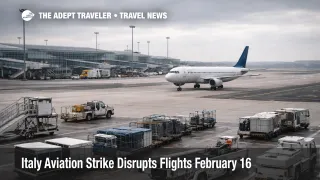
A nationwide aviation strike wave is on the calendar in Italy for Monday, February 16, 2026, and it is large enough to disrupt both flight schedules and the airport ground layer that makes departures possible. Italy's transport strike tracker lists a 24 hour stoppage involving ITA Airways, plus separate actions that can hit airline crews and airport handling, including companies that support operations at Milan's main airports. Travelers with tight same day connections through Italy should treat February 16 as a high risk day and either move travel earlier, or rebuild the day with larger buffers and refundable backstops.
The Italy aviation strike February 16 risk matters because even when some flights operate, airport ground services can become the bottleneck, and that failure mode breaks transfers, baggage timelines, and rebooking options faster than a single cancellation does.
Who Is Affected
The most exposed travelers are those using Italy for a short domestic hop to protect a larger international trip. If your plan is "arrive in Rome, Italy, connect, then continue," the weak point is the connection bank at Leonardo da Vinci International Airport (FCO), where small delays can cascade into missed long haul departures once same day seats disappear. The same logic applies at Milan Malpensa Airport (MXP) and Milan Linate Airport (LIN), where handling slowdowns can create long check in lines, delayed baggage delivery, gate changes, and late pushes that disrupt the next rotation.
Italy's strike table lists multiple aviation actions for February 16 that can overlap in practice. A 24 hour ITA Airways stoppage is listed, and separate actions are also listed for airline staff at other carriers, including EasyJet and Vueling, as well as a 24 hour strike call that targets air, airport, and related workers. Separately, Milan is exposed to an added layer of risk because the strike table also lists 24 hour actions involving ALHA at Malpensa and Airport Handling at Linate and Malpensa, both of which are central to check in, passenger assistance, ramp workflows, and baggage handoffs. Even if your ticket is not on a struck airline, shared airport services can still slow the departure pipeline.
Second order ripple is what turns an "airport day" problem into a multi day itinerary problem. When Italy's air layer thins, travelers shift to high speed rail, buses, and private transfers, and that surge can raise prices and reduce availability for the alternatives you were counting on. Later in the month, Italy's strike tracker also lists a national rail stoppage window beginning the evening of Friday, February 27, 2026, running into Saturday, February 28, 2026, which can concentrate more demand back onto flights and hotels if rail inventory becomes unreliable. In practical terms, February 16 can break your day, and the recovery can be constrained if you are also traveling close to other disruption windows.
What Travelers Should Do
If you can move the trip, move it. For high consequence itineraries, such as cruise embarkation days, wedding weekends, nonrefundable tours, or anything with a hard cutoff, the rational move is shifting flights to Saturday, February 14, 2026, or Sunday, February 15, 2026, and adding a hotel night so you are not forced to gamble on same day recovery. If you cannot move dates, prioritize departures that fall inside the typical ENAC protection bands, and avoid building a plan that requires a tight midday connection.
Use a clear threshold for rebooking versus waiting. If a cancellation would force you to overnight, or if the next available option would cause you to miss a protected segment like a cruise or a paid pickup, rebook as soon as your airline offers a viable alternative. If your trip is flexible, you can sometimes wait for day of updates, but only if you have refundable lodging and you are not stacking separate tickets where one missed segment collapses the rest of the day.
Over the next 24 to 72 hours, monitor three sources, your airline's operational notices, the Ministry strike table for changes, and ENAC's guidance on guaranteed flights and protection bands. Expect the situation to evolve as airlines publish revised schedules, retime aircraft, and consolidate flights into fewer departures. If you see handling actions tied to Milan's airports, assume baggage and check in workflows will be slower than normal, and plan earlier arrival plus a larger buffer between airport arrival and any onward rail, car pickup, or hotel check in cutoff.
Background
Italy's transport strike framework typically includes protected time bands for air travel, commonly from 700 a.m. to 1000 a.m., and from 600 p.m. to 900 p.m., when flights should still operate even during a strike. Those bands do not guarantee a smooth airport experience, because the travel system is layered. The first order impact is the airline schedule and staffing layer, which can cancel or consolidate flights. The second layer is airport handling and passenger processing, where check in desks, gate staffing, ramp services, and baggage systems can become the constraint that delays an otherwise operable flight. The third layer is network recovery, where missed connections push travelers into later banks, and once seats, hotel rooms, and train inventory are gone for the day, disruption becomes an overnight problem rather than a delay.
On passenger rights, EU rules generally require airlines to offer a choice between reimbursement or rerouting when a flight is canceled, and to provide assistance like meals, communication, and hotel accommodation when an overnight stay becomes necessary. Compensation depends on the cause, and EU guidance notes that internal strikes by air carrier staff are not treated as extraordinary circumstances, which means compensation may still apply if the other eligibility conditions are met. Keep receipts, save screenshots of delay or cancellation notices, and make yourself known to the operating carrier before arranging alternatives, because that record matters if you later need reimbursement.