

Doha Hamad Airport Pulls Back as Flights Stay Limited
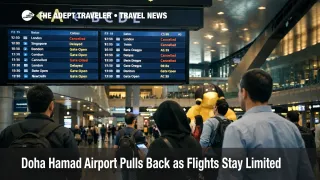
Hamad International Airport (DOH), Doha, Qatar, said on March 17, 2026 that it is withdrawing from external exhibitions, conferences, industry events, and awards programs during the regional conflict. The statement matters less as a branding move than as a signal that the airport and its parent ecosystem still see the situation as operationally serious. Travelers should read it alongside Qatar Airways' latest notice, which says scheduled commercial flying remains suspended in normal form and only a limited corridor is operating for selected flights. For passengers connecting through Doha, that means the airport is open in a constrained way, but it is still not behaving like a normal global hub.
The practical update since earlier Adept coverage is not a fresh airport shutdown. It is that Hamad has now publicly stepped back from nonessential industry activity even as Qatar Airways continues to warn that its limited flights do not confirm a return to normal scheduled commercial operations. That sharpens the traveler takeaway, Doha remains usable only in slices, and transfer plans still need backup options, longer buffers, or a willingness to rebook altogether. For readers catching up on the broader recovery story, see Qatar Expands Doha Limited Schedule Through March 28, Qatar Doha Rebooking Rules Expand Through April 30, and the airport hub page Hamad International Airport (DOH) - Travel News and Guides from The Adept Traveler.
Doha Hamad Airport Disruption, What Changed
What changed on March 17 is tone and priority, not the basic flight rule. Hamad said it is pulling out of the Skytrax World Airport Awards 2026, Passenger Terminal Expo 2026 in London, and other outside programs during the conflict period. Airports do not normally make that kind of announcement unless leadership believes the current operating environment still demands attention at home. On the same operating picture, Qatar Airways says its scheduled flight operations remain suspended in the normal sense because Qatari airspace is still restricted, and that only a limited operating corridor has been authorized.
That distinction matters because travelers can easily misread partial flight availability as recovery. Qatar Airways is explicit that bookings are available only for selected flights and that those flights do not constitute confirmation that scheduled commercial operations have resumed. The carrier is also telling passengers to head to the airport only if they already hold a valid, confirmed booking. In plain language, Doha is functioning as a constrained exception network, not as the high frequency transfer machine travelers usually expect.
Which Travelers Face the Most Doha Transit Risk
The highest exposure sits with passengers who are not starting or ending in Doha, but using Hamad as a bridge between continents. Qatar Airways' normal value comes from timed connection banks linking Europe, Asia, Africa, Australia, and North America. When flying is reduced to a limited corridor, the first order effect is fewer operating flights. The second order effect is weaker onward connectivity, because one surviving long haul leg does not guarantee that the next sector, hotel timing, ground transfer, or tour start still lines up.
Travelers on mixed tickets, tight same day onward bookings, cruise embarkations, or nonrefundable hotel nights are in the worst position. Even when a selected Doha flight operates, the limited schedule still means fewer replacement seats and less room to recover from a late inbound, a missed connection, or an abrupt schedule revision. That is why Adept's earlier Doha coverage emphasized that some flights restarting does not make Hamad normal again. It only creates a narrower path through a still stressed system.
Passengers whose trip ends in Doha face a simpler decision, but not a risk free one. They still need to verify that their exact flight is active, watch for changes, and avoid treating the airport as reliably open to speculative standby travel. Qatar Airways' own guidance, valid confirmed booking first, airport second, is the right operating rule here.
What Travelers Should Do Now
If you are booked through Doha in the next few days, the immediate move is to verify whether your exact flight is on the published limited schedule and whether your onward sector is on the same ticket and still protected. If either leg is uncertain, this is a case for acting early, not waiting for a last minute airport surprise. Scarce seats in a constrained corridor tend to disappear faster than travelers expect, especially once disrupted passengers, corporate travelers, and long haul connectors are all competing for the same inventory.
The decision threshold is straightforward. Wait only if Doha is your final destination, your booking is confirmed, and you can tolerate changes without breaking the larger trip. Rebook, reroute, or postpone if Doha is just a transfer point, you have a tight onward schedule, or missing the connection would trigger hotel, cruise, rail, or event losses that exceed the fare savings from holding your original plan. Travelers already ticketed in the affected window should also check whether they qualify for Qatar Airways' rebooking or refund flexibility through April 30, 2026.
Over the next 24 to 72 hours, watch for three things, whether Qatar widens the corridor, whether airlines restore true scheduled commercial wording instead of limited operations language, and whether more foreign carriers restore or extend Doha flying. Until those signals improve, the safest assumption is that the Doha Hamad airport disruption remains an operational planning problem, not just a public relations footnote.
Why the Disruption Still Spreads Through Travel
The mechanism is simple. Hub airports work because they compress many flights into predictable banks, which lets passengers flow from one region to another with short connection times and lots of backup options. A limited corridor breaks that model. Even if the airport terminal itself is functioning, reduced flight permissions cap the number of aircraft movements, shrink connection possibilities, and leave less slack when one leg moves late or disappears.
That is why Hamad's event withdrawal matters as a supporting signal. It suggests the airport sees the conflict period as more than a short interruption and is concentrating on core operations, passenger handling, staff welfare, and stakeholder coordination rather than external recognition. On its own, the statement does not announce a new closure, curfew, or passenger restriction. But combined with Qatar Airways' still limited operations language, it reinforces that Doha remains in an abnormal operating phase.
For travelers, the main takeaway is not to overreact, but also not to pretend the hub is back. This Doha Hamad airport disruption is now defined by constrained functionality. Some passengers will get through. Others will find that the real problem is not whether one flight exists, but whether the whole itinerary still works once connections, timing, and recovery options are factored in.
Sources
- Industry Statement, Hamad International Airport
- Qatar Airways to Operate Limited Flights, Qatar Airways
- Qatar Expands Doha Limited Schedule Through March 28, The Adept Traveler
- Qatar Doha Rebooking Rules Expand Through April 30, The Adept Traveler
- Middle East Airspace Closures Ground Gulf Hubs, The Adept Traveler