

Finnair Doha Suspension Runs Through July 2
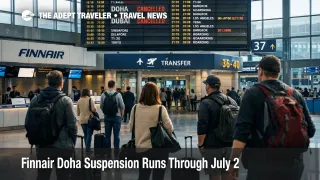
Finnair has turned a late winter Gulf disruption into an early summer planning problem. The airline now says all Doha flights remain canceled from February 28 through July 2, 2026, while Dubai flights remain canceled through March 29, 2026, because of what it calls the heightened safety situation in the Middle East. That gives travelers using Helsinki Airport (HEL) a very different decision window than they had earlier this week, especially if they were counting on Doha as a one stop bridge into Qatar, South Asia, Southeast Asia, or the Indian Ocean. For most affected passengers, the practical move is to stop planning around a near term Doha restart and start deciding whether to accept a reroute, shift dates, or unwind the trip before remaining alternatives tighten further.
Finnair Doha Suspension: What Changed
The new fact is not simply that Finnair is still disrupted. It is that the Doha cutoff has moved from early April to July 2, 2026, while Dubai keeps a separate, shorter cancellation window ending March 29, 2026. Finnair's updated travel notice, published February 28 and updated March 19, says all affected customers will be contacted directly, but it also warns that rerouting options may be limited and recommends refunds for customers who cannot be rerouted to Doha or Dubai. The airline also says it is temporarily not flying through the airspace of Iraq, Iran, Syria, or Israel, which shows this is not being treated as a narrow airport issue or a brief schedule pause.
That is the real difference from the earlier Adept Traveler report, Finnair Extends Dubai, Doha Suspensions Into April. On March 18, the published Doha cutoff was April 2. Now the same route is off sale into early summer, which changes the traveler calculation from short term disruption management to a broader network repair problem.
Which Helsinki Connection Flows Face the Most Risk
The most exposed travelers are not only Finland origin passengers heading to Qatar. The bigger pressure point is anyone using Helsinki as a clean northern connection point into the Gulf and beyond. When Doha disappears for more than four months, Helsinki loses one of its more useful long haul bridge options for Nordic and Baltic itineraries that depend on short elapsed times and protected same day onward connections. First order, passengers lose the nonstop Helsinki to Doha segment. Second order, they get pushed into a smaller pool of alternative seats, longer backtracking routings, and tighter reaccommodation windows when things go wrong.
Travelers on separate tickets are in a weaker position than those on one protected booking. A single ticket can still produce an ugly reroute, but separate tickets tied to a resort transfer, a cruise embarkation, a wedding, or a fixed business event raise the odds that one canceled segment turns into extra hotel nights, missed onward transport, or lost bookings outside the airline reservation. This is especially relevant now because Finnair says alternative flights are very limited and fill up quickly.
The pressure is not isolated to Finnair customers either. In an earlier Adept Traveler article, Qatar Doha Flights Stay Limited Through March 28, Doha itself was already operating on a limited schedule rather than normal hub strength. That means displaced Finnair demand is colliding with a Gulf transfer system that was already running below normal flexibility.
What Travelers Should Do Now
Travelers booked on Finnair to Doha through July 2, 2026 should not wait for a near term restoration signal. The airline's own guidance is that customers will be contacted, that rebooking could take longer than usual, and that a refund may be the better answer when rerouting is not possible. If your trip has a fixed arrival date, a separate onward ticket, or low tolerance for an overnight disruption, the threshold now favors acting early rather than preserving the original plan on paper.
For Dubai travelers, the decision window is narrower because the current cutoff still ends March 29, 2026. That means some passengers may choose to wait a bit longer if they are traveling in April and remain on one protected ticket. Doha is different. With service canceled into July, waiting for the original routing to come back is much harder to justify unless the trip itself is flexible.
Passengers should also verify whether any replacement itinerary actually protects the whole journey. Finnair says customers who already started travel should contact customer service for an alternative flight, and it notes that hotel accommodation can be arranged when a journey is already underway and Finnair has rebooked the customer. That is useful protection, but it does not erase the risk created by mixed bookings, short layovers, or separate hotel and transfer commitments.
Why the Disruption Lasts, and What Happens Next
The mechanism is broader than a single city pair. Finnair says it is avoiding the airspace of Iraq, Iran, Syria, and Israel, so the issue is not just whether Doha airport or Dubai airport can function on a given day. The airline is signaling that route safety and network geometry across the wider region remain unacceptable for its operation. As a result, Doha stays out longer than Dubai, which suggests Finnair sees the Doha side as the less repairable option within its current operating assumptions. Finnair has not published a more detailed public breakdown for why the two end dates differ, so that last point is an inference from the schedule action itself, not a separately confirmed explanation.
What happens next depends on whether Finnair publishes another network adjustment, whether alternative Gulf capacity stabilizes, and whether other carriers keep extending their own suspensions. Finnair says it will update the same travel notice with new information. That makes the next decision point straightforward for travelers, watch the carrier's published cutoff dates, then compare them against the hard dates in your own itinerary rather than hoping for a rolling recovery.
The practical outlook is clear even without guessing at a restart timeline. Doha is no longer a short disruption for Finnair customers. It is a spring and early summer network gap, and travelers who depended on Helsinki as a Gulf bridge should plan around that reality now.