

U.S. TSA Shutdown Airport Delays Could Linger
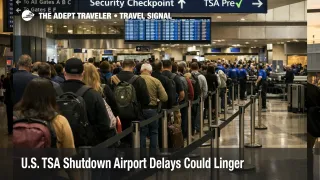
TSA shutdown airport delays may not ease as quickly as travelers hope, even after the Senate moved on March 27 to fund most of the Department of Homeland Security, including the Transportation Security Administration. The bill still has to clear the House before it can fully reopen the affected agencies, and airport operations were already under real strain as staffing losses, absences, and multi hour checkpoint lines hit major hubs. For travelers flying this weekend and into next week, the risk is no longer just whether Washington has a breakthrough. It is whether screening capacity at the hardest hit airports can recover fast enough to make that breakthrough matter on the ground.
TSA Shutdown Airport Delays: What Changed
What changed on March 27 is political, not yet operational. Reuters reported that the Senate passed a bill to fund most of DHS, including TSA, after a six week partial shutdown that disrupted airport operations nationwide. The measure would restore pay for airport security personnel and other affected DHS workers, but the House still must act before that funding path is complete. At the same time, President Donald Trump said he would order DHS to pay TSA workers immediately, creating a second, less clear track for short term relief while Congress finishes its work.
That means travelers should not read the Senate vote as the same thing as restored airport performance. AP reported that the shutdown has already pushed nearly 500 TSA officers out of the workforce, while Reuters and AP both tied the staffing loss to airport delays severe enough to produce waits of up to four hours in places such as Houston, Texas, and Atlanta, Georgia. Once a checkpoint system loses trained officers, the pressure does not disappear simply because lawmakers move a bill.
Which Travelers Still Face the Most Risk
The most exposed travelers are the ones who need airport screening to work on a tight clock. That includes early morning departures, same day cruise embarkations, short domestic connections, international itineraries with onward flights, and any trip that depends on clearing a hub without much slack. A flight can still operate on time while the trip fails at security.
The pressure is also uneven. Reuters specifically highlighted Houston and Atlanta as airports where waits reached up to four hours during the shutdown. That matters because uneven recovery is harder for travelers to spot than a broad system wide collapse. One airport may look stable while another still runs thin staffing, closed lanes, or slower throughput at peak times.
In an earlier Adept Traveler signal, Airport Security Delays Could Outlast the Shutdown, the warning was that even a formal end to the shutdown would not instantly rebuild checkpoint resilience. That remains the central traveler problem now. Funding can restart pay quickly. Rebuilding experienced screening coverage takes longer.
What Travelers Should Do Now
Travelers flying while the House outcome is still unresolved should keep building airport buffer, not removing it. For departures at major hubs, that means treating published schedules as less important than local checkpoint conditions. Travelers with flexible plans should favor nonstop options over short connections, and anyone with a cruise, wedding, tour, or fixed event on the other end should make more conservative timing choices than usual.
The next decision point is whether the situation shifts from political progress to visible operational recovery. Rebook early if your trip depends on a thin connection through a known hotspot airport and the airport or your airline is still warning about long screening lines. Wait if your departure airport is running normally, your itinerary has slack, and you can absorb a delay without losing the trip.
Over the next 24 to 72 hours, the most useful signals will be airport specific advisories, checkpoint closures, unusually early arrival guidance, or fresh airline warnings tied to security lines rather than weather or air traffic control. If those alerts persist after the House acts, TSA shutdown airport delays are still in the system, just in a more uneven form.
Why Recovery Can Lag After a Shutdown Deal
The mechanism here is simple. Airport screening is a trained labor system, not just a funding line. Back pay or resumed pay can stop some immediate financial pressure, but it does not instantly replace officers who quit, stabilize attendance, or restore the experience mix that helps large airports recover from morning banks, weather hiccups, and irregular operations. First order, the line stays longer. Second order, missed flights, hotel changes, cruise failures, and same day ground transport costs keep rising around it.
That is why the Senate vote matters, but only as the start of recovery. The House still has to act, the White House payment plan remains a separate variable, and the operational damage is already real. Travelers should assume the shutdown's aftereffects can outlast the shutdown itself, especially at major hubs where screening slack was already thin before March 27. The political story may be nearing a turn. The airport story is not finished yet.