

Iran Hotel Threat Hits Middle East Resorts
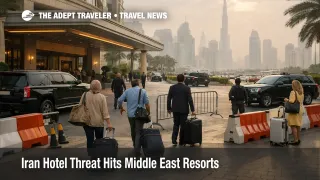
Iran's March 27 warning that hotels and other sites used by U.S. forces could be treated as legitimate targets has turned a broader regional security crisis into a more specific lodging risk for some travelers in the Middle East. The warning does not amount to a verified brand wide threat against every Four Seasons or resort in the region, but it does move hotels from a background concern into the operational risk picture, especially in countries where U.S. facilities, military activity, or diplomatic footprints are already part of official travel advisories. For travelers with near term stays in Bahrain, the United Arab Emirates, Saudi Arabia, or politically exposed properties elsewhere in the region, the main decision is no longer just whether the flight will operate, but whether the hotel itself is the right place to stay.
Middle East Hotel Threat: What Changed
What changed on March 27 is that Iranian state aligned reporting moved beyond general warnings about American linked sites and explicitly said that hotels and other accommodations used by U.S. personnel could be considered legitimate targets. Follow on reporting citing Fars News Agency specifically named the Four Seasons Hotel Damascus among the sites allegedly used to host foreign experts and dignitaries. That matters for travelers because a hotel threat alters how people should judge a trip even when the destination itself is still technically open and commercial service continues. A functioning airport or an open resort does not remove the risk that a politically exposed property could attract scrutiny, heightened security, or last minute operational changes.
There is an important limit here. The named Four Seasons reference that appears in current coverage is tied to Damascus, Syria, not a verified list of Gulf Four Seasons properties or a broad official Iranian blacklist of luxury brands. Four Seasons' own corporate notice says the Damascus hotel is no longer managed by Four Seasons Hotels and Resorts, which means travelers should be careful not to read the Damascus reference as proof that the current global Four Seasons portfolio has been directly singled out.
Which Travelers and Properties Face the Most Risk
The highest exposure is not evenly spread across all leisure stays in the region. The sharper risk sits with travelers booked into high profile luxury hotels, compounds, or mixed use properties in countries where the U.S. government already warns of Iranian drone or missile threats, terrorism risk, or American linked sites being potential targets. The U.S. State Department now tells travelers to reconsider travel to the United Arab Emirates and says the Iranian regime has publicly stated its intention to target locations in the UAE associated with the United States. Bahrain remains under a Level 3 advisory tied to terrorism and armed conflict, and Saudi Arabia's advisory specifically mentions the risk of Iranian drone and missile targeting of American interests, including hotels and locations where American citizens gather.
That does not mean every resort guest should assume an imminent strike. It does mean business travelers, government contractors, event attendees, airline crews, and luxury travelers staying at properties known for diplomatic, military, or official traffic should rate hotel choice more carefully than they did a week ago. First order, a property can face visible security tightening, access restrictions, road controls, or last minute guest movement. Second order, airport transfers, tour pickups, restaurant bookings, and onward connections can break even if the room itself remains available. In an earlier Adept Traveler article, Gulf Flight Suspensions Expand by Carrier showed how regional flight recovery is already fragile. Layering hotel exposure on top of flight disruption raises the odds that one weak link turns into a failed itinerary.
What Travelers Should Do Before Check In
Travelers with departures in the next 24 to 72 hours should review the property, not just the destination. Check whether the hotel is attached to a major diplomatic district, near a military or government zone, or widely used for official delegations, crews, or foreign contractors. If the answer is yes, compare the cost of switching to a lower profile property in a less exposed district against the cost of forcing the trip to hold at the original hotel. This is especially relevant in Bahrain, the UAE, and Saudi Arabia, where U.S. advisories already point to conflict related threats and disrupted transport conditions.
The wait versus switch threshold is now clearer. Keep the booking if the hotel is in a lower profile area, your trip is essential, your arrival window is short, and you have solid airport transfer flexibility plus refundable backup lodging. Change hotels now if the property is politically prominent, known for official traffic, or close to likely security cordons, and especially if your trip depends on a fixed event, cruise embarkation, or one night connection. Travelers should also enroll in STEP, monitor the nearest embassy alerts, and make sure their transport plan does not depend on one single road, one single app, or one nonrefundable transfer.
Tour travelers should be even stricter. In an earlier Adept Traveler article, Intrepid Egypt Tours Resume, Jordan and Oman Stay Paused showed that operators are already splitting the region into destinations that are workable and destinations that still are not. Hotel selection is now part of that same screening logic.
Why the Threat Now Reaches Hotels and What Happens Next
The mechanism is straightforward. Once conflict spreads beyond military to logistics, transport, and symbolic American linked sites, hotels become relevant because they are where crews sleep, delegations meet, contractors stay, and foreign nationals gather. Reuters reported on March 1 that Iranian strikes had already hit airports, military installations, ports, and hotels across the Gulf, which means the lodging sector is not being pulled into the story for the first time now. What is new is the more direct warning language around accommodation sites connected to U.S. personnel.
What happens next depends on whether this threat remains rhetorical or leads to more named properties, embassy alerts, or hotel specific security changes. The signals to watch over the next several days are concrete ones, embassy warnings tied to specific districts or hotels, operators shifting crew hotels, major brands changing access procedures, and insurers or tour operators tightening terms. Until that picture is clearer, travelers should treat the Middle East hotel threat as a selective but serious planning issue, not a reason to assume every regional resort stay is unsafe, and not something to ignore because the flight still shows on time.
Sources
- Worldwide Caution, U.S. Department of State
- Consular Information for Americans in the Middle East, U.S. Department of State
- United Arab Emirates Travel Advisory, U.S. Department of State
- Bahrain Travel Advisory, U.S. Department of State
- Saudi Arabia International Travel Information, U.S. Department of State
- Gulf businesses reel as Iran strikes trigger regional shutdowns, Reuters
- Iran warns five-star hotels used by US forces are legitimate targets
- Four Seasons Hotel Damascus Notice