

Winter Storm Bellamy, Chan Disrupt Chicago And U.S. Flights
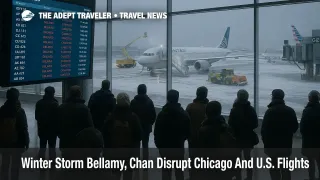
Winter Storm Bellamy Chicago flights are already heavily disrupted, turning Chicago and much of the upper Midwest into a post Thanksgiving bottleneck, with record single day November snow at Chicago O Hare International Airport (ORD) and more than 1,400 flights canceled across O Hare and Chicago Midway International Airport (MDW) on November 29, 2025. Millions of travelers trying to get home from Thanksgiving or start early December trips across the United States now face a second hit as forecasters track Winter Storm Chan, which will add fresh snow and icing from the Midwest and Great Lakes into the Northeast through midweek. Anyone with flights or long drives through the storm belt needs to treat November 30 through December 3 as a rolling two storm gauntlet, building extra buffer into connections, adjusting routings away from the worst hubs, and moving flexible trips out of the highest risk windows.
The core change since our earlier Winter Storm Bellamy coverage is that the storm has delivered record November snowfall and concrete cancellation numbers in Chicago, while Winter Storm Chan is now forecast to extend disruption from Midwest hubs into major Northeast airports, so travelers must plan around back to back systems rather than a single day of Winter Storm Bellamy Chicago flights delays. Travelers who need a deeper dive into Bellamy itself can pair this update with Adept Traveler's earlier alert Winter Storm Bellamy To Snarl U.S. Thanksgiving Travel, and those focused on Chicago routing decisions should also read Chicago Winter Storm Cancels Flights November 29.
How Hard Bellamy Hit Chicago And The Midwest
By Saturday night, local reports and flight tracking data showed about 1,232 flights canceled at O Hare and roughly 246 at Midway, meaning more than 1,400 departures and arrivals scrapped in Chicago alone as Bellamy's heavy snow and gusty winds moved through. The same storm produced more than 8 inches of snow at O Hare, with The Weather Channel and National Weather Service data indicating that November 29 was the snowiest November day on record in the city, and Chicago Sun Times coverage framed it as the heaviest single day snowfall in roughly a decade.
Nationwide, Bellamy has already driven more than 1,400 flight cancellations and several thousand delays, with FlightAware tallies and national outlets confirming that the majority of scrapped flights are linked to weather in the upper Midwest. Chicago, Minneapolis Saint Paul International Airport (MSP), Detroit Metropolitan Wayne County Airport (DTW), and other Great Lakes hubs have borne the brunt of the impact, while Denver, Kansas City, and parts of the central Plains have seen waves of deicing delays and weather reroutes.
On the roads, the National Weather Service has warned of snowfall rates exceeding one inch per hour in parts of Iowa, Illinois, Wisconsin, and Michigan, plus whiteout conditions in exposed areas, which has already translated into pileups and spinouts on interstates and smaller highways. Drivers heading between Chicago and surrounding states should assume slower speeds, intermittent closures, and long clear up times where crashes have occurred.
Sunday November 30, Bellamy Moves East While Backlog Builds
Through November 30, Bellamy's core energy shifts into the Great Lakes and then into the Northeast corridor, with snow transitioning to a mix of rain, low ceilings, and crosswinds along the Interstate 95 spine. Forecasts from The Weather Channel and others flag Atlanta, Boston Logan International Airport (BOS), New York's major airports, Philadelphia, Pittsburgh, and Washington area airports as high risk for Sunday delays, even where precipitation falls mainly as rain.
For travelers, that means Sunday becomes a classic squeeze point. Midwest hubs are still working through Saturday's backlog and deicing queues, while East Coast hubs start seeing inbound holds and flow control as Bellamy's tail arrives. Tight one stop itineraries that connect through Chicago into the East Coast, or that rely on a single evening arrival before a Monday morning meeting, should be treated as fragile. Where possible, passengers should move to earlier flights, direct services, or routings that use less exposed hubs like Dallas Fort Worth International Airport (DFW) or Houston George Bush Intercontinental Airport (IAH) once their weather improves, even if it adds distance.
Monday December 1, Chan Refreshes Snow In Midwest And Great Lakes
Even as Bellamy's direct impacts fade, Winter Storm Chan takes over the pattern. Weather Channel and Weather Underground guidance show Chan bringing a new swath of snow to parts of the Plains, Midwest, and Great Lakes on Monday and Monday night, including corridors that already saw heavy snow from Bellamy.
For aviation, that creates a second operational squeeze on routes that depend on Chicago, Minneapolis, Detroit, Cleveland, and smaller upper Midwest airports. Some carriers will have aircraft out of position after Bellamy, and Chan's fresh snow could trigger new ground delays, longer deicing lines, and short notice cancellations, especially on regional feeders. Anyone whose original flight was already pushed from Sunday into Monday should assume that Monday afternoon and evening departures in the upper Midwest are at higher risk than usual and adjust plans accordingly.
On the ground, Monday looks riskier for long drives across Wisconsin, Michigan, northern Indiana, and northern Ohio. Interstate corridors around the Great Lakes that were only slushy on Sunday could move back into snow covered and icy status, with plow crews facing fresh accumulation on top of existing drifts and piles.
Tuesday And Wednesday, Chan Targets The Northeast
By Tuesday and early Wednesday, Winter Storm Chan is expected to intensify off the mid Atlantic coast, with forecast discussions flagging a combination of heavy snow inland and a messy mix of snow, sleet, and freezing rain closer to the coast. Forecasters highlight the risk of a challenging rain snow line along the I 95 corridor, with Boston, New York, Philadelphia, and possibly Washington area airports facing another round of weather driven delays and cancellations, just as they recover from Bellamy's weekend rain and low ceiling impacts.
Travelers planning Tuesday or Wednesday departures into or out of the Northeast have three big considerations. First, early morning departures often have a better chance of getting out before snow rates and winds peak, especially on shorter regional hops. Second, afternoon and evening connections that rely on a tight inbound slot from the Midwest or South into a Northeast hub may be vulnerable to cascading delays once Chan is fully in place. Third, any itinerary that strings together separate tickets, or that leaves only a slim margin before onward trains, ferries, or events, should be padded or simplified now.
What The Airline Waivers Actually Offer
Major U.S. carriers have responded by issuing weather waivers that cover Bellamy's peak and, in some cases, the broader early winter pattern. American Airlines lists a Winter Storm Bellamy Midwest U.S. alert that lets passengers who bought tickets by November 25 or 27 and were due to travel November 29 to 30 rebook between roughly November 26 and December 4 without change fees, as long as origin and destination stay the same and rebooking remains in the same cabin.
Delta's Midwestern Winter Weather advisory similarly covers travel on November 29 and 30, with tickets that were issued by November 28 eligible to be reissued by December 3 and new travel beginning by that date, alongside separate fare difference waivers when passengers stay in the same cabin. United has issued an Upper Midwest Winter Weather waiver for November 29 to 30, while Southwest has a Chicago Winter Storm Bellamy advisory that allows rebooking within a fourteen day window without paying a fare difference in many cases.
The practical translation is that travelers whose trips touch Chicago, the broader upper Midwest, or eventually the Northeast have an opportunity to move out of the worst windows with fewer penalties. That might mean shifting a Sunday night flight to Monday midday once Bellamy has cleared but before Chan's snow reaches full strength, or pushing a Tuesday morning Northeast departure to Wednesday afternoon if forecasts confirm heavy snow or ice.
Strategy, By Trip Type
For same day, must travel trips, the priority is to simplify. Direct flights are preferable to one stop routings, even if that means flying slightly earlier or later than planned or using a nearby airport with better performance. For example, in some cases Buffalo may offer a more reliable option than a smaller regional field, and in others, a direct into Boston might be safer than connecting through New York on a short layover.
For discretionary or semi flexible trips, travelers should use the waivers to get out of peak exposure windows altogether. If your itinerary runs through Chicago, Minneapolis, or Detroit on Sunday night, or through Boston or New York on Tuesday morning, moving that trip to Wednesday afternoon or later in the week will likely offer a smoother experience. Those booking new tickets for early December should route away from the upper Midwest and interior Northeast on days when Chan's peak impacts are expected, even if it adds an extra hour or two in the air.
For road trips, especially in the Great Lakes snow belts, the safest play is to front load long drives into late Sunday once main routes have been plowed and winds have eased, then keep Monday and Tuesday legs shorter and more flexible in case Chan's snow bands overperform. Travelers who must drive on peak days should carry winter kits, allow generous time for fuel and rest stops, and be ready to pull back or reroute if state troopers close sections of interstate.
How This Fits With Our Earlier Bellamy Coverage
This piece is meant to sit on top of Adept Traveler's earlier storm sequence, which began with our broader look at Thanksgiving Winter Storms Hit US Flights And Roads and our first dedicated Bellamy analysis in Winter Storm Bellamy To Snarl U.S. Thanksgiving Travel. Those pieces walk through how the holiday pattern set up and how Thanksgiving travel interacts with FAA flight caps and constrained crew and aircraft availability. This update adds the concrete metrics, record snow day context, and second storm timing that were not yet clear when Bellamy was only a forecast.
Taken together, the message is straightforward. Bellamy has already proved that forecast storm totals and travel disruption warnings were not empty. Chan is coming into a system that is already stretched, and travelers who take advantage of waivers and rerouting options now will have more control than those who wait until their flight is one of the many flashing red on the departure board.
Sources
- Winter Storm Chan To Bring New Snow To Midwest, Then Target Northeast Early This Week
- Saturday Was Snowiest November Day On Record In Chicago: 8.4 Inches At O'Hare
- More Than 1,400 Flights Canceled At Chicago Airports As Winter Storm Hits
- How Is The Winter Storm Messing Up Travel Plans?
- A Major Winter Storm Disrupts Travel As Millions Head Home After Thanksgiving
- Travel Alerts, Winter Storm Bellamy, Midwest U.S.
- Current Advisories, Midwestern Winter Weather
- Travel Advisories And Alerts, Chicago Winter Storm Bellamy