

Spain Rail Strike Risk After Adamuz, Barcelona Crashes
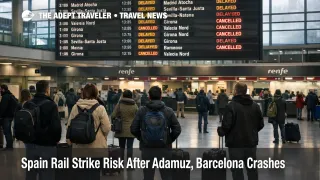
Spain rail strike risk increased after SEMAF, Spain's largest train drivers union, called for nationwide strike action following a deadly collision near Adamuz, Spain, and additional derailments on the Barcelona area commuter and regional network. For travelers, the key change is that this is no longer only an investigation and recovery story. It is now a live operational risk that can cut capacity through labor action, plus precautionary slowdowns and inspections that reduce timetable reliability even if trains keep running.
Authorities have responded with safety measures, including inspections and precautionary speed limits on critical lines, which can reduce throughput on high demand corridors and compress passengers into fewer departures. In Catalonia, heavy rain and infrastructure impacts have already disrupted services, and the derailments add both immediate service interruptions and the possibility of conservative operating rules while sections are assessed and cleared. This is the same disruption pattern travelers see across Europe when safety, weather, and labor risk stack, and the calendar logic is similar to what is described in Europe Transport Strike Dates 2026 for Flights and Trains.
Who Is Affected
Rail passengers on Renfe's long distance services, including AVE, Alvia, and Avant, are the most exposed group because they are more likely to be running tight, ticketed, time bound itineraries between major cities. When a strike is threatened, operators often avoid promising full schedules, and even limited service regimes can produce uneven gaps that are hard to plan around if you are relying on specific train numbers to make a hotel check in, a timed entry, or a same day connection.
Travelers in and around Barcelona, Spain, face a second layer of risk because the Rodalies commuter and regional network is the feeder layer that makes airport transfers, day trips, and station access work. Storm impacts and derailments can force partial line closures, bus bridging, and reduced frequency, and that can quickly become the deciding factor for whether you reach your train, or miss it before the long distance segment even starts. This also intersects with city access issues already showing up in Spain this week, including road disruption risks noted in Spain Protest Roadblocks Disrupt City Access.
Air travelers are indirectly affected because rail is a primary access mode to airports and a common substitute when short haul flights cancel. If rail capacity drops, airport road corridors get busier, rideshare and taxi queues lengthen, and missed check in windows become more common, especially for early morning departures. The highest exposure is for passengers trying to connect between rail and flights at Adolfo Suárez Madrid Barajas Airport (MAD) and Josep Tarradellas Barcelona El Prat Airport (BCN) on the same day, or anyone traveling on separate tickets.
What Travelers Should Do
Act as if the next published strike notice could change same day viability. If your trip depends on a specific long distance train, add buffer by moving to an earlier departure, booking a flexible hotel night near the departure station, or securing a refundable backup such as a coach seat or a changeable flight. In Barcelona and the wider Catalonia region, assume commuter rail can be intermittently disrupted after heavy rain, and plan airport transfers with time to absorb a missed train without cascading into a missed flight.
Use a clear decision threshold for rebooking versus waiting. If losing two to three hours would cause you to miss the last practical connection, a cruise or tour start, or a nonrefundable check in deadline, rebook to a different day, or swap to a mode that does not depend on the affected rail layer as soon as official notices confirm dates or minimum service rules. If your plans are flexible and you can tolerate an overnight without major cost, waiting can be reasonable, but only if you are not chaining multiple rail legs where one cancellation breaks the entire itinerary.
Over the next 24 to 72 hours, monitor three channels in parallel, the train operator status pages, the infrastructure and service alerts for the corridors you will use, and your ticket specific notifications from Renfe or your seller. Watch for the publication of strike dates, minimum service obligations, and corridor specific operating restrictions after inspections. Until those are clear, treat Spain rail strike risk as an active planning constraint, and avoid itineraries that require perfect on time performance to succeed.
How It Works
Rail disruption propagates in two overlapping waves, capacity loss and recovery loss. The first order effect is direct capacity reduction, fewer trains, fewer crews, fewer dispatch and control resources, or conservative speed and routing decisions after incidents. Even without a formal strike day, inspections and precautionary speed limits can lower the number of paths available per hour on busy lines, which increases platform holds, creates knock on delays, and makes published timetables less predictive.
The second order ripple shows up in traveler behavior and downstream modes. When trains are canceled or retimed, demand compresses into fewer departures, so rebooking becomes harder and price pressure rises on alternatives. Coaches sell out on obvious city pairs, rental cars reprice, and hotels near major stations see last minute demand from stranded passengers. In a multi incident week, that recovery capacity is already depleted, so a smaller disruption, like a localized storm impact on a commuter line, can trigger outsized effects across long distance rail, station access, and airport transfers.
This is why the most practical posture right now is to plan for volatility until the strike timing, minimum service rules, and post incident operating constraints are fully published. Spain rail strike risk is not only about whether trains run. It is about whether your specific sequence of rail legs, station transfers, and onward connections still has enough slack to survive last minute cancellations and replatforming.
Sources
- Spanish train drivers call for strike after deadly derailments, Reuters, January 21, 2026
- Spain orders speed limit on Madrid Barcelona line in wake of deadly train crash, Reuters, January 20, 2026
- Commuter train derails near Barcelona, driver dead, four badly injured, Reuters, January 20, 2026
- El sindicato de maquinistas Semaf llama a la huelga, RTVE, January 21, 2026
- Los sindicatos de maquinistas llaman a la huelga en el ferrocarril, El País, January 21, 2026