

Dubai Drone Debris Hits Burj Al Arab, Fairmont Palm
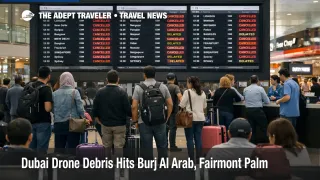
Debris from an intercepted drone in Dubai, United Arab Emirates, damaged two high profile hotels over the weekend, adding a lodging layer to a disruption story that many travelers have been treating as flight only. Dubai's government media office said debris caused a minor fire on the outer facade of the Jumeirah Burj Al Arab on Saturday, and that civil defence teams brought it under control with no injuries reported. Fairmont The Palm also acknowledged an incident nearby involving debris in a car park, while saying the hotel remains open and operational.
For travelers, the practical takeaway is not that Dubai's hotel sector is broadly shutting down. It is that prominent properties can be pulled into the operational picture through debris, precautionary access controls, and sudden shifts in movement, even when guest areas remain open. If your itinerary is time sensitive, treat the next few days as a volatility window where transfer time, rebooking inventory, and on property guidance can change quickly.
Dubai Drone Debris Hotel Damage, What Changed for Guests
Dubai's Media Office said a drone was intercepted and debris caused a minor fire on the Jumeirah Burj Al Arab's outer facade on Saturday, and that the fire was controlled with no injuries reported. Separate reporting has described the incident as part of a wider regional escalation that also drove airspace and flight disruption across Gulf hubs.
Fairmont The Palm posted a guest facing update stating it was aware of an incident in the vicinity of the property, with debris reported in a nearby car park. The statement said the hotel remains open and operational, and that teams are monitoring developments and coordinating precautionary measures with relevant authorities.
The Burj Al Arab's global profile matters here because it is a recognized landmark and a common anchor for premium leisure trips, milestone travel, and short stay stopovers. Jumeirah's own brand history notes the hotel opened in 1999 and became a signature part of Dubai's luxury positioning. That visibility can translate into tighter security postures and more conservative access decisions, even when damage is minor and contained.
Which Dubai Travelers Are Most Exposed Right Now
The most exposed segment is travelers currently in Dubai, or arriving within the next 24 to 72 hours, who are staying at, visiting, or transferring near high profile waterfront properties such as the Burj Al Arab area and Palm Jumeirah. Even when hotels remain open, localized controls can slow vehicle access, change drop off points, or delay scheduled excursions and restaurant reservations.
The second group is travelers using Dubai as a connection point, especially anyone with a tight same day onward flight, a cruise embarkation, or separately ticketed segments. When airspace constraints and schedule changes stack up, the trip failure mode is often misconnects, baggage separation, and forced overnights, not a single dramatic cancellation. If your stay is effectively a buffer between flights, you should assume that buffer may need to grow.
A third group is travelers who booked non refundable hotel rates or prepaid packages without flexibility. In a fast moving security environment, the financial exposure can become the main problem, because you may need to relocate properties, extend a stay, or reroute flights on short notice.
What Travelers Should Do Now in Dubai
Start with verification, not assumptions. If you are booked at the Jumeirah Burj Al Arab or Fairmont The Palm, check the most recent property communication channels and confirm arrival instructions, vehicle access, and any changes to entrances or valet operations before you travel across the city.
Next, build buffer into anything that has a hard start time. For airport runs, add extra time for ground movement, and avoid planning an arrival at the airport that depends on a single, precise transfer window. For tours and dinners, choose options with flexible cancellation, and consider shifting fixed bookings later in the day until you see steadier operations.
Then, set a decision threshold for rebooking. Rebook now if your itinerary relies on Dubai as a short connection, if you are on separate tickets, or if your airline has already opened a no fee change window and you can route around the highest risk corridors. Wait only if you have genuine date flexibility and can absorb a forced overnight without breaking the purpose of the trip. For wider context on how fast this can spread through hubs and schedules, see Worldwide Security Alert Flags Airspace, Hotel Risk and Middle East Airspace Closures Halt Dubai, Doha Flights.
Why Hotel Incidents Can Disrupt Trips Beyond the Property
In a security driven disruption, lodging is not just a place to sleep, it is part of the movement network. When incidents involve debris near major hotels, authorities may adjust traffic patterns, increase screening, or temporarily narrow access routes. That can create second order effects like late airport arrivals, missed timed entry tickets, delayed meetups for group excursions, and compressed taxi availability in specific corridors.
At the same time, airspace constraints can reduce inbound flight reliability, which shifts demand into hotels through forced overnights and last minute rebookings. That demand spike can tighten inventory, raise prices, and make same day property changes harder, even when the original incident is limited. The operational lesson is to plan for system friction, not just the headline event. A small, contained incident can still change how a city moves for a day or two, and that is enough to break tight itineraries.
Sources
- Dubai Media Office post on intercepted drone debris and Burj Al Arab fire (X)
- Luxury Hotel in Dubai, Fairmont The Palm statement (Fairmont)
- Dubai airport, iconic Burj Al Arab hotel damaged in Iranian missile strikes (Reuters, February 28, 2026)
- Dubai's image as a safe, tax free haven is rocked by blasts from Iranian airstrikes (AP, March 1, 2026)
- Drone interception sparks minor fire near Burj Al Arab (Dubai Eye 103.8, March 1, 2026)