

Middle East Cruise Cancellations Trap Ships in Gulf
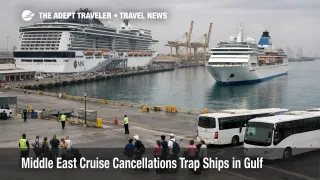
Middle East cruise cancellations are now a live operational problem for travelers in the Arabian Gulf, not just an airline reroute story. Celestyal Cruises has canceled two departures scheduled for March 2, 2026, and is holding ships alongside in Doha, Qatar, and Dubai, United Arab Emirates, while MSC Cruises has canceled multiple upcoming MSC Euribia departures tied to Dubai, Doha, and Abu Dhabi dates through March 11, 2026. The practical change is that some guests are being asked to wait onboard for days, and future guests need to make flight and hotel decisions before the port situation normalizes.
Middle East Cruise Cancellations: What Changed for Gulf Sailings
Celestyal said Celestyal Journey will remain alongside in Doha until March 7, 2026, and that the cruise scheduled to depart March 2 was canceled, with guests offered the option to remain onboard until March 7 or disembark. Celestyal also said Celestyal Discovery is alongside in Dubai, and that the sailing scheduled to depart from Abu Dhabi on March 2 was canceled, with the line saying it could not disembark guests "in line with instructions from local authorities" and would begin disembarkation in Dubai once permission is granted. For travelers who were booked on the canceled sailings, Celestyal said guests will be offered a full refund or a future cruise credit.
MSC Cruises, meanwhile, published an update stating it has canceled the upcoming MSC Euribia cruise departures from Dubai on March 7, 2026, from Doha on March 8, 2026, and from Abu Dhabi on March 11, 2026, and said impacted guests have already been contacted directly. Reuters reporting also described MSC Euribia remaining in Dubai, and noted the company was in contact with embassies and foreign offices about repatriation planning.
Which Travelers Are Most Exposed Right Now
The highest exposure group is anyone in the Gulf region whose itinerary chains cruise embarkation to short notice air travel through Dubai, Abu Dhabi, or Doha. When ships remain alongside and ports restrict disembarkation, the usual "get off, transfer, fly" playbook can fail, and a cruise disruption turns into a lodging, visa, and rebooking problem quickly.
A second exposed group is future guests who have not departed yet, especially those with nonrefundable positioning flights, one night pre cruise hotels, or tight work return dates. The risk is not only the canceled sailing, it is the secondary cost, rebooking into constrained flight inventory, additional hotel nights, and last minute one way fares that often spike during a regional disruption window.
Travel advisors and families traveling in groups should treat this as a coordination problem. If one party can reroute home and another cannot, a "split return" plan may be the fastest way to reduce total cost and reduce the number of travelers stuck waiting on the same bottleneck.
What Travelers Should Do Now
If you are currently onboard a ship being held in Doha or Dubai, prioritize documentation and communications before you prioritize comfort. Get written confirmation from the cruise line of your ship status, your disembarkation options, and any promised transfers or hotel support, then share that with your travel insurer and, if relevant, your embassy registration system. Take screenshots of airline cancellations, cruise notices, and any rebooking offers, because these documents often determine whether trip interruption and delay claims are paid.
If you were booked on a canceled sailing, the decision threshold is simple. Take the refund if your trip purpose is date specific, for example a school break end date, a wedding, or a fixed return to work, because the system is not offering reliable forward timing signals yet. Consider future cruise credit only if you are confident you can rebook outside this risk window and you are comfortable carrying supplier credit exposure for months.
If you are due to fly into the region to join a cruise within the next week, rebook now if you cannot tolerate a 1 to 3 day slip. Waiting can feel cheaper, but it often becomes more expensive once flight inventory tightens and hotels sell out near the ports. Over the next 24 to 72 hours, monitor the cruise line's ship specific updates and the operating reality at Dubai and Doha hubs, because cruise departures and guest repatriation depend on both port permissions and workable flight options.
Why the Disruption Spreads Through Cruises
Cruise disruptions in the Gulf spread differently than a simple port skip. First order, ships can remain alongside when local authorities restrict movement, which immediately blocks planned turnarounds and embarkation cycles. Second order, even when a ship is safe and "calm onboard," moving thousands of guests off ship requires coordinated permissions, transport capacity, and then flight seats, and those seats can be scarce when the same conflict is also disrupting airspace and hub reliability.
There is also a compounding timetable effect. Cruise itineraries are built on fixed port windows, shore side staffing, and sequential guest flows. When a ship misses one turnaround, the disruption can cascade into the next sailing cycle, because the ship, crew rotations, supplies, and scheduled port calls all slide together. That is why cancellations and holding patterns can expand from a single departure date into multiple dates, as MSC's March 7, March 8, and March 11 cancellations illustrate.
For earlier air travel context that can affect cruise joining and return flights, see Middle East Airspace Closures Keep Global Reroutes and UAE Airport Recovery Delays Dubai, Abu Dhabi March 1.