

Middle East Airspace Closures Keep Global Reroutes
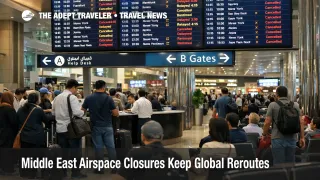
Middle East airspace closures are still breaking itineraries on Monday, March 2, 2026, because the disruption is no longer just about avoiding overflight corridors. Flight tracking and airline updates show that multiple countries' airspace restrictions, plus uneven airport operating conditions at key Gulf hubs, are continuing to force long haul flights into longer routings, diversions, technical stops, and forced overnights. The practical change since the weekend is that travelers now have to plan for a multi day recovery pattern, not a single day shock, even as some authorities and carriers begin limited restart moves.
Middle East Airspace Closures: What Changed On March 2
March 2 matters because the network is now in day three behavior. Airlines are still canceling large numbers of services into, out of, and through the region, and even flights that operate are arriving at different times and into different alternates than originally planned. Reuters reporting and live aviation tracking also point to staggered, partial resumptions for some operators, which usually means the first priority is aircraft positioning and constrained repatriation style flying, not a clean restoration of normal passenger banks.
For travelers, the decision problem has shifted. On February 28, it was whether your flight would operate at all. On March 2, the bigger risk for many itineraries is that a flight operates, but the longer routing or diversion breaks onward connections, hotel check ins, timed tours, cruise embarkations, or meetings that cannot slide.
Which Travelers Are Most Exposed Right Now
The highest exposure group is anyone holding same day connections through Dubai International Airport (DXB), Zayed International Airport (AUH), or Hamad International Airport (DOH), because these hubs rely on tightly banked arrival and departure waves. When airspace closures force detours, the arrival wave spreads out, gates and crews do not line up, and missed connections become structural rather than accidental.
Travelers on separate tickets remain the most financially exposed. If your long haul into a hub and your onward segment are not on one protected ticket, a diversion or cancellation can break the chain without automatic reaccommodation, even if the itinerary looks "linked" in your mind. This is also where baggage separation becomes a trip killer, because bags can end up in an unintended transit point while you are rebooked elsewhere.
A second exposed group is travelers already in motion, especially anyone who might be forced landside in an unexpected country. Diversion cities can include major alternates such as Istanbul, Turkey, or Athens, Greece, and when large numbers of passengers arrive unexpectedly, hotel inventory, onward flights, and airport services tighten quickly.
What Travelers Should Do Now
If you have a Gulf hub connection inside the next 24 to 72 hours and your arrival timing matters, treat "avoid the region" as the default move. Ask your carrier to reissue onto routings that do not rely on Gulf connections until airspace access and airport operations stabilize, even if the alternative is longer on paper. The tradeoff is time versus predictability, and right now predictability is usually the scarce asset.
Use a clean decision threshold for whether to wait. Wait only if your flight is still showing as operating, you can tolerate at least one overnight, you are on a single protected ticket, and you have a flexible arrival purpose. Rebook now if you are on separate tickets, you must arrive by a hard deadline, you have a tight connection under 3 hours in a hub, or you cannot tolerate a diversion that forces you landside.
Pack for baggage separation, not for best case. Keep one day of essentials in carry on, including any medication, chargers, and one change of clothes. If you are already checked in with a bag and you are offered a voluntary reroute via a different hub, confirm whether your bag can be retagged, or whether you should retrieve it before changing plans.
For travelers who may be forced into an unplanned overnight, keep entry rules in mind before you land. If an alternate routing might put you landside in Amman, Jordan, start with Jordan Entry Requirements For Tourists In 2026 so you know what documents and timelines tend to matter if you cannot remain airside.
Why The Disruption Keeps Spreading
This disruption persists because airspace closures remove high capacity corridors that global networks depend on, and because hub operations are designed around timing, not just distance. When flights detour around closed airspace, they consume more time and fuel, and they arrive outside their planned bank. That breaks minimum connection times, pushes crews toward duty limits, and mispositions widebody aircraft that are supposed to fly the next long haul segment.
Second order effects then compound the recovery. Diversions place aircraft and crews in airports that were never intended to act as recovery bases for that airline, and maintenance, catering, and crew hotel contracts may not exist at scale. Even after a limited reopening begins, airlines often need multiple cycles to rebuild the schedule, because yesterday's detours and cancellations become today's missing aircraft and crew rest problems.
A final pressure point is capacity squeeze. When many carriers are forced onto fewer viable corridors, the remaining routes get crowded, and airlines have less flexibility to add sections or recover missed banks quickly. That is why "partial restart" can still feel like extended disruption for travelers, especially on long haul itineraries that depend on connections.
For background and earlier day decision framing, see Middle East Airspace Closures Hit Dubai, Doha Hubs and Middle East Airspace Closures Snarl Gulf Hub Flights.
Sources
- Airspace closures following Israeli and US strikes on Iran
- Etihad Airways resumes some operations, commercial flights still halted amid Iran conflict
- Israel's Ben Gurion Airport set to reopen airspace in very limited format on Monday
- Stranded travelers scramble to make new connections as war shuts much of Middle East to air travel
- Air travel has been thrown into chaos with cancellations, diversions, and airspace closures after strikes on Iran