

London Underground Strike Risk Rises, Heathrow Transfers Hit
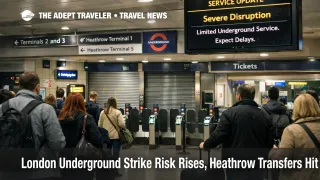
London Underground strike risk is rising after the RMT said Tube drivers backed industrial action linked to Transport for London's proposed voluntary four day working pattern. No strike dates have been published yet, but the ballot result is a meaningful escalation because it increases the odds of short notice disruption that can break airport transfers, timed tickets, and same day positioning across London, England. The practical takeaway for travelers is simple, build a transfer buffer now, and decide what you will do if the Tube is limited or shut on your travel day.
A second reason this matters now is timing. The legal notice window for industrial action in the UK has recently shortened in many cases, which compresses how much warning travelers may get once a walkout is actually called. That makes "watch and wait" a weaker strategy if your itinerary depends on the Tube for a fixed deadline, especially an international departure, a cruise embarkation, or a same day rail connection out of London.
London Underground Strike Risk, What Travelers Should Assume Now
Until specific dates are announced, travelers should treat this as a rising probability event with a short execution window, not a guaranteed shutdown. The right posture is to plan as if your first choice route could fail, and to pre decide your second choice while prices are still normal, and vehicles are still available. That means knowing which rail services you can use that do not depend on the Tube, and what a taxi or car service will cost from your neighborhood at the time you actually need to move.
For London Heathrow Airport (LHR), the Tube is usually the cheapest and most flexible option because the Piccadilly line serves the terminals directly. A Tube strike, or a sharply reduced service day, pushes demand onto the Elizabeth line, Heathrow Express, coaches, and road traffic, and those substitutes can saturate quickly. If you have a morning departure, or you are landing and trying to make a same day onward connection, the safer move is to add time rather than hoping the network stabilizes after peak commute hours.
For London City Airport (LCY), the sensitivity is even higher because the Docklands Light Railway is the standard rail access for many travelers. If industrial action expands beyond Tube drivers, or if TfL reduces services across multiple modes, your last mile options can get expensive and slow fast, especially at peak times and during major events.
Which Itineraries Are Most Exposed to Disruption
The most exposed trips are the ones with a hard downstream clock and a single surface corridor. If you are staying far from Paddington, Liverpool Street, Farringdon, or other Elizabeth line stations, a Tube disruption can turn a predictable cross city hop into a long bus chain with uncertain timing. That is how travelers miss timed entry attractions, theater start times, and day tours that do not wait.
Airport transfer risk is highest when you are combining a long haul flight with a tight hotel check in, an early departure, or an onward rail booking. Even if flights operate normally, an unreliable ground transfer can erase your buffer. The second order effect is that disruption concentrates demand into fewer corridors, and then those corridors become slow, crowded, and less predictable, even for travelers who are not using the Tube.
If you are traveling with bulky luggage, kids, or accessibility needs, treat this as a higher severity risk. The options that remain during a strike day are often busier, require more walking, and demand more transfers, which increases failure points when you are carrying bags or moving slowly.
How To Plan Around a Tube Strike Before Dates Are Set
The best move is to make your backup plan station based, not line based. For Heathrow, identify how you will reach an Elizabeth line station, or Paddington for Heathrow Express, without relying on the Tube. That can be a direct taxi to the rail hub, a hotel change closer to the hub, or a coach from a nearby terminal that you can reach on foot.
Terminal detail matters. If you are flying from Terminal 5, Heathrow Express is a straightforward option into Paddington, and the Elizabeth line also serves the airport, which can be a useful hedge if one operator is crowded or delayed. If you are using Terminal 4, rail access can involve an extra step depending on service patterns that day, so the simplest strike day posture is to avoid tight departure timing and to leave earlier than you normally would.
For City Airport, decide now whether you will pay for a car service if rail access becomes unreliable. If your trip is business critical, pre booking a car can be the cheapest insurance you buy, because same day demand spikes during strikes, and prices can jump while availability disappears.
Your decision threshold should be practical. If you have an international flight, a cruise, or a paid tour you cannot move, switching hotels to a location you can reach from an Elizabeth line station without the Tube is often worth it. If your plans are flexible, you can wait longer, but you should still map the backup route and monitor TfL's strike updates daily as your departure approaches.
Why Strike Risk Can Flip Into Real Disruption Quickly
The mechanism is straightforward. A strike ballot is not the same thing as a strike date, but it signals that formal action is now a live option, and that means schedules can change quickly once notice is served. Recent changes to industrial action rules in the UK are also relevant because shorter notice windows can reduce the time between an announcement and the first disrupted travel day, which is exactly the window when travelers are trying to reprice hotels, secure cars, and protect non refundable bookings.
On the dispute itself, the reporting so far centers on TfL's proposed voluntary four day week for Tube drivers, and union concerns about longer shifts and fatigue. TfL has argued that striking to stop a shorter working week would be unprecedented, and at least one other drivers' union has publicly supported the proposal, which is a reminder that outcomes can still move through negotiations even after a ballot result.
For travelers, the first order effect is reduced or suspended Tube service if dates are called. The second order effects are what break itineraries, crowding on the remaining rail corridors, longer taxi times as roads fill, and station level bottlenecks that add unpredictable minutes at exactly the time you are trying to hit a fixed deadline. That is why the safest strategy is to decide early where you will anchor your movements, and to avoid itineraries that require perfect cross city timing on a potential strike day.