

flydubai Reduced Schedule Keeps Dubai Trips in Flux
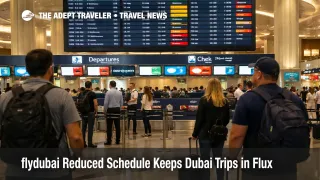
flydubai reduced schedule rules still shape Dubai, United Arab Emirates, travel on March 22, 2026. The airline says it has resumed operations with a reduced schedule and tells customers not to go to the airport unless they have confirmation that their flight is operating, has been rebooked, or has a revised check in time. For travelers, that means Dubai is no longer a full shutdown story, but it is also not a normal airport routine. The practical move is to reconfirm the booking chain before leaving for Dubai International Airport (DXB) or Dubai World Central, Al Maktoum International Airport (DWC), especially if the trip depends on a same day onward connection.
flydubai Reduced Schedule: What Changed for Dubai Travelers
What changed is not just that some flights are back. The operating rule has shifted into a partial recovery phase where a published schedule alone is not enough. flydubai's latest operational update, last updated on March 19, says the carrier has resumed operations with a reduced schedule and warns customers to stay away from the airport unless the airline has confirmed that the flight is operating, has been rebooked, or now has a revised check in time. Dubai Airports is still carrying a live advisory on March 22 telling passengers not to travel to the airport unless they have received a confirmed departure time directly from their airline.
That is a tighter threshold than the old habit of refreshing the departures board and heading out anyway. In an earlier Adept Traveler article, Dubai Airport Shutdown Exposes DXB Hub Failure covered the immediate shutdown phase after the March 16 disruption. The new traveler problem is different. Flights exist, but the airport run itself has become conditional on direct airline instruction.
Operationally, this is meaningful disruption, not minor friction. A passenger who shows up under old assumptions can lose hours at the terminal, miss a newly assigned check in window, or discover that the short haul feeder flight was moved without the onward plan being rebuilt. That is especially punishing in Dubai because the hub works on timed banks. Once one leg slips, baggage, gate access, and onward departure timing can break together.
Which Travelers Face the Most Exposure
The most exposed group is not only people starting their trip in Dubai. It is also travelers using flydubai as a low cost feeder into a larger itinerary. A short regional leg into Dubai may look recoverable on its own, but the second order risk is that it lands too late for a long haul departure, or that the new check in timing forces an overnight hotel stay that was never planned.
Separate ticket passengers face the hardest math. If the flydubai leg changes, the long haul carrier may have no obligation to protect the rest of the trip. Travelers connecting from the Gulf, the Caucasus, Central Asia, Eastern Europe, or the Indian subcontinent onto another airline are therefore more exposed than passengers on a single protected booking. The same goes for travelers with checked baggage, because partial recovery periods often restore flying faster than they restore smooth baggage handling and transfer reliability.
Budget conscious travelers are also unusually exposed here. flydubai often functions as the lower fare bridge into Dubai and beyond. When that bridge runs on a reduced schedule, the backup options can become much more expensive at the last minute, especially if the fallback is Emirates, a foreign carrier with limited Gulf service, or a surface transfer that adds a hotel night. In an earlier Adept Traveler article, UAE Airspace Shutdown Deepens Gulf Hub Risk the wider problem was the region's repeat disruption layer. This flydubai update narrows that into a more specific execution risk inside Dubai's recovery phase.
What Travelers Should Do Before Any Dubai Airport Run
The first move is simple but stricter than usual. Do not leave for DXB or DWC until flydubai has directly confirmed one of three things, that the flight is operating as booked, that you have been rebooked onto a working alternative, or that your check in time has changed and the booking is still valid. A flight number still visible online is not the same as an operational green light.
The second move is to decide whether to preserve the itinerary or preserve flexibility. flydubai says customers booked to travel between February 28 and March 31 can rebook to the same destination up to 30 days from the original date with no penalty, or cancel for a full refund to a flydubai voucher. If the trip is discretionary, if the connection is on separate tickets, or if there is only one viable onward departure that day, taking the rebooking window is often safer than gambling on same day recovery.
The third move is to tighten the buffer around every linked part of the trip. That means extra time for airport transfer, a plan for one unexpected hotel night, screenshots of updated booking messages, and a direct check on the onward carrier if Dubai is only the middle of the itinerary. Over the next 24 to 72 hours, the useful signal is not broad language about resumption. It is whether airline instructions become more stable, whether revised check in times stop shifting, and whether airport warnings begin to soften from exception handling back toward normal routine. Until then, the flydubai reduced schedule should be treated as an active planning constraint.
Why Partial Recovery Still Breaks Dubai Itineraries
Partial recovery looks deceptively normal from the outside. Aircraft are flying, some flights depart on time, and airport systems appear open. But the mechanism underneath is still fragile. Dubai Airports says schedules can continue to change as airlines reposition aircraft and rebalance their global networks, even after flights resume. That is the core reason the traveler discipline has changed. Recovery is not only about whether the runway is open. It is about whether the entire chain behind a specific booking has been rebuilt.
That is also why low cost feeder traffic matters so much in Dubai. A reduced schedule does not just remove seats. It changes the timing geometry that makes long haul connections work. First order, a short haul flydubai departure may be delayed, moved, or rebooked. Second order, the onward long haul sector may become unreachable, baggage may not flow cleanly, and airport hotel capacity can tighten as more passengers are forced into overnight recovery.
What happens next depends on whether Dubai's airport advisory language begins to ease and whether carriers move from individual exceptions back to stable daily operations. For now, the serious point is clear. Dubai trips are no longer blocked in the blunt way they were during the shutdown phase, but they still require confirmation discipline before every airport movement. Until that rule changes, the flydubai reduced schedule remains a live execution risk, not just a footnote in a recovery notice.