

London Tube Strike Threat Eases for Late March
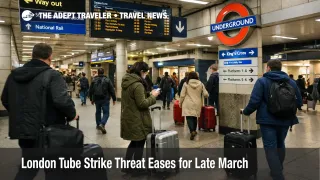
London's late March transfer picture looks materially better than it did a week ago. Transport for London now says the Tube drivers' strikes planned for Tuesday, March 24, to Wednesday, March 25, and Thursday, March 26, to Friday, March 27, have been suspended and that services will operate as normal on those dates, while Reuters reported the RMT union suspended the action after progress in talks over proposed working hour changes. That removes the sharper immediate threat to Heathrow Airport, St Pancras, and central London hotel transfers. It does not end the dispute, though, and travelers with London moves later in April, May, or June still need to treat the network as a recovery watch rather than a settled labor peace story.
London Tube Strike Threat: What Changed
The practical change is that the late March strike window most travelers were planning around is off the table for now. TfL's strike page says services will operate as normal on the suspended March 24 to 27 dates, which is a very different operational outlook from the one travelers faced when two 24 hour strike waves threatened to hit the Underground in the same week. In an earlier Adept Traveler article, London Tube Strike Pause Eases Late March Transfers, that pause already started to reduce the need for backup airport and hotel plans.
The dispute itself, however, is still live. Reuters reported on March 18 that the RMT suspended the strikes because of progress in talks over planned changes to working hours, but also quoted the union saying further talks will take place and the dispute remains active. That distinction matters for travelers. A suspended strike removes an immediate disruption window. It does not remove the possibility that a later breakdown in talks could put Underground dependent itineraries back under pressure.
Which Late March Trips Gain Breathing Room
The biggest winners are travelers whose plans depended on the Underground as the cheapest or most direct link across London. Heathrow passengers who expected to use the Piccadilly line or connect onward through central London regain a more normal late March transfer pattern. St Pancras travelers making rail to Tube to hotel, or airport to Eurostar handoffs, also avoid the backup pressure that a Tube strike would have pushed onto taxis, coaches, and above ground rail. Central London hotel stays look easier to keep intact, especially for visitors who were considering moving to airport hotels just to reduce risk. TfL says the March dates will run normally, which is the key reason the near term picture has improved.
That said, travelers should not overread this as a full network clearance. TfL still lists more Tube driver strike dates in April, May, and June, including April 21 to 24, May 19 to 22, and two June strike windows. Reuters also makes clear the union has not settled the underlying dispute. The late March reprieve is real, but it sits inside a longer labor story that can still affect later spring bookings, especially if a traveler is building tight same day airport, hotel, and rail chains.
What Travelers Should Do Now
For travel through Friday, March 27, the smart move is to keep the original late March plan unless another separate disruption affects your route. There is no strong case now for preemptively rerouting away from Underground dependent Heathrow or central London transfers solely because of the suspended strike dates. That should ease some of the taxi surge and airport coach backup demand that would likely have built if the strike had gone ahead.
The decision threshold changes for later spring. If your London trip falls in the April 21 to 24, May 19 to 22, or June 16 to 19 windows still shown by TfL, keep watching the dispute instead of assuming the same late settlement will happen again. Travelers with expensive same day chains, especially Heathrow arrival to central hotel to Eurostar, or long haul arrival to domestic rail, should lean toward more buffer and more flexible ticketing if those dates remain on the calendar close to departure. If your trip is purely local and easily moved above ground, waiting for more clarity can make sense. If missing one handoff would break the whole itinerary, earlier contingency planning is the better call.
Travelers unfamiliar with London's airport transfer options should also avoid relying on a single Underground path even in calmer periods. The site's own London Travel Guide: The Ultimate 7-10 Day Itinerary for First Time Visitors notes that Heathrow has multiple rail choices into the city, including the Piccadilly line, the Elizabeth line, and Heathrow Express, and that planning airport transfers in advance saves time and money. In labor disputes, that redundancy is what separates a manageable delay from a broken arrival day.
Why the Risk Has Eased, and What Happens Next
The reason the risk eased is narrow and specific. Reuters says the action was suspended after progress in talks over working hour changes, while earlier reporting on the dispute showed the fight centered on a proposed four day working pattern, with RMT arguing it raised fatigue, safety, and work life balance concerns and TfL saying the plan was voluntary and initially tied to the Bakerloo line. In plain terms, the system stepped back from an immediate labor clash, but not from the disagreement that created it.
What happens next depends on whether those negotiations turn a pause into a settlement. The first order effect of the suspension is that late March airport and city transfers should hold together more normally. The second order effect is that hotel reshuffling, last minute car bookings, and above ground fallback crowding should be lower than feared for that week. But the later dates still on TfL's strike page are the warning sign travelers need to watch. If those dates stay live as departure nears, London's airport access problem could return quickly, especially for Heathrow and central London journeys built around the Tube.