

TSA Shutdown Risk Grows Ahead of March 27 Deadline
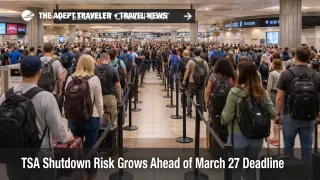
TSA shutdown risk is moving into a more serious phase ahead of March 27, 2026, because the next missed paycheck could hit during a busy spring travel window when airport screening demand is already high. The most exposed travelers are people departing from airports already warning of unusually long lines, especially large spring break hubs and smaller airports with less staffing slack. Transportation Security Administration checkpoint volumes have stayed above 2.4 million travelers on several recent March days, while airport and industry warnings show that some locations are already operating with reduced screening capacity. Travelers with hard same day commitments should stop treating security as routine buffer time and start treating it as a real itinerary risk.
TSA Shutdown Risk: What Changed
What changed is not merely that lines are long. The operational pressure point is that unpaid TSA officers could miss another full paycheck on March 27 after already working through the Department of Homeland Security funding lapse that began on February 14. TSA itself warned in congressional testimony before the shutdown that a lapse in funding would threaten morale, retention, hiring, and employee support, while current airport advisories now show the visible traveler effect, fewer open lanes, longer waits, and more volatile screening times. Houston Airports says the shutdown is affecting staffing and resources nationwide, and LaGuardia Airport is warning that security wait times may be significantly longer than normal.
The March 27 date matters because it combines workforce pressure with a political deadline. In the reporting the user provided, Senate Majority Leader John Thune said he could not see Congress leaving for its scheduled break if DHS remained unfunded, which turns the next missed paycheck into both a travel operations problem and a possible forcing mechanism in Washington. That does not guarantee a deal. It does mean the next several days are the point where screening strain and political incentives are most likely to collide.
Which Travelers Face the Most Disruption
The highest exposure sits with travelers flying from airports that have already posted unusually early arrival guidance, or those relying on tight same day connections, cruise embarkations, international departures, weddings, tours, or nonrefundable ground transfers. Houston has become one of the clearest examples. Houston Airports says the shutdown is reducing available screening lanes and warns that wait times can run longer than normal, with airport specific advisories showing reduced screening operations and changing checkpoint access. AP also reported that passengers in Houston and New Orleans faced exceptionally long waits as unpaid TSA staffing gaps widened.
Large hubs are where the longest visible lines show up first, but smaller airports may be more fragile if absence rates worsen. The travel industry and airlines are now framing the problem in system terms, not just customer inconvenience. A March 19 industry coalition letter led by U.S. Travel urged Congress to fund TSA immediately, warning that staffing shortages are driving longer security lines and added stress on a system that protects millions of travelers. Airlines for America likewise said on March 8 that waits of two and three hours were already causing missed flights and delays.
In an earlier Adept Traveler article, U.S. Shutdown Airport Risk Shifts to Continuity the focus widened from long lines to broader resilience risk. In another earlier Adept Traveler article, Houston TSA Delays Hit IAH and Hobby on March 23 the traveler problem became more specific, checkpoint consolidation, reduced premium screening options, and weaker departure timing at two busy airports.
What Travelers Should Do Before March 27
The immediate move is to build more buffer than usual, especially for morning departures, major hubs with published advisories, and any trip where missing the flight would break the itinerary. Normal pre departure habits, arriving on the usual cadence, assuming PreCheck or CLEAR will save the morning, or waiting to check the airport alert page until you are already en route, are weaker assumptions right now. Travelers should check the airport's own alert page before leaving, then recheck airline and airport apps once they are on the way.
The key decision threshold is simple. Rebook earlier, switch airports, or move a connection if a same day miss would trigger a larger failure, such as a cruise departure, an international handoff, or a late arrival that cannot be absorbed. Waiting may still be reasonable for flexible domestic trips, but only if the origin airport is not posting active TSA warnings and later backup options still exist. The tradeoff is cost versus itinerary protection. Waiting can preserve the original fare. Moving earlier can preserve the trip.
Over the next 24 to 72 hours, watch three signals. First, whether more airports begin posting concrete screening warnings like Houston and LaGuardia. Second, whether checkpoint volumes stay elevated near recent March levels. Third, whether Washington resolves funding before the March 27 paycheck pressure hits. If airport advisories spread and funding does not, TSA shutdown risk becomes less about a few bad queues and more about unreliable screening throughput across the network.
Why March 27 Could Decide What Happens Next
The mechanism is straightforward. TSA officers are essential workers, so screening continues during a shutdown, but unpaid work raises absenteeism risk, which reduces staffing elasticity at the exact point where airports need it most. Once that slack disappears, the first order effect is longer lines. The second order effect is more expensive, missed flights, weaker rebooking options, later hotel arrivals, broken connections, and pressure spreading from screening into the rest of the trip. TSA's own pre shutdown testimony anticipated that a funding lapse would affect employee support and operational readiness, and recent official passenger counts show that this is happening during a period of heavy travel demand, not a soft shoulder season.
March 27 could also mark the point where political and operational pressure finally line up. The travel industry is openly pressing Congress to restore funding and guarantee pay protections, citing the cost and strain of prolonged shutdowns. At the same time, the reporting supplied by the user shows that senior lawmakers were already treating the date as a likely decision point before a congressional recess. That still leaves uncertainty. A deal could come before the date, at the date, or not at all. What travelers can confirm now is narrower, airports with active staffing alerts deserve bigger buffers, and a trip that cannot absorb a same day screening failure should be rebuilt before March 27, not after it.
Sources
- Oversight Hearing, Potential DHS Shutdown Impacts, TSA
- TSA Checkpoint Travel Numbers
- Government Shutdown Impacts TSA, Passengers, Houston Airports
- William P. Hobby Airport Alert
- LaGuardia Airport
- Pay TSA, Industry Sign On Letter
- A4A Statement on Extraordinarily Long TSA Lines at Some U.S. Airports
- Travelers Encounter Long Waits at Some Airports as DHS Shutdown Affects Security Checkpoints
- March 27 Looks Like a Make or Break Day for U.S. Travelers and the Partial Government Shutdown