

Viking Pauses Nile Cruises to Egypt Through March 31
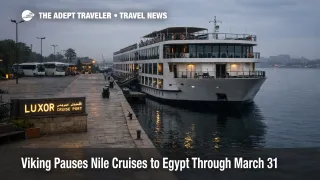
Viking has canceled its Nile River cruises in Egypt through the end of March 2026 as the regional conflict escalates. The company said it currently has travelers in Egypt and is arranging transportation out of the country. Separately, Viking executives said they are pausing Egypt itineraries through March 31, 2026, while they notify guests.
This is not a small schedule tweak for affected guests. A Nile sailing is usually a bundled chain of flights, hotels, domestic transfers, guided touring, and timed access, where one broken link can collapse the whole itinerary. If your departure is in March, the practical reality is that you should plan for a full rework of the trip, not a simple date shift.
Which Egypt and Middle East Trips Are Most Exposed Right Now
The highest exposure is travelers booked on March Nile departures, plus anyone whose Egypt trip includes Jordan, Dubai, United Arab Emirates, or other regional add ons that depend on stable air service. In the same window, other suppliers have also pulled back. Avalon Waterways has ceased Egypt operations for March, and it operates one Nile ship there, MS Farah.
Tauck has also moved to protect guests from the compounded risk of air disruptions and advisories. Tauck says it is canceling upcoming departures of Egypt: Jewels of the Nile through March 15, 2026, and it is canceling all March departures of Jordan & Egypt: Petra to the Pyramids.
AmaWaterways is taking a split approach. It said it has suspended its Jordan land extension and Dubai programs through March 31, 2026, but it plans to continue its March Egypt river cruises, and it is allowing March guests who want to rebook to do so without penalty.
What Travelers Should Do Now
If you are booked on a March Nile departure, treat this as a decision window where speed reduces cost. Start by getting the supplier's written cancellation or pause notice, then immediately ask your travel advisor or insurer what documentation they require for refunds, claim eligibility, and any "cancel for any reason" timelines. Waiting for clarity can be expensive because replacement air and hotels typically rise when lots of travelers are forced to move at once.
Rebook if your trip relies on tight international connections, nonrefundable hotel nights, or add on touring in Jordan or the Gulf. Those itineraries are structurally fragile right now because they rely on predictable regional flight banks and open routings. If your supplier is still operating and you are considering staying with the original plan, the tradeoff is simple: you may preserve a hard to replicate itinerary, but you are accepting a higher chance of last minute disruption and a narrower set of recovery options.
Over the next 24 to 72 hours, monitor two streams, your supplier's operational notices, and U.S. government security messaging that can shift insurer posture quickly. For the broader aviation backdrop that has been breaking Middle East routings, see Worldwide Caution, Middle East Flights Still Halted. For the supplier wide pattern of tours and cruises pausing across the region, see Middle East Tours, Cruises Suspended Through March 5.
Why This Is Happening, and How the Disruption Spreads
The immediate trigger is not the Nile itself, it is the system that gets travelers in and out safely and predictably. The U.S. State Department urged Americans to depart more than a dozen Middle East countries, including Egypt, as the conflict escalated, which can quickly change how airlines, insurers, and tour operators evaluate acceptable risk. Even if Egypt's formal advisory level does not change in lockstep, the "leave" messaging can be enough to push suppliers to pause operations rather than strand guests mid itinerary.
First order effects show up as outright cancellations or pauses, which force guests into refund, rebooking, and evacuation logistics. Second order effects hit the components around the cruise, Cairo hotel nights, domestic flights to embarkation points, ground transfers, and guided touring slots that are often capacity controlled. When multiple brands pause in the same month, the remaining operating departures become harder to service because suppliers are competing for the same flights, guides, and hotel inventory, and travelers who do get moved may face higher prices, fewer routing options, and longer recovery times.
Viking has been expanding in Egypt, but it has described the Egypt fleet as a small slice of its total capacity. That capacity mix matters because it explains why a pause can be operationally decisive for guests while still being manageable for the company. For travelers, the takeaway is that March is now a high volatility window for Egypt river cruising, where the best outcome comes from early, documented decisions, not last minute improvisation.