

UAE Airport Access Tightens Into No Ticket Rule
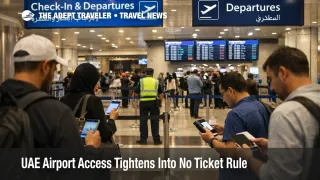
UAE airport access rules tightened again on March 14, 2026, and the practical change is sharper than a generic disruption warning. A new U.S. Mission alert for the United Arab Emirates tells passengers not to travel to the airport unless they hold a confirmed ticket and have been told by their airline to do so. Dubai Airports is carrying parallel language, telling passengers not to come unless they have a confirmed departure time directly from their airline. For travelers in Dubai, United Arab Emirates, Abu Dhabi, United Arab Emirates, and nearby emirates, that means the old irregular operations habit, go to the terminal early and try to fix it in person, is now a worse bet than staying put until the booking and airline message are locked.
The change matters because the airport itself is becoming a controlled checkpoint, not just a place where disrupted travelers gather. Adept's earlier UAE Airport Access Tightens for Stranded Travelers piece established the confirmed traveler rule on March 12. What changed by March 14 is that the rule is now being reinforced as the current operating posture, while Dubai Airports still warns passengers not to travel without a confirmed departure time. That pushes more stranded or self rerouting passengers back toward hotels, airline apps, call centers, and documented onward plans before they move.
UAE Airport Access Rules: What Changed
The clearest new fact is behavioral, not just procedural. Earlier coverage focused on airport access limits and weak overland fallbacks. The March 14 U.S. mission alert now makes the traveler instruction explicit again, do not go unless you have a confirmed ticket and airline direction. Dubai Airports is saying effectively the same thing in its live advisory, using confirmed departure time as the control point for access to Dubai International Airport (DXB) and Dubai World Central, Al Maktoum International Airport (DWC). In other words, airport access in the UAE is no longer just about whether flights exist in the system. It is about whether your exact trip is live enough for the airline to tell you to leave for the terminal.
That is a real step up from broad disruption language because it changes the ground decision before a traveler ever books a taxi or hotel checkout. Someone with a canceled ticket, a waitlist, a speculative same day rebook, or a separate ticket chain that is not fully confirmed now has less reason to assume the airport is the best place to solve the problem. The terminal may be open, but access controls and volatile schedules mean "open" and "usable for my situation" are not the same thing.
Which Travelers Face the Most Friction
The most exposed group is not every UAE passenger. It is travelers whose plan still depends on improvisation. That includes passengers on canceled or suspended long haul itineraries, travelers on separate tickets trying to rebuild a trip leg by leg, transit passengers whose onward segment is still unstable, and anyone thinking about heading to the airport first and sorting the rest out later. Those travelers now face a double problem, they may not clear the access threshold cleanly, and they may burn time and money getting to an airport that cannot actually process them into a workable trip.
The next exposed group is travelers treating overland exit as an easy substitute. UAE Border Congestion Complicates Overland Exits showed that border crossings are now their own choke point, with U.S. guidance flagging congestion and reminding travelers that Oman and Saudi Arabia still enforce visa rules. That means the fallback sequence, leave hotel, drive out, cross a border, catch a flight from the other side, is also getting tighter. Airport gating and border congestion together make the UAE a more document first, confirmation first environment than it was earlier in the week.
Travelers with protected one ticket itineraries and direct airline notifications are in a better position. They still face reduced schedules and rolling changes, but they have the thing the current system is demanding, proof that the airline expects them. That distinction matters more now than fare class, loyalty status, or how early you are willing to arrive.
What Travelers Should Do Before Leaving the Hotel
The immediate move is simple. Do not leave accommodation for the airport unless you can show a confirmed ticket or confirmed departure time, and you have some form of direct airline instruction, app notice, email, SMS, or active booking record that clearly shows the flight is operating. Also keep passport, visa status if relevant, and any onward booking references ready in one place, because the whole system is now rewarding travelers who can prove readiness before they move.
The decision threshold is whether your itinerary is truly live. Go only when the airline is actively confirming operation and your booking is ticketed and intact. Wait, or rebuild remotely, when the flight is still listed but not directly confirmed, when your onward sector is unprotected on a separate ticket, or when you are counting on airport staff to create a seat that does not yet exist. Travelers who need a wider structural backdrop on why partial reopening still breaks trips should compare Middle East Airspace Closures Raise Asia Europe Fares, because thinner schedules and stronger demand make failed improvisation more expensive than usual.
Over the next 24 to 72 hours, watch three signals. First, whether airport advisories soften from confirmed departure only language. Second, whether airlines expand stable operating schedules rather than one off recovery flying. Third, whether border congestion eases enough to make overland backup plans credible again. Until then, the safest assumption is that the UAE remains usable only for travelers who already have a controlled, documented departure plan.
Why Airport Gating Now Matters More Than Airport Opening
The mechanism is straightforward. Gulf hubs work best when huge numbers of passengers can flow into the terminal, connect in banks, and recover quickly when a flight slips. That logic breaks when airspace disruption thins schedules and airports start filtering access more tightly. The first order effect is obvious, fewer passengers can use the terminal as a live problem solving space. The second order effect is broader, hotel stays stretch, taxis and transfers get wasted, call centers absorb more pressure, and travelers start trying land exits or expensive last minute positioning moves that may fail at the border or on the next ticket.
That is why this March 14 alert is not just another version of "check your flight status." It marks a cleaner dividing line between travelers who are ready to depart and travelers who are still searching for a route. In the UAE right now, the airport is no longer the place to become ready. It is the place you go only after you already are.
Sources
- Security Alert - U.S. Mission to the United Arab Emirates, March 14, 2026
- Travel Advisory, Dubai Airports
- Dubai Airports Issues Operational Updates Following Temporary Airspace Measure
- UAE Airport Access Tightens for Stranded Travelers, Adept Traveler
- UAE Border Congestion Complicates Overland Exits, Adept Traveler
- Middle East Airspace Closures Raise Asia Europe Fares, Adept Traveler
- Missile Fire Hinders Middle East Rescue Flights as Airspace Edges Open, Reuters