

AROYA Gulf Cruises Canceled for Rest of Season
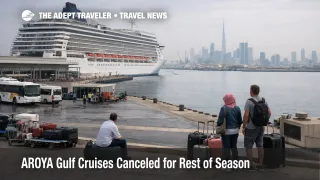
AROYA has now moved from a one sailing disruption to a season ending shutdown in the Arabian Gulf, and that is the real traveler update. The cruise line says it will not proceed with the remaining sailings scheduled in the Arabian Gulf for the current season, after first postponing and then canceling individual departures in late February and early March. For travelers, that turns this from a short hold into a planning problem that runs through the rest of AROYA's Gulf program, with Dubai embarkation plans, flight changes, and hotel nights all now in play.
What changed since the earliest coverage is scope. On March 5, AROYA was still talking about a March 7 sailing that would not proceed and offering up to two nights of hotel accommodation in Dubai for guests who were onboard at that point. By March 6 and again on March 7, the line said the remaining Arabian Gulf sailings for the current season would not proceed, and confirmed all onboard guests were safely disembarked in Dubai on March 7.
In practical terms, the canceled window appears to cover the rest of AROYA's inaugural Arabian Gulf season, which official Saudi coverage had said ran from February 21 to May 8, 2026, and trade reporting tied to the brand's Gulf launch described as a Dubai centered program extending into early May. That means this is not just one missed departure, it is the removal of the line's remaining Gulf inventory for the season.
AROYA Gulf Cruises Canceled, What Changed for Travelers
The highest exposure group is anyone still booked on an AROYA Arabian Gulf sailing after March 7, 2026, especially travelers who built a wider Dubai trip around embarkation day, same week flights, prepaid transfers, or nonrefundable hotel nights. AROYA has said affected guests have been contacted and provided information in line with its guest policies, but the public updates do not spell out one universal compensation formula for every canceled future sailing in the way some other operators have.
That gap matters. Travelers should not assume that support offered to guests already onboard in Dubai, including up to two hotel nights from March 7 to March 9, automatically applies to people whose future departures were canceled before they traveled. The safer reading is narrower, onboard guests received immediate hotel support during disembarkation, while later affected guests were told they would receive options and direct guidance from AROYA.
This also tightens the broader Gulf cruise market. AROYA's withdrawal follows a wider pattern of Arabian Gulf disruption that has already hit MSC and Celestyal, which means travelers trying to swap into another Gulf sailing may find fewer realistic substitutes than they expect. In that environment, alternate cruise shopping may shift toward later Red Sea departures, Mediterranean sailings, or abandoning the cruise portion and rebuilding the trip as a land stay. Arabian Gulf Cruises Canceled, MSC and Celestyal helps frame that wider crunch.
Which Booked Guests Face the Biggest Rebooking Problem
Travelers with separate air and cruise bookings face the most friction. When the sailing disappears, the cruise fare is only one part of the loss chain. Dubai hotel demand can rise as stranded passengers and self rerouting travelers stay longer, and flight options can tighten at the same time as more passengers try to exit or reposition. That increases the odds of paying more for replacement air, extra nights, or flexible fares on short notice.
Families and group travelers are also more exposed because rebooking is harder when several cabins, seats, and room nights have to move together. The same is true for travelers who planned onward land or air segments from Dubai immediately after the cruise. A season wide cancellation is more damaging than a port swap because it removes the entire anchor booking that the rest of the itinerary depended on.
The least exposed group is travelers who booked directly with flexible air, refundable Dubai hotels, and no time sensitive onward plans. They still lose the cruise, but they have more room to wait for formal options or rebuild around another destination. Travelers who are already in the Gulf also need to keep watching local movement and airport rules, because the region's wider transport picture remains uneven. UAE Shelter In Place Rules Reshape Exit Planning and UAE Travel Insurance Questions Surge as Flights Disrupt are the most useful related reads if you are trying to repair the rest of the trip.
What Travelers Should Do Now
First, verify exactly which part of your booking stack is protected by AROYA and which parts are your problem. Check whether your cruise was booked direct or through an agency, confirm whether airfare was bundled or separate, and get written confirmation of the cruise line's offered remedy before you cancel any linked travel on your own. That is the threshold that determines whether you wait for supplier handling or start self repairing the trip immediately.
Second, move quickly on Dubai hotels, airport transfers, and replacement flights if your dates are near term and the rest of your trip still matters. Waiting for perfect clarity can cost more than it saves when regional disruption is already squeezing air and accommodation. On the other hand, if most of your trip is refundable and your sailing was the main purpose, it may be smarter to postpone rather than force an expensive salvage job.
Third, watch two things over the next several days, whether AROYA publishes more precise guest remedy language for future canceled departures, and whether the ship's next deployment settles into its advertised Red Sea program from Jeddah in mid May. That second point matters because Gulf recovery is no longer a same month question for AROYA. The line's public site is already marketing Red Sea cruises rather than Arabian Gulf departures, which strongly suggests the operational focus has shifted away from Dubai for now.
Why the Gulf Cruise Recovery Timeline Just Moved Again
The mechanism here is simple. Repositioning risk and regional operating restrictions do not just delay one sailing, they break the whole sequence that a cruise season depends on. A ship that cannot sail as planned from Dubai does not only affect that week's guests. It also disrupts hotel turnover, port transfers, provisioning, crew rotations, and the next departure that depends on the prior one finishing cleanly.
That is why the first order effect is lost cruise capacity, while the second order effects spread into Dubai air demand, hotel pricing pressure, and a narrower set of replacement options for travelers shopping late. It is also why the Gulf recovery timeline now looks longer for cruise passengers than for travelers who are only dealing with one canceled flight. AROYA is not merely pausing to review one itinerary anymore, it has written off the rest of the Gulf season.
For the broader market, this strengthens the case that Gulf cruise recovery will be uneven even after individual airport or airspace conditions improve. Cruise lines need a stable operating corridor, not just an occasional movement window, because ship deployments, embarkation calendars, and guest logistics are chained together weeks in advance. That is the bigger traveler lesson from AROYA's decision, the cruise problem now lasts beyond the original operational shock.
Sources
- Arabian Gulf Updates, AROYA Cruises
- AROYA Cruises Debuts Arabian Gulf Voyages for 2026, Saudi Press Agency
- 6 Arabian Gulf Cruises to Book for 2026, Connecting Travel
- Aroya Cruises ends inaugural Arabian Gulf season ahead of schedule, CruiseMapper
- Aroya to End Arabian Gulf Season, Cruise Industry News
- Arabian Gulf Cruises Canceled, MSC and Celestyal, Adept Traveler
- UAE Shelter In Place Rules Reshape Exit Planning, Adept Traveler
- UAE Travel Insurance Questions Surge as Flights Disrupt, Adept Traveler