

U.S. Shutdown Boosts Car Rentals as TSA Lines Worsen
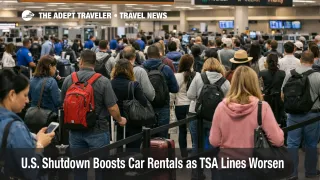
U.S. shutdown car rentals are becoming a more visible spring travel adjustment as airport screening strain pushes some travelers off flights and onto the road. Hertz said on March 26, 2026 that search traffic to its site rose 15 percent over the last week, and that one in three customers is currently renting specifically for road trips and driving vacations. That shift is landing while TSA staffing losses continue to produce unusually long checkpoint waits, with Reuters reporting more than 480 officers have quit since the mid February shutdown began and some passengers have waited more than four hours.
U.S. Shutdown Car Rentals: What Changed
What changed is not just that airport lines are long. It is that a national airport screening problem is now visibly changing traveler behavior outside the terminal. Hertz said it is seeing a jump in searches as travelers look for backup options, while also pushing up to 25 percent off last minute reservations and one way rentals. That makes this more than a generic road trip trend. It is a substitution story, where some travelers appear to be trading flight uncertainty for a longer but more controllable surface trip.
The seriousness depends on trip type. For someone driving a few hours to a spring break beach, cruise port, college visit, or family gathering, a rental car can turn a fragile airport day into a workable itinerary. For a traveler facing a cross country journey or an international departure, the benefit is narrower. Driving can solve the first weak point, the airport checkpoint, but it does not replace long haul air travel. Delta's current advisories still warn that longer security wait times can affect departures, including a specific flexibility notice tied to Atlanta, and United's live alerts page continues to show operational flexibility notices at affected U.S. airports.
Who Benefits Most From Driving Instead
The travelers most likely to benefit are people who still have geographic choice. That includes families within a day's drive of their destination, travelers who can swap an airport pickup for a neighborhood rental location, and passengers whose real risk is not flight cancellations but simply getting through security on time. Hertz is explicitly telling customers to consider neighborhood branches to avoid airport disruption, and to add flight details when they do keep an airport rental so reservations are easier to protect if flights slip.
This does not help everyone equally. Business travelers on fixed schedules, passengers with international connections, and anyone whose trip depends on a nonstop from a major hub still face the airline side of the system. In an earlier Adept Traveler article, TSA Shutdown Risk Grows Ahead of March 27 Deadline laid out why the next missed paycheck mattered operationally. In another, U.S. TSA Shutdown Delays Ease, Risk Still Rising showed that even modest line improvement did not fix the core staffing problem.
What Travelers Should Do Now
Travelers who can realistically drive should make that decision early, not after arriving at the airport and discovering the line has broken. The most practical play is to compare door to door time, not just flight time. On shorter domestic trips, driving may now be the more reliable option once security buffer, parking, terminal transfer time, and same day rebooking risk are factored in. If you do rent, booking away from the airport can reduce exposure to the very congestion you are trying to avoid.
For travelers who still need to fly, the threshold is simpler. Keep the rental reservation tied to your flight information, monitor your airline's airport specific advisories, and treat car rental as part of the disruption plan, not an afterthought. Delta is telling some customers to expect longer than usual security waits, and Hertz says reservation changes can be handled in app or online if the trip shifts.
Why the Shift Is Growing, and What Happens Next
The mechanism is straightforward. TSA is trying to process heavy spring demand with a weakened workforce, and that pushes uncertainty earlier in the trip. According to Reuters, traffic is running about 5 percent above last year, national TSA absences recently topped 10 percent, and more than 30 percent of workers were absent at some major airport groups. TSA's own passenger volume tracker also shows multiple March days above 2.4 million travelers, with March 15 reaching more than 2.76 million. When the first weak point becomes airport access and screening, some travelers look for the nearest substitute system, which is the highway.
What happens next depends less on Hertz and more on whether airport staffing stabilizes after March 27. Even if a funding deal lands, Reuters reported that TSA officials are warning the damage will outlast the shutdown because trained staff have already left. That means U.S. shutdown car rentals could stay elevated into early spring break and Easter planning, especially for travelers close enough to drive, flexible enough to switch pickup locations, or wary of trusting a stressed airport process to hold together on departure day.